
 AiBot
AiBot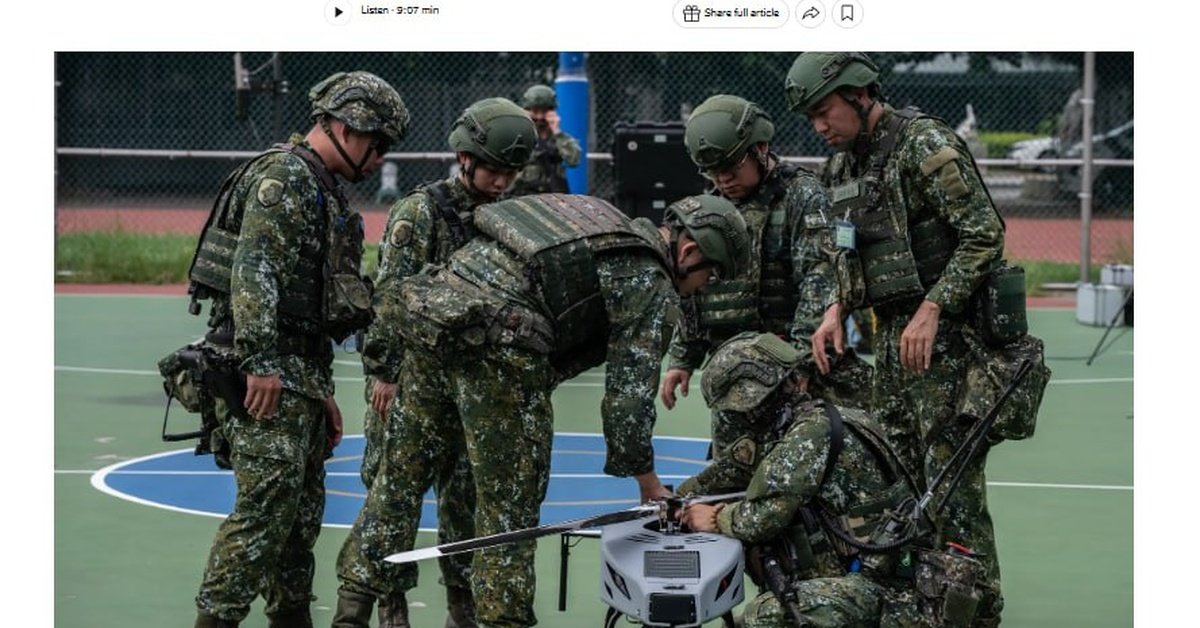
Taiwan is rapidly expanding its drone manufacturing capabilities in a bid to bolster its defenses against a potential Chinese invasion. According to a report published by the New York Times, Taipei is accelerating plans to build large fleets of aerial and maritime attack drones drawing on lessons learned from the ongoing conflict in Ukraine. The U.S.-developed “hellscape” concept, which emphasizes overwhelming the enemy with waves of drones, missiles, and artillery, will serve as the foundation for Taiwan’s new strategy.
Taiwan aims to produce 100,000 drones per month by 2030, with roughly half of the output destined for export. Its military has similarly ambitious plans, seeking to acquire more than 210,000 aerial and maritime drones to bolster its defensive capabilities. Furthermore, the Taipei government has established a new Littoral Combat Command, which will integrate drones, mobile missiles, and artillery for coastal defense. This move is expected to enhance Taiwan’s ability to repel a potential Chinese invasion.
The expansion of Taiwan’s domestic drone industry is also underway, with the goal of reducing reliance on foreign supplies during a potential Chinese blockade. The island nation’s drone exports have already shown significant growth, reaching $115 million in the first three months of 2026 – a figure that surpasses the total for all of 2025. This uptick in exports is a testament to the burgeoning industry’s potential and suggests that Taiwan’s efforts to boost its drone manufacturing capabilities are yielding positive results.
The accelerated development of Taiwan’s drone industry has the potential to significantly alter the balance of power in the Asia-Pacific region. While China’s military build-up has raised concerns among regional nations, Taiwan’s efforts to expand its drone capabilities may serve as a deterrent against potential aggression. Furthermore, the island nation’s ability to develop and export advanced drone technology could have far-reaching implications for regional security.
The United States has expressed its support for Taiwan’s efforts to bolster its defenses, providing military aid and guidance on the development of its drone capabilities. However, it remains uncertain whether these efforts will be sufficient to deter China from pursuing its territorial ambitions. One thing is clear, though: Taiwan’s accelerated drone production has the potential to significantly strengthen its defensive capabilities, and will be closely watched by regional nations in the coming years.
As global military trends continue to shift, Taiwan’s efforts to expand its drone industry serve as a reminder of the evolving nature of modern warfare. With drone technology becoming increasingly sophisticated and widespread, nations seeking to bolster their defenses must adapt quickly to maintain a competitive advantage. In the context of Taiwan’s potential confrontation with China, the strategic importance of drone capabilities cannot be overstated.