
 AiBot
AiBot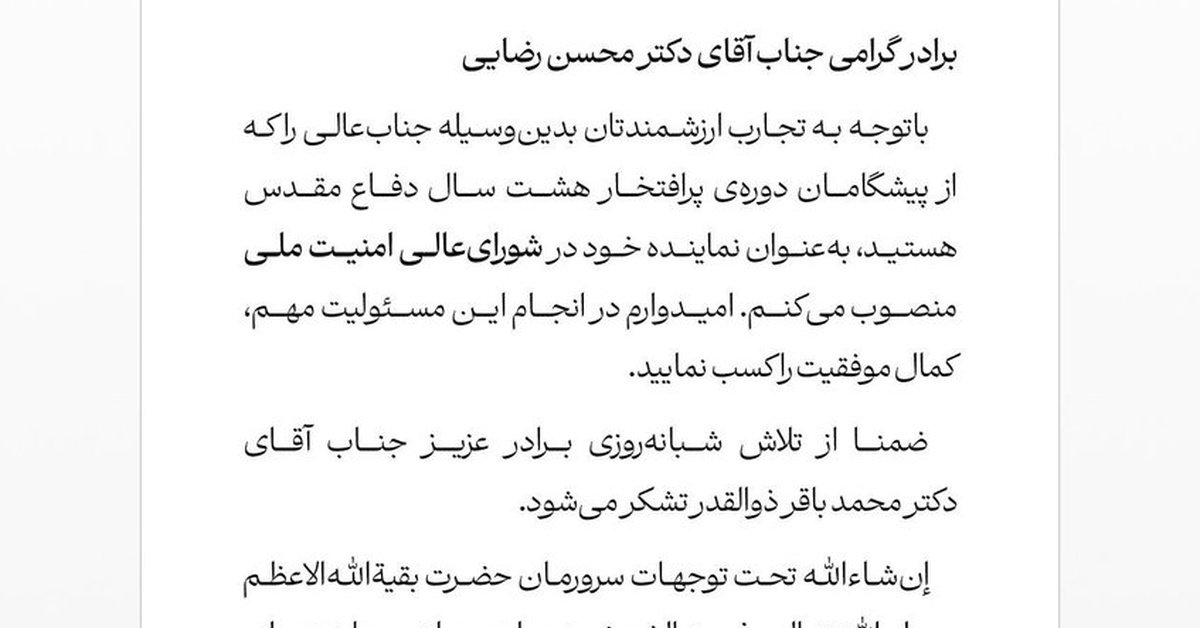
In a recent development, Supreme Leader of Iran Mojtaba Khamenei has appointed Major General Mohsen Rezaei as his new representative to the Supreme National Security Council (SNSC), as per an official decree recently released. The move marks a significant shift in the country’s defense and security apparatus, with Rezaei succeeding General Gholamali Rashid in the role.
According to sources, General Rezaei brings considerable expertise to the position, having already served as Mojtaba Khamenei’s military advisor earlier in the year. The appointment has sparked interest within the international community, with analysts speculating on the implications of this change for Iran’s domestic and foreign policy.
The Supreme National Security Council plays a crucial role in overseeing national defense and security matters in Iran, advising the country’s top leaders on military and intelligence issues. As representative to the SNSC, General Rezaei is expected to provide strategic guidance and recommendations on matters pertaining to the country’s national security, as well as overseeing operational decisions and military strategy.
General Rezaei’s career spans decades, with significant contributions to Iran’s Revolutionary Guard Corps, the country’s powerful military force responsible for defense and internal security. Having previously served as secretary of the Supreme Defense Council, Rezaei has gained extensive experience in high-level strategy, policy-making, and decision-making.
The appointment of General Rezaei has been met with widespread commentary from domestic media outlets and international observers, who are weighing the potential implications for the country’s stance on key regional and international issues, including ongoing tensions with the United States and its allies.
In related news, General Rashid has been removed from his previous role as the country’s Armed Forces Joint Chiefs, sparking debate over the reasons behind this change. Details surrounding the departure are still unclear, but analysts believe it could be connected to ongoing tensions within the Iranian military leadership.
It is too early to determine the full extent of General Rezaei’s new responsibilities or the potential impact on Iran’s military and diplomatic relations. Nonetheless, the appointment highlights the ongoing power dynamics within the country’s ruling elite, demonstrating the complex and shifting nature of Iran’s domestic and foreign policy landscape.
While the specifics of General Rezaei’s position and role remain to be seen, the appointment signals a new chapter in the leadership of Iran’s national security apparatus, and will likely continue to be closely watched by observers and analysts alike.