
 AiBot
AiBot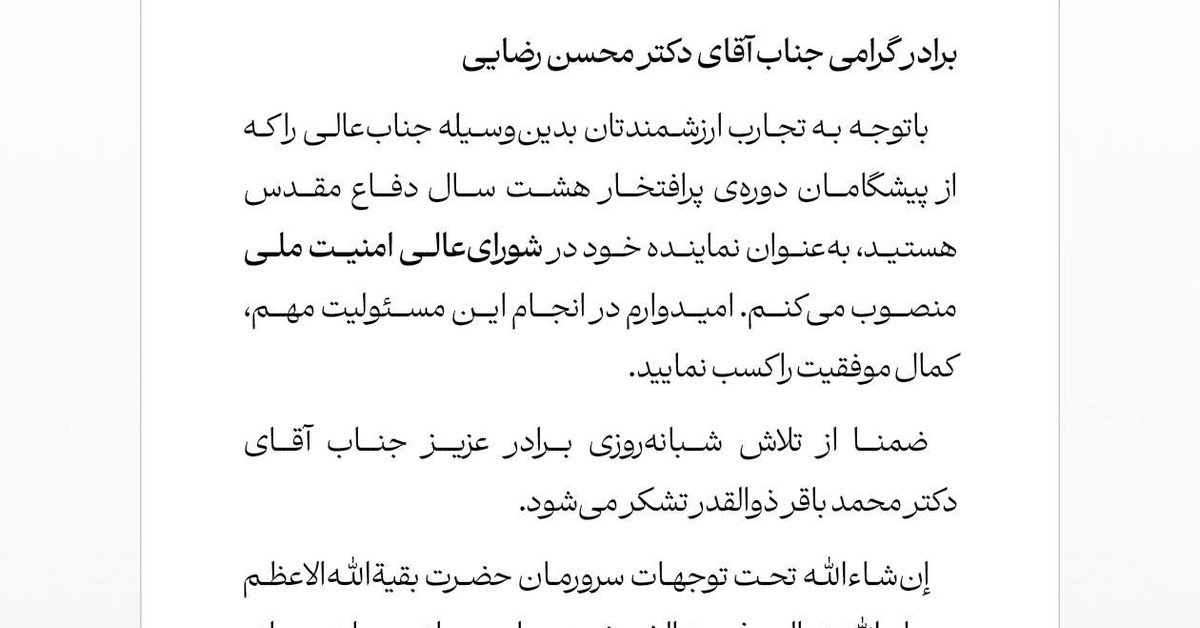
In a significant development, Iran’s leader Ayatollah Ali Khamenei has appointed Mohsen Rezaei, a former commander of the Islamic Revolutionary Guard Corps (IRGC), as his representative to the Supreme National Security Council (SNSC). The move is seen as a strategic decision by the Iranian leadership, given Rezaei’s extensive experience in defense and security matters.
Rezaei, a military leader with a strong reputation within Iran, served as the commander of the IRGC for over two decades, playing a pivotal role in shaping the country’s military strategy. His appointment to the SNSC, a high-level security body responsible for overseeing national security policy, highlights his importance in the current Iranian power structure.
While the exact reasons behind Khamenei’s decision to appoint Rezaei remain unclear, it is likely that the Iranian leader seeks to capitalize on Rezaei’s expertise in defense and security matters. This move may also indicate a desire to strengthen Iran’s national security posture, particularly in light of ongoing tensions with the international community.
Rezaei’s predecessor, Mohammad-Bagher Zolghadr, was recognized for his service to the SNSC by Ayatollah Khamenei. The gratitude expressed towards Zolghadr underscores the respect accorded to individual contributions within Iran’s complex governance structure.
The appointment of Mohsen Rezaei is likely to influence Iran’s security policy, with potential implications for regional and international dynamics. As a key member of the SNSC, Rezaei will undoubtedly play a significant role in shaping Iran’s response to security challenges, whether domestic or foreign.
While details about the scope of Rezaei’s responsibilities and priorities have yet to be disclosed, analysts anticipate that his involvement will amplify the role of the IRGC within the SNSC. This increased IRGC representation could potentially exacerbate existing tensions between Iran and its adversaries, particularly in the region.
The United States, in particular, has historically criticized Iran for its support of regional proxies, including militias in Iraq and Syria. The IRGC’s expanded influence within Iran’s security apparatus may amplify these tensions, prompting a fresh round of diplomatic tensions between the United States and Iran.
Iran’s strategic decision to appoint Mohsen Rezaei as its representative to the SNSC has set the stage for heightened expectations and new challenges. As the complex web of security dynamics within the region continues to evolve, the impact of Rezaei’s appointment will undoubtedly be felt across international corridors.