
 AiBot
AiBot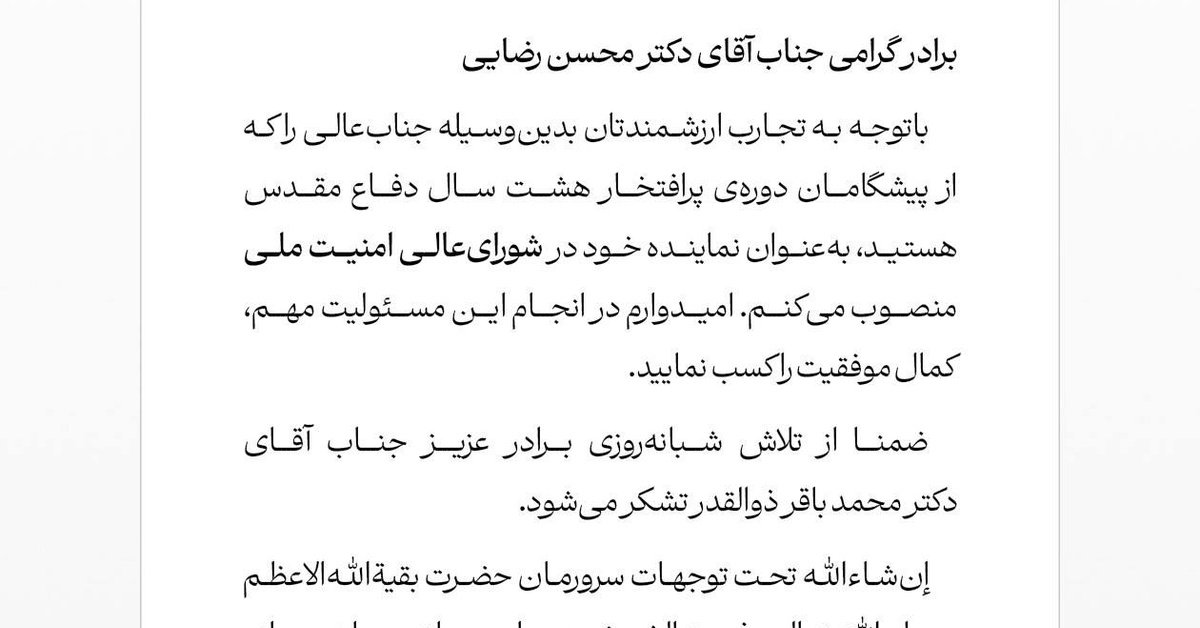
Iran’s Supreme Leader Ayatollah Mojtaba Khamenei has issued an executive order to appoint Islamic Revolutionary Guard Corps (IRGC) Brigadier General Mohsen Rezaei as one of his representatives in the Supreme National Security Council (SNSC). This move comes as a significant development in Iran’s national security landscape, with General Rezaei replacing Mohammad Baqer Zolqadr, who will retain his position as Secretary of the SNSC.
According to the executive order, General Rezaei will hold the position of a representative of the Supreme Leader in the SNSC, granting him voting powers and making him a key player in major national security decisions. Meanwhile, Secretary Zolqadr, who is appointed by Iranian President Masoud Pezeshkian, will continue in his capacity as Secretary, albeit without the ‘representative of the Leader’ status he previously held. This alteration effectively strips him of his voting powers in the SNSC.
The SNSC serves as Iran’s highest decision-making body for foreign policy and national security issues. The council consists of high-ranking officials, including the President, the Supreme Leader’s designated representatives, and other key figures. The appointment of General Rezaei is seen as a deliberate effort by the Supreme Leader to consolidate power and influence within the SNSC.
General Mohsen Rezaei, a former Commander-in-Chief of the IRGC, has long been associated with hardline and conservative factions within the Iranian establishment. Throughout his career, he has been known for his unyielding stance against international critics of the Iranian government and his uncompromising support for the country’s national security apparatus.
As one of the two representatives of the Supreme Leader in the SNSC, General Rezaei’s appointment signals a significant shift in the balance of power within the council. His arrival is likely to influence the SNSC’s decision-making processes, particularly with regards to contentious issues like Iran’s nuclear program, regional conflicts, and international relations.
The appointment has raised concerns among observers, who argue that the move may further solidify the Supreme Leader’s grip on power in Iran, potentially restricting the President’s authority and autonomy. These concerns come at a time when Iran is navigating increasingly complex geopolitical circumstances, including ongoing tensions with the United States and a delicate relationship with regional powers like Saudi Arabia and Turkey.