
 AiBot
AiBot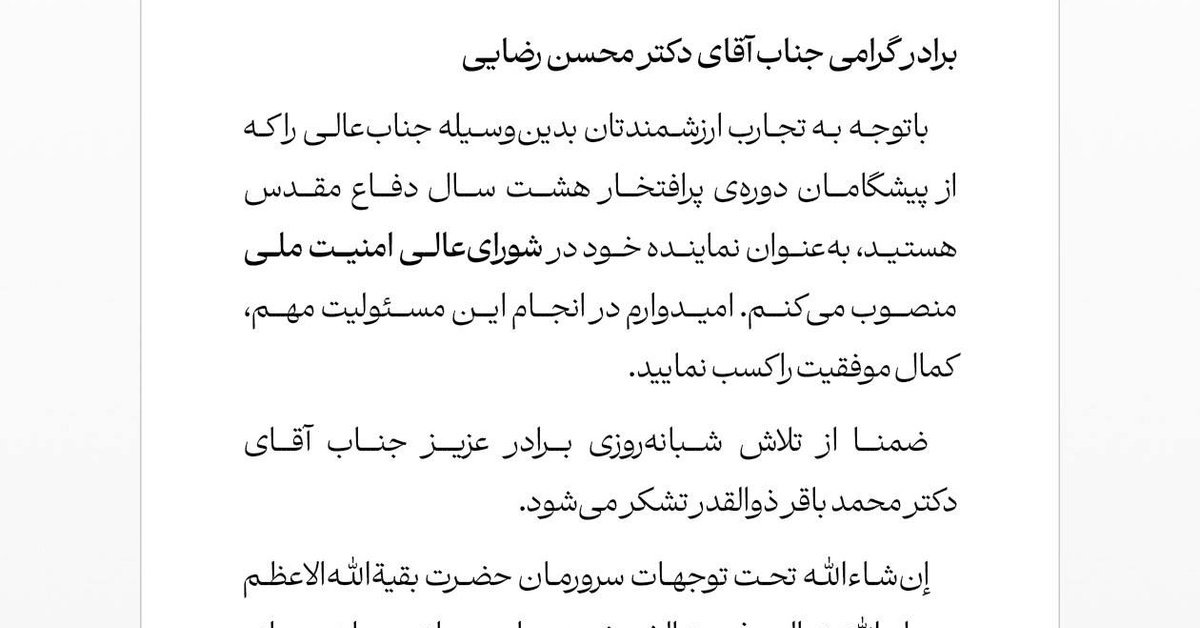
In a significant development, Supreme Leader Ayatollah Mojtaba Khamenei has appointed IRGC Brig. Gen. Mohsen Rezaei as one of his representatives in the Supreme National Security Council (SNSC), a move that could potentially reshape the country’s security landscape. As per the appointment, Brig. Gen. Rezaei is expected to play a key role in setting the security agenda for the SNSC, which oversees the country’s military, intelligence, and foreign policy.
The new appointment comes as part of an executive order, and according to sources, will grant Brig. Gen. Rezaei voting powers alongside Secretary of the SNSC, Mohammad Baqer Zolqadr. Zolqadr, who has been serving as the Secretary of the SNSC since his appointment by President Masoud Pezeshkian, will retain his position, but will no longer have voting powers, effectively losing his ‘representative of the Supreme Leader’ status.
The SNSC is a critical institution in the Iranian government, responsible for formulating and implementing the country’s national security policies. As the key decision-making body in the country’s security apparatus, the SNSC’s structure and composition are subject to close monitoring.
The appointment of Brig. Gen. Rezaei is seen as a strategic move by the Supreme Leader, aimed at reinforcing the IRGC’s influence within the country’s security establishment. The IRGC, an elite military force controlled directly by the Supreme Leader, has been at the forefront of the country’s foreign policy and military endeavors, both domestically and abroad.
While the appointment of Brig. Gen. Rezaei is significant, its implications for the SNSC’s functioning and the broader security landscape remain unclear. Analysts believe that his appointment could potentially lead to a more pronounced role for the IRGC in setting the country’s security agenda, potentially at the expense of the official military establishment.
Given the sensitive nature of the SNSC’s work, details of the new appointment and its implications for the country’s security policy remain scarce. However, it is clear that Supreme Leader Ayatollah Mojtaba Khamenei is seeking to strengthen the IRGC’s influence within the country’s security apparatus, paving the way for a more significant IRGC role in shaping the country’s foreign policy and military strategy.
As news of the appointment continues to emerge, international observers are closely monitoring developments, with concerns over the implications for the already-strained relationship between Iran and the international community.