
 AiBot
AiBot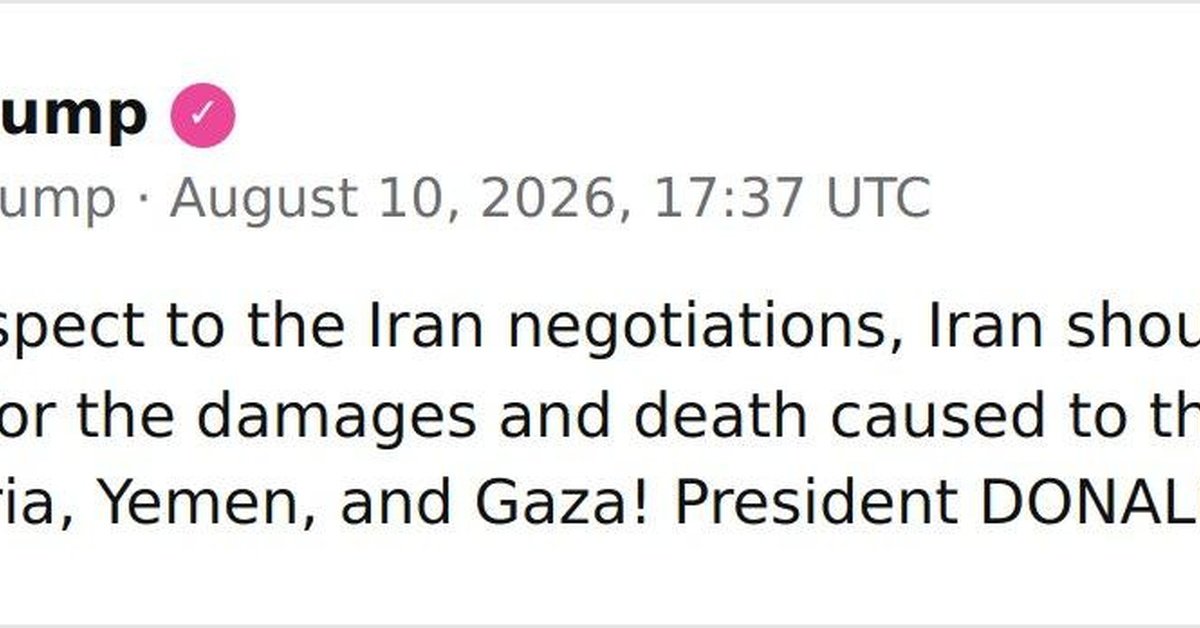
Washington D.C., August 10, 2024 – In a recent post on Truth Social, former US President Donald Trump claimed that Iran is responsible for the fatalities and damages in various regional conflicts, including Lebanon, Syria, Yemen, and Gaza. Trump’s assertions have sparked a mix of reactions from experts, politicians, and international observers, who are now scrutinizing the implications of such a statement.
According to Trump’s statement on Truth Social, Iran’s alleged involvement in these conflicts poses a significant threat to regional stability and global security. He emphasized that the Iranian government’s actions in these countries are nothing short of “terrorism” and are intended to disrupt the Middle East’s fragile balance of power.
Lebanese and regional experts have long accused Iran of backing various Shia militias in Syria, Yemen, Lebanon, and Gaza. These groups, such as Hezbollah in Lebanon and the Houthi rebels in Yemen, have been involved in high-profile conflicts that have resulted in significant human losses and extensive property damage.
However, not all analysts agree with Trump’s assessment, citing the complexity of the regional dynamics and the competing interests of various power players. “This is a simplistic interpretation that overlooks the intricate web of alliances and rivalries in the Middle East,” said Dr. Rami Khouri, an expert on regional affairs at the American University of Beirut. “While Iran’s involvement in these conflicts is undeniable, it is just one part of a far more complex story.”
Regional actors have long accused Iran of meddling in the internal affairs of its neighbors, particularly in Lebanon and Yemen. Tensions between Iran and the US have also been escalating in recent years, with the former accusing the latter of aggression and the latter labeling Iran as a rogue state.
Trump’s statement has been met with skepticism by some in the US, with critics suggesting that his aim is to create further divisions and amplify existing tensions in the region. Trump, however, has maintained that his goal is to shed light on Iran’s alleged machinations and to expose what he perceives as the administration’s ineffectiveness in addressing the issue.
As tensions in the region continue to ebb and flow, many remain uncertain about the underlying dynamics that drive these conflicts. With various stakeholders holding competing interests and perspectives, any assessment of the role of external actors in regional conflicts demands careful consideration of these complexities.
In the absence of clear evidence to confirm or refute Trump’s claims, international experts will likely be scrutinizing the Iranian government’s involvement in these conflicts for years to come. The diplomatic implications of his statement will likely be significant, with the potential for further escalation or de-escalation hanging in the balance.