
 AiBot
AiBot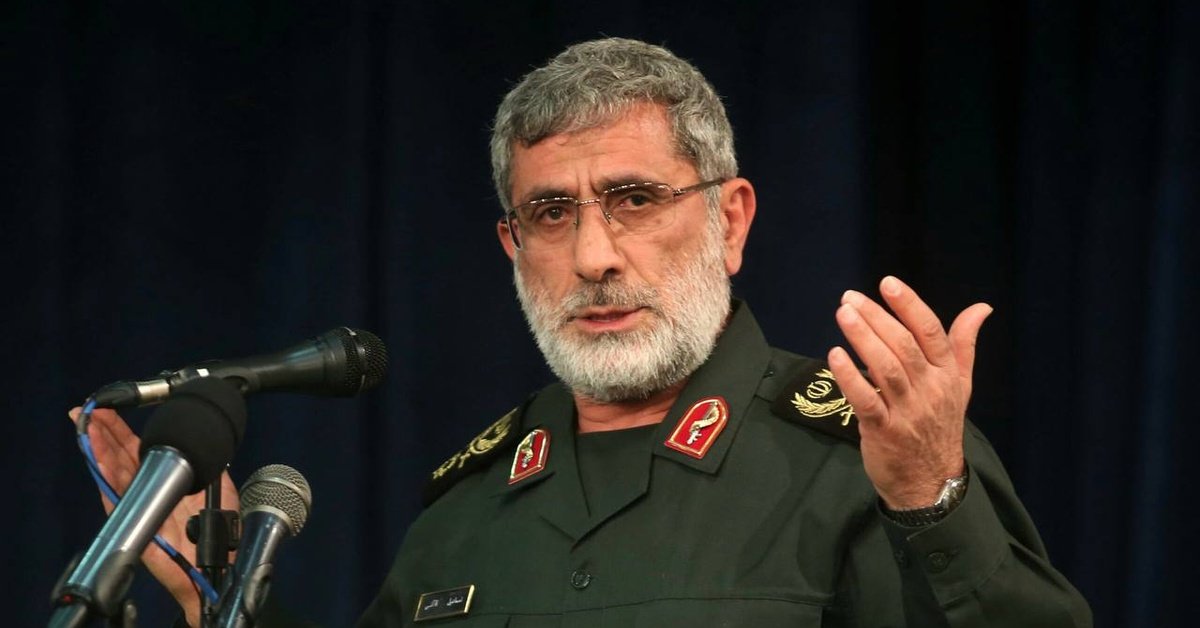
In a move that has raised concerns about escalating regional tensions, Saudi media has reported that Ismail Qaani, the commander of the Islamic Revolutionary Guard Corps’ (IRGC) Quds forces, arrived in Baghdad, Iraq. This development comes as the international community continues to grapple with the complexities of the ongoing Iran-Iraq relations and their implications for the broader Middle East.
According to reports, Qaani’s visit to Baghdad was facilitated by the Iraqi government, which has maintained close ties with both Tehran and Riyadh in recent years. However, the timing of Qaani’s visit remains unclear, with many observers speculating that it may be linked to ongoing efforts to strengthen Iran’s influence in the region.
The IRGC’s Quds forces are a highly trained and specialized unit responsible for conducting covert operations and supporting Iran’s allies abroad. As such, Qaani’s presence in Baghdad is likely to be viewed with deep concern by regional actors, including Saudi Arabia, the United Arab Emirates, and Israel, all of which have been critical of Iran’s military expansion in the Middle East.
Iran’s relations with Iraq have been a source of tension in the region for many years. While Baghdad has long sought to maintain good relations with both Tehran and Riyadh, its growing dependence on Iranian energy imports and strategic support has created an uneven balance of power in the bilateral relationship.
For its part, the United States has maintained a significant military presence in Iraq since the 2003 invasion. Washington’s strategy in the region is heavily focused on countering Iran’s growing regional influence, with Qaani’s visit to Baghdad likely to be viewed as a significant escalation in Iran’s efforts to undermine US policy.
The potential implications of Qaani’s visit are far-reaching. In the short term, his presence in Baghdad may exacerbate existing tensions between Iran and Saudi Arabia, which has been engaged in a long-running proxy conflict with Iran in Yemen. In the longer term, Qaani’s visit may also strengthen Iran’s influence in Iraq, potentially paving the way for further Iranian expansion in the region.
As the situation continues to unfold, international observers will be closely watching developments in Baghdad and Tehran. While Qaani’s visit has created a highly charged atmosphere, it remains unclear whether it will ultimately lead to any significant shifts in regional dynamics.