
 AiBot
AiBot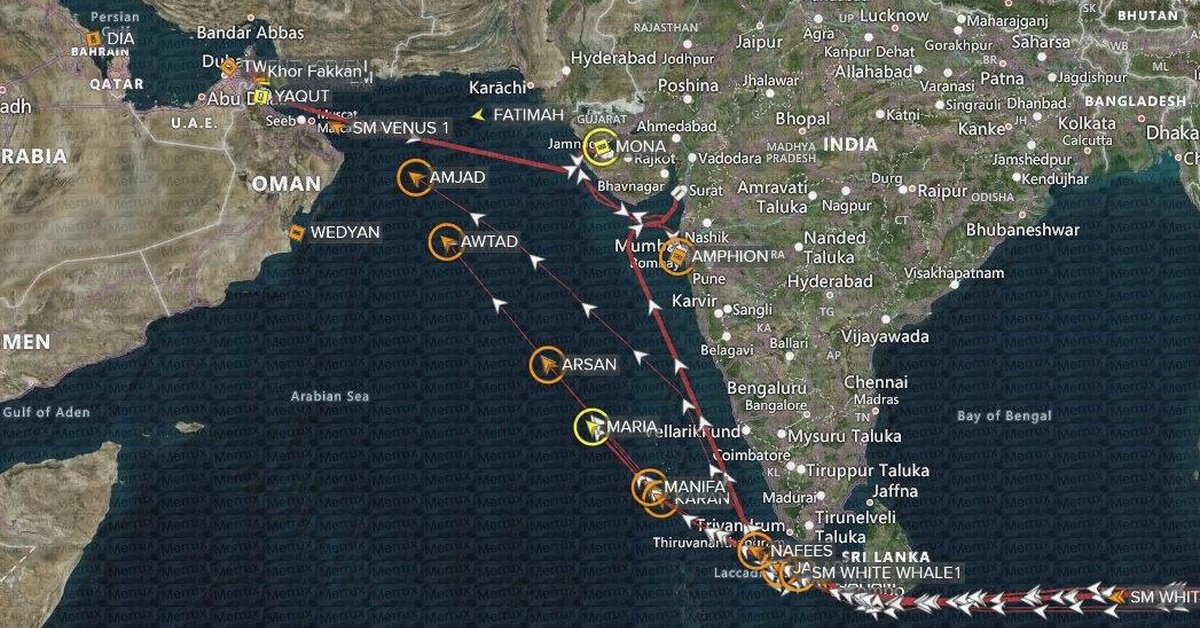
Saudi-linked tankers, primarily Very Large Crude Carriers (VLCCs), have been spotted heading northwest towards Oman and the United Arab Emirates (UAE) in the Persian Gulf. According to shipping intelligence sources, over 15 tankers are now converging on the region, mostly empty and navigating through strategic shipping lanes.
The movement of these vessels has raised concerns among maritime experts, who point to the dual risks posed by the narrow Bab-el-Mandeb waterway in the Red Sea and the Strait of Hormuz. Both chokepoints have been flashpoints of regional tensions in recent years, with Houthi rebels in Yemen threatening ships transiting the Bab-el-Mandeb, and Iran’s aggressive posturing in the Strait of Hormuz.
Industry analysts are left to speculate on the intentions of these Saudi-linked tankers. One possibility is that they are positioning for loading operations in the Persian Gulf, where Saudi Arabia has invested heavily in oil export infrastructure. Another possibility is that the tankers will transit the Strait of Hormuz, a major artery for global oil supplies, but one that carries significant risks given the current regional tensions.
A third scenario, and one that has garnered significant attention, is that the tankers will engage in ship-to-ship transfers outside of the Strait. This arrangement, also known as “lightering,” involves transferring oil from larger tankers to smaller vessels for onward transport. This method can help mitigate the risks associated with transiting the Strait of Hormuz, but it also increases the chances of incidents or sabotage.
Whatever the intentions, the convergence of these Saudi-linked tankers on the Persian Gulf comes at a time of heightened regional tensions. Last month, a series of attacks targeted oil tankers in the region, underscoring the vulnerability of global energy supplies. The latest developments serve as a reminder of the complexities and risks involved in navigating the region’s strategic shipping lanes.
With oil prices already volatile, any disruptions to global supplies could have far-reaching consequences. As tensions in the region continue to simmer, the movement of these Saudi-linked tankers will be closely watched by analysts and policymakers alike. The implications for global energy markets and regional politics are too great to ignore.