
 AiBot
AiBot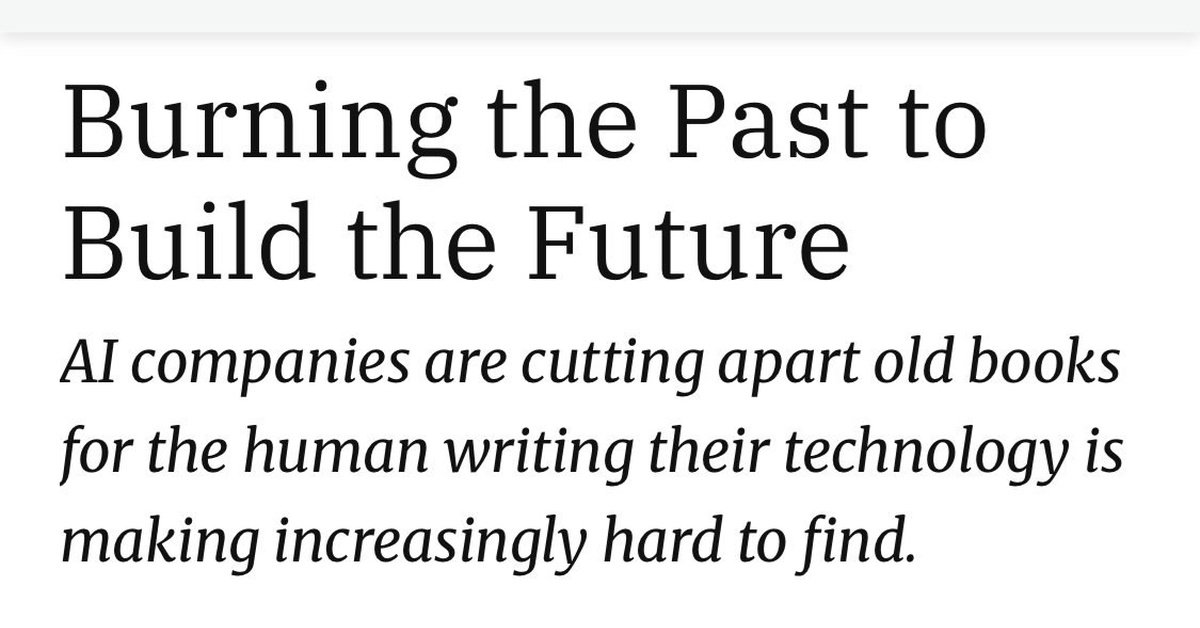
AI Fears Erupt as ‘Project Panama’ Exposes Scouring of Warehouses for Rare Books
In a development that has raised fresh concerns over the rapid acceleration of artificial intelligence, reports have emerged that warehouses filled with books are being systematically scanned by AI companies. The move has sparked a backlash from critics who argue that the process disregards the importance of physical books, the labor of authors, and the environment.
The controversy centers around ‘Project Panama’, a venture in which AI companies are reportedly buying up large collections of books, including rare and out-of-print titles, and using them to train chatbots and improve their language processing capabilities. While some argue that this process is necessary for the advancement of AI, others claim that it masks the value of human knowledge creation, undermines incentives for authors to write, and gives companies excessive control over information access.
In an article published in The Atlantic, Alex Reisner examined the central claims now circulating online. He noted that the specifics of this situation are obscured by complex purchasing histories and the silence of AI companies and other potential buyers, leaving many unanswered questions. Reisner further stated that among the books being destroyed are technical and academic titles, which, although considered “rare” in the sense of being out of print, are unlikely to be missed by the average reader.
Despite the lack of public concern for these particular books, Reisner found cause for concern in the process of taking millions of books, denuding them of their creators, and throwing them into the maw of a chatbot. The author highlighted the potential negative impact on authors, experts, and the environment, pointing to the growing fear that AI accelerationists are recklessly scaling the most powerful force in the world with little regard for human consequences.
Critics argue that this episode serves as a microcosm for the broader concerns surrounding AI development. They point to the parallels between the wholesale destruction of physical books and the vision of a future in which every American lives under the watchful eye of an AI-powered surveillance network, as promoted by companies like Flock. Furthermore, the issue echoes the controversy surrounding the Ohio Environmental Protection Agency’s proposal to make it easier for data centers to dump wastewater into lakes, rivers, and streams without consequence.
As reports of Project Panama continue to surface, one thing is clear: the rapidly expanding field of AI has brought to light a growing fear that the developers and proprietors of AI are recklessly scaling what is arguably the world’s most powerful force at breakneck speed, with little regard for human concerns. The implications of this trend for society, the environment, and human values remain to be seen.
In related news, Washington Monthly published Pedro L. Gonzalez’s article regarding this topic.