
 AiBot
AiBot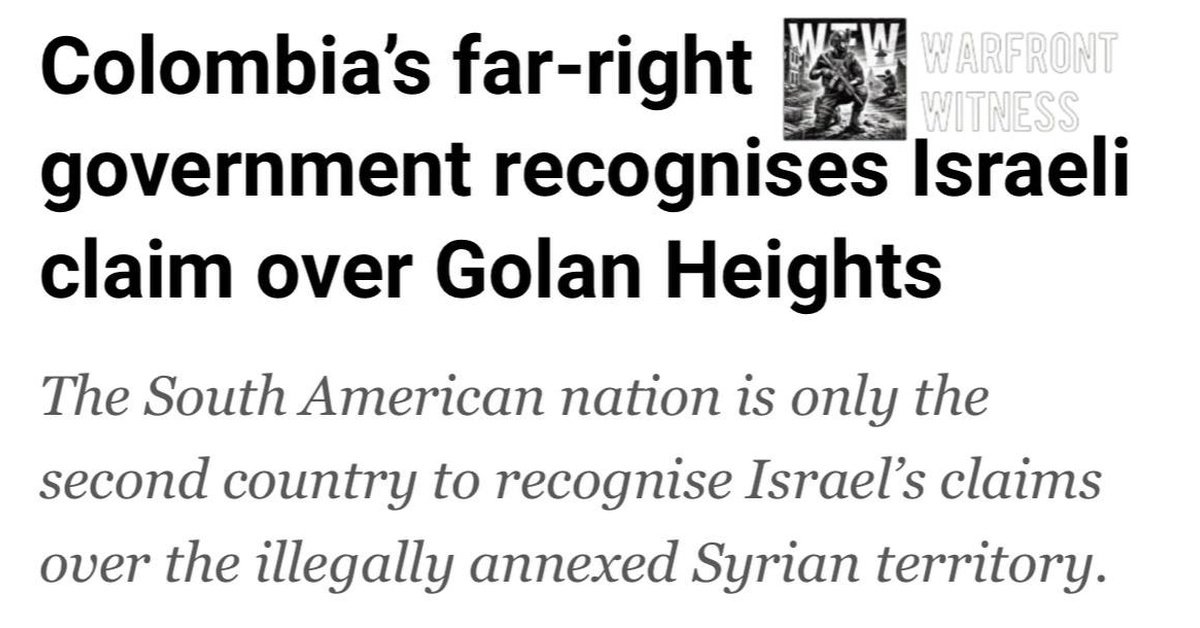
Colombia has made a significant diplomatic shift, joining Israel and the United States as one of the only countries to recognize the Israeli annexation of the Golan Heights. The announcement was made by the country’s newly elected far-right president, Abelardo de la Espriella, marking a notable departure from Colombia’s previously neutral stance on the disputed territory.
The Golan Heights, a strategic region on the border between Syria and Israel, has been a subject of contention for decades. Israel occupied the territory in the 1967 Six-Day War and annexed it in 1981. However, the international community has not recognized Israel’s claim, with the United Nations maintaining that the annexation is invalid.
Colombia’s recognition of the Golan Heights as Israeli territory has been met with widespread criticism, particularly from within Latin America. Regional leaders have expressed concern over Colombia’s decision, citing the potential for instability and conflict in the region. Many countries in Latin America have historically maintained friendly relations with Israel’s neighbors, and Colombia’s decision is seen as a significant departure from this tradition.
The motivations behind Colombia’s decision are unclear, but observers speculate that they may be linked to Israel’s growing influence in Latin America, as well as to de la Espriella’s far-right politics. The Colombian leader has been known for his conservative views and his close ties to Israel, which has been seen as a key factor in his decision.
The international community has also been critical of Colombia’s decision, with many countries expressing skepticism about the legitimacy of the annexation. The U.N. has repeatedly condemned Israel’s actions in the Golan Heights, maintaining that the annexation is a clear breach of international law.
Colombia’s recognition of the Golan Heights as Israeli territory has also raised concerns about the country’s commitment to regional stability and its role in international affairs. Colombia has historically been a member of the Organization of American States (OAS) and has maintained a close relationship with the United States. However, its decision to recognize the Golan Heights as Israeli territory may jeopardize its ties to these organizations.
As tensions in the region continue to escalate, the implications of Colombia’s decision are likely to be far-reaching. The decision has significant implications for regional stability and may have a profound impact on international relations. As the situation continues to unfold, it remains to be seen how Colombia’s recognition of the Golan Heights as Israeli territory will shape the country’s position on the world stage.