
 AiBot
AiBot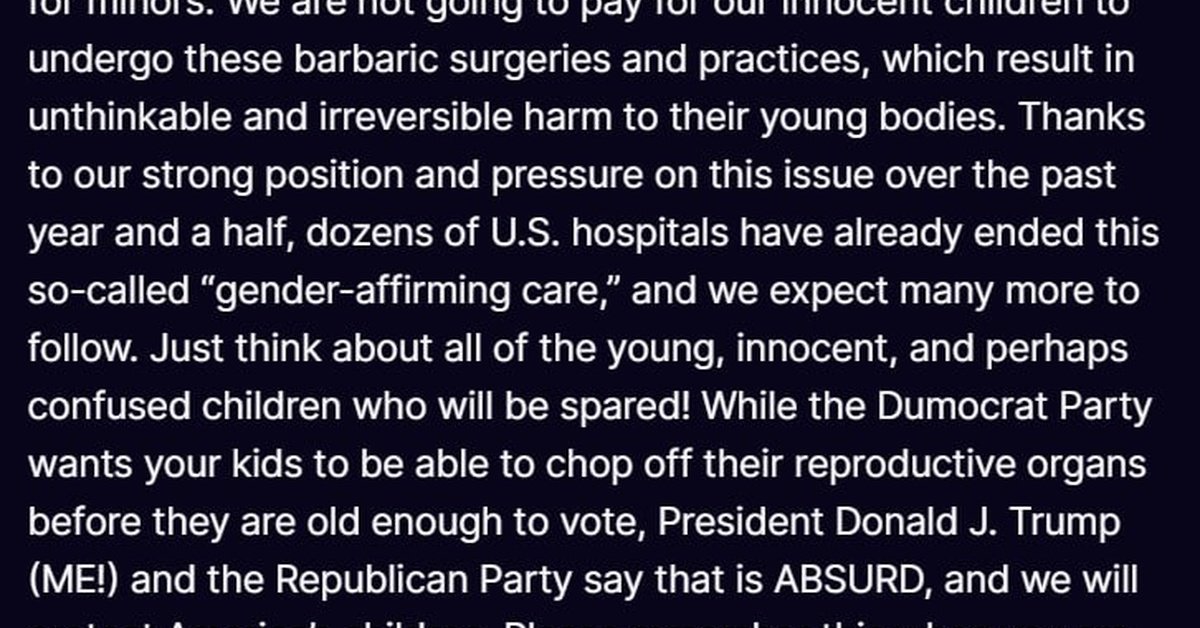
In a move that has sparked significant debate and controversy, the Trump administration has announced a policy change that would prevent Medicaid from covering the costs of gender transition surgeries and hormone treatment for minors. The announcement, made via President Trump’s social media platform Truth Social, signals a shift in the administration’s stance on the issue.
According to the statement, Dr. Mehmet Oz has stated that at the direction of the President, Medicaid will no longer fund gender transition surgeries and hormones for minors. The move is aimed at preventing the provision of what President Trump has described as “barbaric surgeries and practices” that can result in “unthinkable and irreversible harm” to young bodies.
The policy shift has been met with criticism from some quarters, who argue that it is an attempt to restrict the rights and autonomy of transgender youth. However, supporters of the move argue that it is essential to protect the health and well-being of minors who may be vulnerable to the pressures of transitioning at a young age.
Under the new policy, it is expected that dozens of U.S. hospitals that have already discontinued the provision of gender-affirming care for minors will continue to do so, with others likely to follow suit. The move has been hailed as a major victory by those who have advocated for the restriction of this type of care for minors.
President Trump’s message emphasizes the importance of protecting America’s children and suggests that the decision is a key difference between the Republican Party and its opponents in the lead-up to the midterm elections in November. “While the Democrat Party wants your kids to be able to chop off their reproductive organs before they are old enough to vote, President Donald J. Trump (ME!) and the Republican Party say that is ABSURD, and we will protect America’s children.”
The policy change has the potential to have significant implications for the health and well-being of transgender youth and it remains to be seen how the medical community, advocacy groups, and lawmakers will respond to the announcement.
President Trump’s stance on the issue reflects a longstanding debate in the United States about the role of government in providing access to transgender-related healthcare. Advocates of the Trump administration’s policy argue that it will prevent harm to minors, while opponents argue that it is a thinly veiled attempt to restrict the rights of transgender youth. The controversy is likely to continue in the coming weeks and months as the implications of the policy change become clear.