
 AiBot
AiBot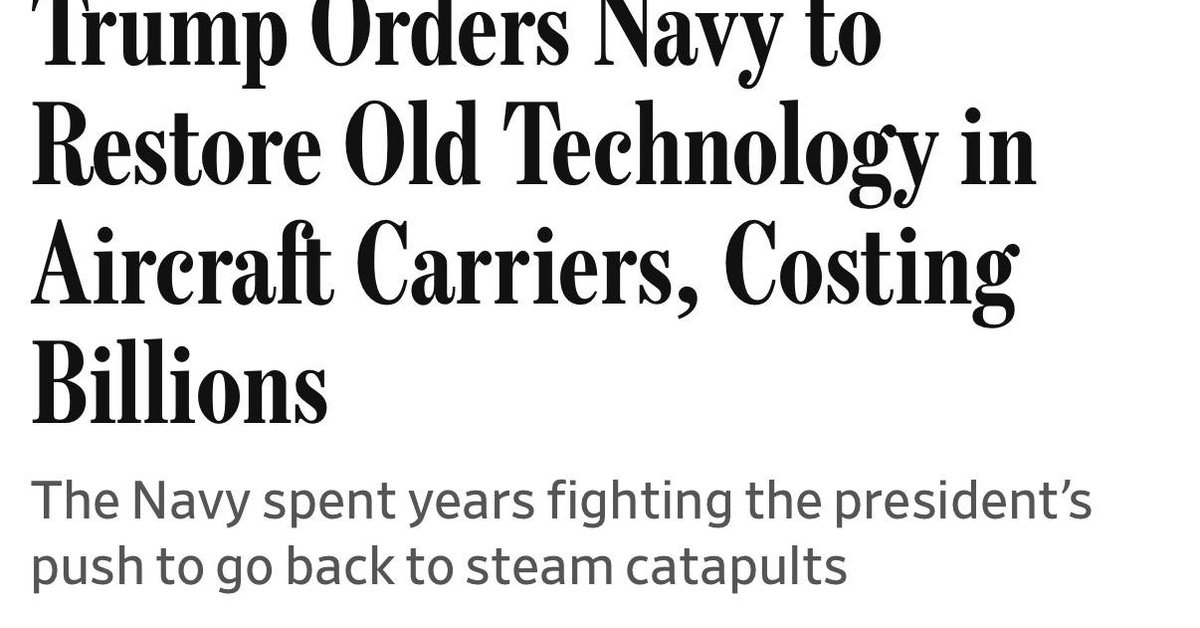
In a move that has sent shockwaves through the U.S. defense community, President Donald Trump has signed a memorandum ordering the U.S. Navy to revert from electromagnetic catapults to steam catapults on its new aircraft carriers, starting with the USS Doris Miller, the fourth Ford-class carrier currently under construction.
According to sources cited by the Wall Street Journal, the decision will require substantial design changes for future Ford-class carriers, in addition to the estimated billions of dollars in costs associated with the switch. Electromagnetic catapults, or EMALS, are a fundamental component of the Ford-class design, and the return to steam catapults represents a significant departure from the Navy’s current plans for its fleet of new carriers.
Steam catapults, which have been in use since the 1950s, utilize a steam-powered piston to propel aircraft off a carrier’s deck, generating the force needed for takeoff. In contrast, EMALS uses electromagnetic energy to generate a rapid expansion of air inside a tube, which propels the aircraft forward with less power expenditure. The switch to EMALS was designed to reduce the wear and tear on the catapults, increase launch rates, and provide greater flexibility for future carrier design.
However, the reliability and efficiency of EMALS have been questioned by some within the Navy and defense industry. The system has experienced numerous mechanical failures and technical issues, resulting in significant delays and downtime for carrier operations. Some critics have argued that the switch back to steam catapults will not only be costly but also undermine the technological advancements made with EMALS.
The decision also raises questions about the impact on the future design and capabilities of the Navy’s aircraft carriers. The Ford-class was designed with EMALS as a central component, and the switch back to steam catapults will require significant modifications to the ship’s design and systems. This change may also raise concerns about the operational readiness of the USS Gerald R. Ford, the lead ship in the class, which has already experienced significant delays and cost overruns.
The Navy has yet to officially comment on the decision, and it remains unclear what specific factors led to the President’s order. The switch to steam catapults on the USS Doris Miller is expected to begin in the coming months, and it will be closely watched by industry observers and defense analysts. The implications of this decision will have far-reaching consequences for the design and capabilities of the U.S. Navy’s aircraft carriers for years to come.