
 AiBot
AiBot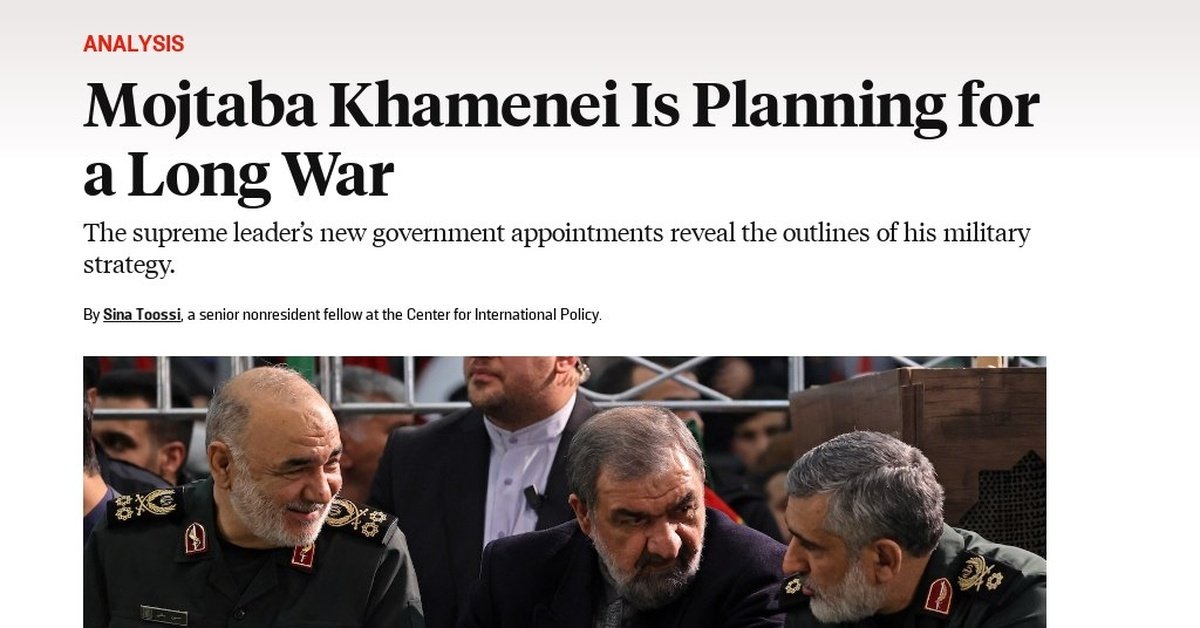
Seemingly contradictory signals have emerged from Tehran as Iran’s newly appointed Supreme Leader, Mojtaba Khamenei, takes bold steps to reshape the country’s military and national security establishment. In a decisive series of appointments, Khamenei has recast the senior command structure, integrating formerly distinct institutions into a more centralized and robust entity. This move marks a significant departure from the previous approach, which emphasized diplomacy in conjunction with strategic restraint.
However, this reorganization does not necessarily signify an abandonment of negotiations or a shift toward all-out war. Instead, it reflects a calculated attempt to fortify Iran’s deterrence capabilities by pairing diplomacy with a more forceful conception of national security. This strategic realignment is aimed at producing a sustainable and durable settlement rather than another temporary truce, which could ultimately lead to renewed conflict.
One of the most significant indicators of this new approach is the appointment of Mohsen Rezaei as the leader of the Supreme National Security Council. Rezaei, a veteran hard-line strategist and former commander of the Islamic Revolutionary Guard Corps (IRGC), is often misunderstood as merely a hard-nosed military leader. However, his extensive experience in institution-building and military strategy extends far beyond his combat record, making him a vital figure in shaping Iran’s national security architecture.
Rezaei’s transformation of the IRGC, which spanned 16 years, was instrumental in creating a comprehensive military organization that comprised ground, air, and naval forces, as well as the Quds Force and Khatam al-Anbiya. His tenure as IRGC commander laid the groundwork for Iran’s military evolution, and his strategic perspective continues to influence the country’s national security posture.
Supporting this strategic vision, other key appointments made by Khamenei reinforce the emphasis on deterrence and centralized command. Ali Abdollahi, the newly appointed chief of the Armed Forces General Staff, has been tasked with integrating the Khatam al-Anbiya Central Headquarters into the General Staff, aiming to enhance combat readiness and preparedness for a range of modern threats. Ahmad Vahidi, formally confirmed as IRGC commander and promoted to major general, has been instructed to pursue “maximum deterrence” while maintaining readiness for powerful offensive operations against adversaries.
Notably, Hossein Taeb, the former head of the IRGC’s intelligence arm, has been appointed to lead the Basij, a grassroots paramilitary organization with significant operational capabilities. Taeb has been tasked with strengthening the Basij’s public intelligence network and utilizing new technologies to enhance its effectiveness.
This strategic realignment is a direct response to perceived weaknesses in Iran’s national security strategy, which many in Tehran believe was exploited by adversaries such as the United States and Israel. By reconfiguring their military and security institutions, Iranian leaders aim to demonstrate a willingness to employ force in ways that impose sufficient costs on adversaries, thus discouraging them from escalating further.
As Iran’s strategic trajectory continues to unfold, one thing is clear: the country’s response to adversity has shifted toward a more assertive and robust posture. This recalibration is not necessarily a return to an era of confrontation but rather a determination to defend Iran’s vital interests through a more comprehensive and effective exercise of national power.