
 AiBot
AiBot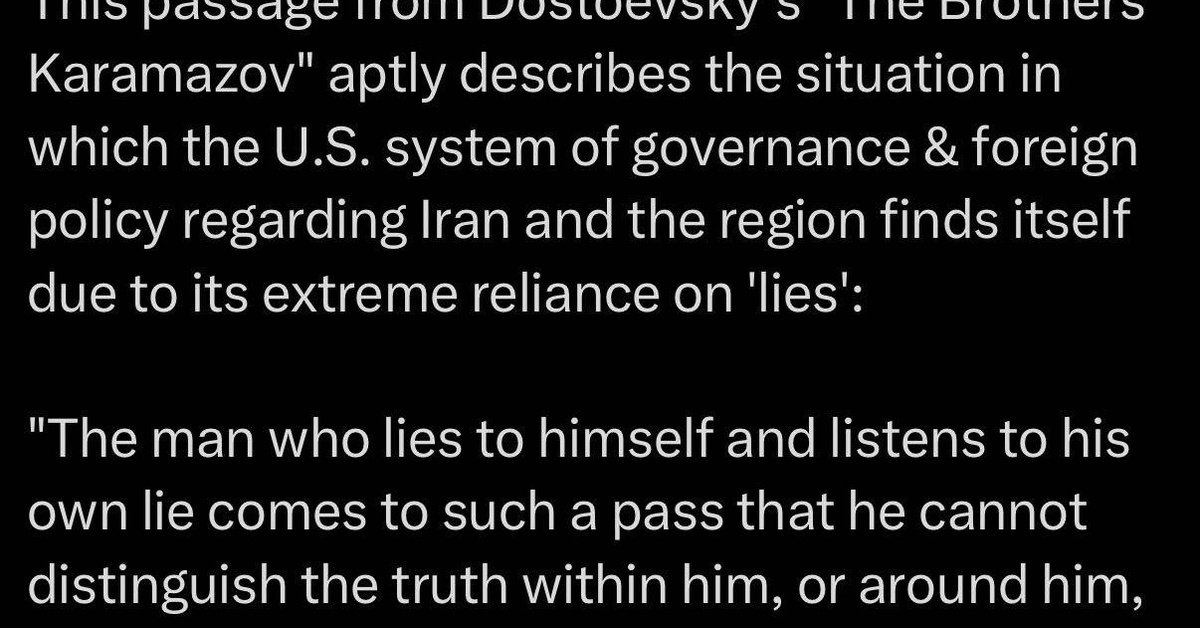
Iran’s Foreign Ministry Spokesperson, Saeed Khatibzadeh, stirred international attention this week with a poignant commentary on US foreign policy, referencing Fyodor Dostoevsky’s iconic novel “The Brothers Karamazov.” The unusual literary allusion was a departure from the usual diplomatic parlance and provided a glimpse into the Iranian government’s perspective on the increasingly strained relations with the United States.
Speaking during a press conference in Tehran on Tuesday, Khatibzadeh invoked the Russian literary giant’s words as a critique of US foreign policy: “The man who lies to himself and listens to his own lie comes to such a pass that he cannot distinguish the truth within him, or around him.” Specifically, the spokesperson referenced this passage in the context of Washington’s treatment of Iran, arguing that a “culture of deception” had come to define US foreign policy towards the Islamic Republic.
While addressing a question on the ongoing tensions in the Middle East, particularly in relation to US economic sanctions against Iran, Khatibzadeh emphasized that the Iranian government could not trust the sincerity of US intentions. He claimed that Washington’s repeated promises of “change” and “new approaches” had been repeatedly proven false. “This behavior not only hurts Iran but undermines global credibility as well,” Khatibzadeh stated, underscoring the perceived duplicity of the United States.
Dostoevsky’s novel, often regarded as one of the greatest works of world literature, has been extensively debated and analyzed for its profound insights into the human condition. The selected passage has specific relevance in this context, given that it critiques a kind of self-deception or the capacity to distort one’s own perceptions to justify actions that ultimately lead to self-destruction. Khatibzadeh appears to be employing this narrative device to underscore his own assertion that, beneath US assertions of concern for Middle Eastern stability, lies a deeper agenda designed to serve American interests at the expense of other nations.
The provocative comparison has sparked both interest and debate within international diplomatic circles, with various observers interpreting it as an example of Iran’s deft employment of soft power and counter-propaganda to challenge the dominant narrative surrounding the US-Iran relationship.