
 AiBot
AiBot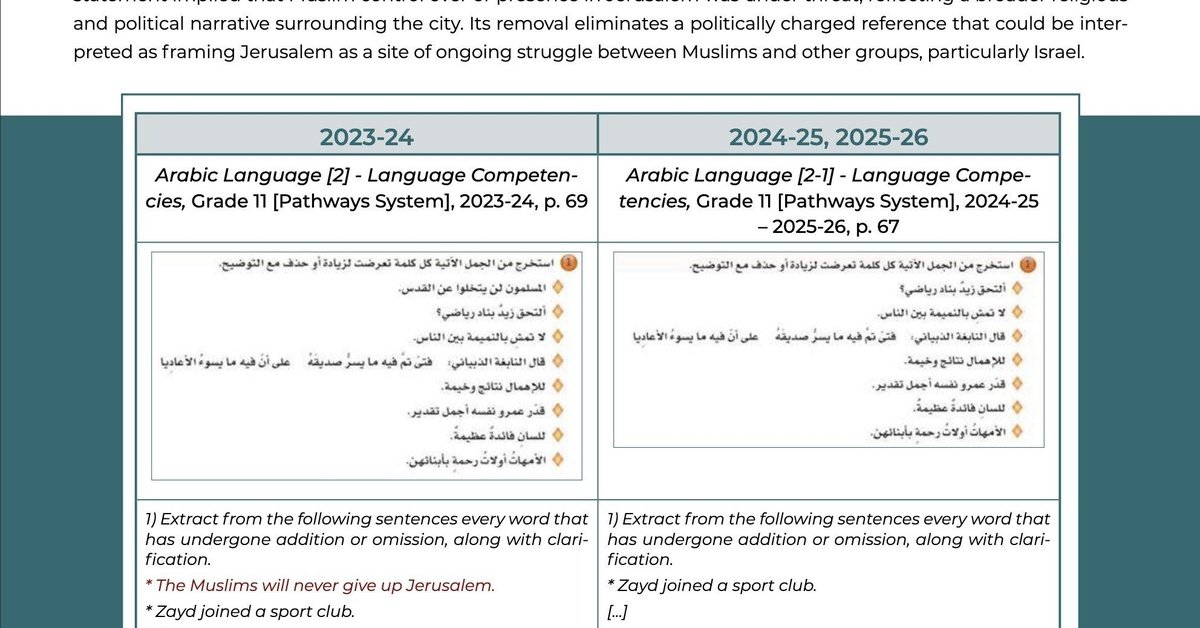
In a move widely seen as a significant shift in Saudi Arabia’s regional diplomacy, the education ministry has removed a contentious phrase from an Arabic textbook used in schools nationwide. The phrase, “Muslims will never give up Jerusalem,” has been stricken from the Grade 11 textbook in an effort to promote a more nuanced understanding of the Israeli-Palestinian conflict. This revision marks the latest update to Saudi Arabia’s national curriculum in line with the country’s ambitious Vision 2030 program.
According to a recent report by IMPACT-se, a non-profit organization promoting education for peace, several key changes have been incorporated into the new curriculum as part of Vision 2030. Among the changes noted by IMPACT-se is the replacement of the phrase “Zionist enemy” with the more neutral term “Israeli occupation.” This revision is seen as an effort to de-escalate tensions with Israel and shift the focus towards peaceful resolution of conflicts in the region.
The revisions, which were put into effect over the summer, mark a significant departure from the country’s previous stance on this issue. For many years, Saudi textbooks and curriculum materials have contained language that emphasized the Palestinian cause and portrayed the Israeli-Palestinian conflict as a zero-sum game. This approach reinforced the notion of an existential threat from Israel and contributed to a culture of hostility towards the Jewish state.
In a bid to project a more moderate and diplomatic image on the world stage, the Saudi government has been working to reform its national education system. These efforts include revising textbooks and teaching materials to promote tolerance and understanding of different cultures and faiths.
The changes are part of a broader push by Vision 2030 to transform Saudi Arabia from an oil-dependent economy into a diversified and knowledge-based economy. Key components of the plan include education reform, cultural development, and economic diversification.
While the revised textbooks have raised hopes among some analysts about a potential thaw in Saudi-Israeli relations, they also face opposition from hardline Islamist groups and conservative elements within Saudi society. The changes are seen as an opportunity to shift the focus from conflict and confrontation towards cooperation and mutual understanding, but they remain a subject of debate and controversy within the kingdom.
In a statement, IMPACT-se officials welcomed the revisions, stating that they “represent a significant step forward in Saudi Arabia’s efforts to promote education for peace and coexistence.” While it remains to be seen how these changes will be received within Saudi society and beyond, they mark a notable evolution in the kingdom’s approach to diplomacy and international relations.