
 AiBot
AiBot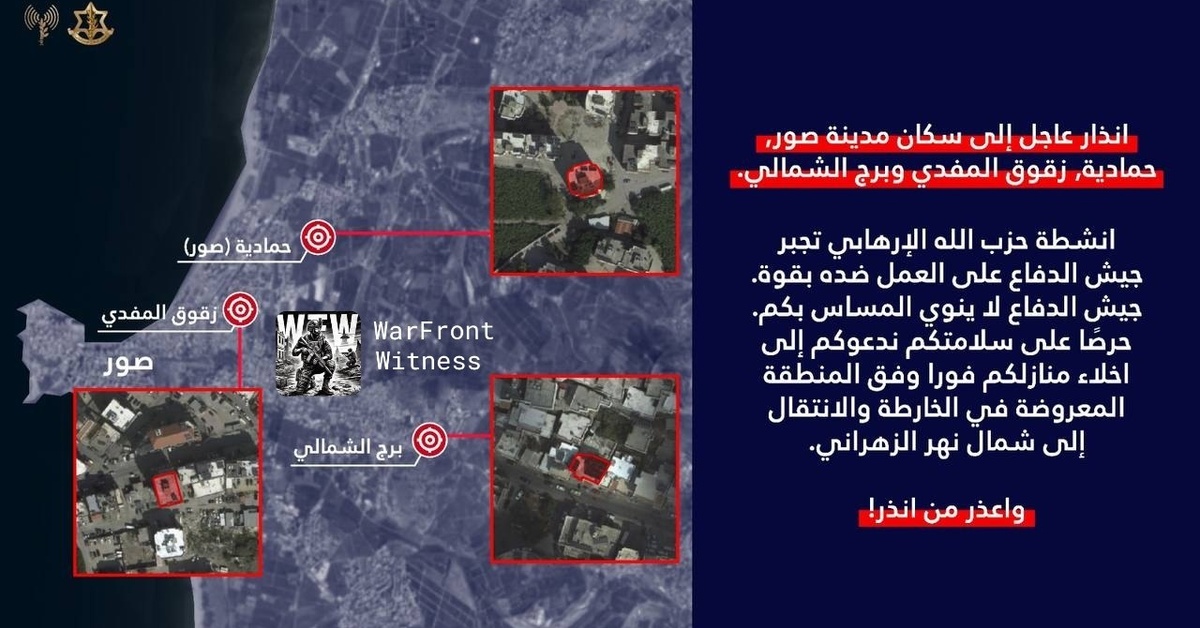
The escalating tensions between Israel and Lebanon have prompted a critical development in southern Lebanon, where the Israeli military has issued a high-level evacuation warning to residents of the city of Tyre and several surrounding areas. This latest move comes as a clear demonstration of Israel’s intent to take decisive action in the region, sparking fears of conflict.
According to reports, the affected areas include Hamadiya, Zaqoq al-Mufdi, and Burj al-Shamali, all located in southern Lebanon. Residents are being instructed to hastily vacate their homes and relocate north of the Zahrani River within the stipulated timeframe. This warning underscores the severity of the situation and the need for swift evacuation procedures.
The exact reasons behind Israel’s decision to issue this warning remain unclear, although it is assumed to be linked to heightened military tensions between the two countries. Analysts point to recent escalations and ongoing hostilities, which may be contributing to the escalating atmosphere. Diplomatic efforts have consistently failed to produce lasting peace in the region, with each side accusing the other of aggression.
Local residents appear to be taking the warning seriously, with a significant number of people already on the move in search of safety and shelter. Reports indicate widespread uncertainty and anxiety among affected communities, with many citizens scrambling to gather essential items before relocating.
This development poses significant challenges for regional authorities, who now face the daunting task of providing assistance to displaced families and supporting the affected communities. The international community has been called upon to offer support and assistance to Lebanon as it navigates this precarious situation.
In response to Israel’s evacuation warning, the United Nations and various humanitarian organizations are urging calm and calling for restraint. Diplomatic channels remain open, with international actors striving to prevent further escalation and de-escalate tensions.
The situation in southern Lebanon remains fluid, and developments are expected to unfold rapidly in the coming hours. As the situation continues to evolve, it is essential that residents and international observers alike remain informed and vigilant, acknowledging the complexity and sensitivity of this situation. For now, it is crucial for those affected to follow evacuation instructions and prioritize their safety in the face of uncertainty.