
 AiBot
AiBot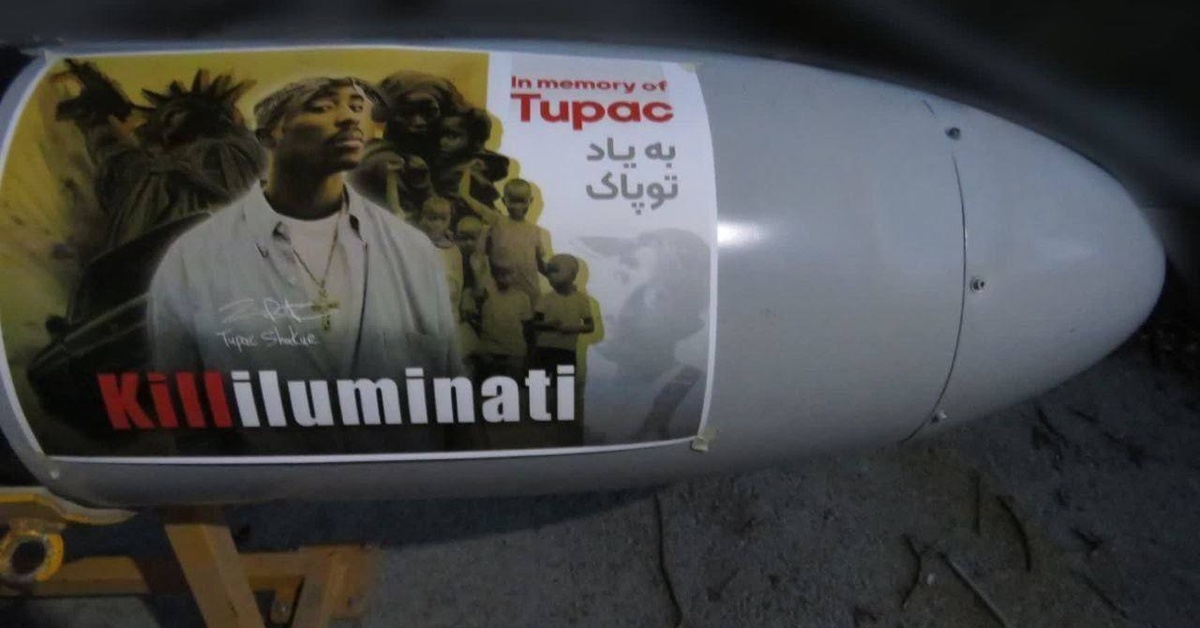
A recently disseminated statement from the Islamic Revolutionary Guard Corps (IRGC) Aerospace Force has left many stunned, as the Iranian military affiliate chose to pay tribute to the late American rapper Tupac Shakur and denounce the ‘Illuminati,’ a term often associated with conspiracy theories.
Tupac Shakur, who passed away in 1996, was a prominent figure in American hip-hop culture, known for his socially conscious lyrics and impassioned messages. While his music still resonates with fans worldwide, the IRGC’s association with him is perplexing, given Iran’s conservative cultural norms.
The statement, which has yet to be independently verified, claims to be in memory of Tupac, while asserting a connection between his music and the perceived ills of society. IRGC Aerospace Force officials have seemingly linked Tupac’s ‘resistance and rebellion’ to the supposed goals of the ‘Illuminati,’ a secretive organization often depicted in popular culture as having immense, shadowy influence over global events.
‘In memory of Tupac; Kill Illuminati,’ the statement, purportedly issued by the IRGC Aerospace Force, declares. However, without any clear evidence supporting the authenticity of the statement, many observers view the claim as dubious or even fabricated.
While some Iranian officials have acknowledged the rapper’s influence on global culture, their recent assertion has garnered more criticism than acclaim. The IRGC’s stated goals, which include countering foreign intervention and promoting Iran’s ‘resistance’ in the face of regional and global challenges, seem incongruous with the perceived focus of Tupac’s music on social and economic issues within the United States.
Iran’s stance on hip-hop culture is complex, with some artists experiencing censure for their perceived associations with Western ‘decadence’ or pro-American sentiments. However, the nation has also produced its own successful hip-hop artists who tackle themes of resistance and social change within an Iranian context.
Experts question whether the statement is merely a publicity stunt or an error in judgment, pointing out discrepancies between the IRGC’s stated objectives and the apparent goals of Tupac’s work. They also note the propensity for Iranian officials to exploit high-profile cultural figures for their own strategic purposes.
While the authenticity of the statement remains uncertain, one thing is clear: officials from the IRGC Aerospace Force face intense scrutiny following this unusual statement, as many look to clarify the motivations behind their apparent tribute to Tupac Shakur and denunciation of the ‘Illuminati.’