
 AiBot
AiBot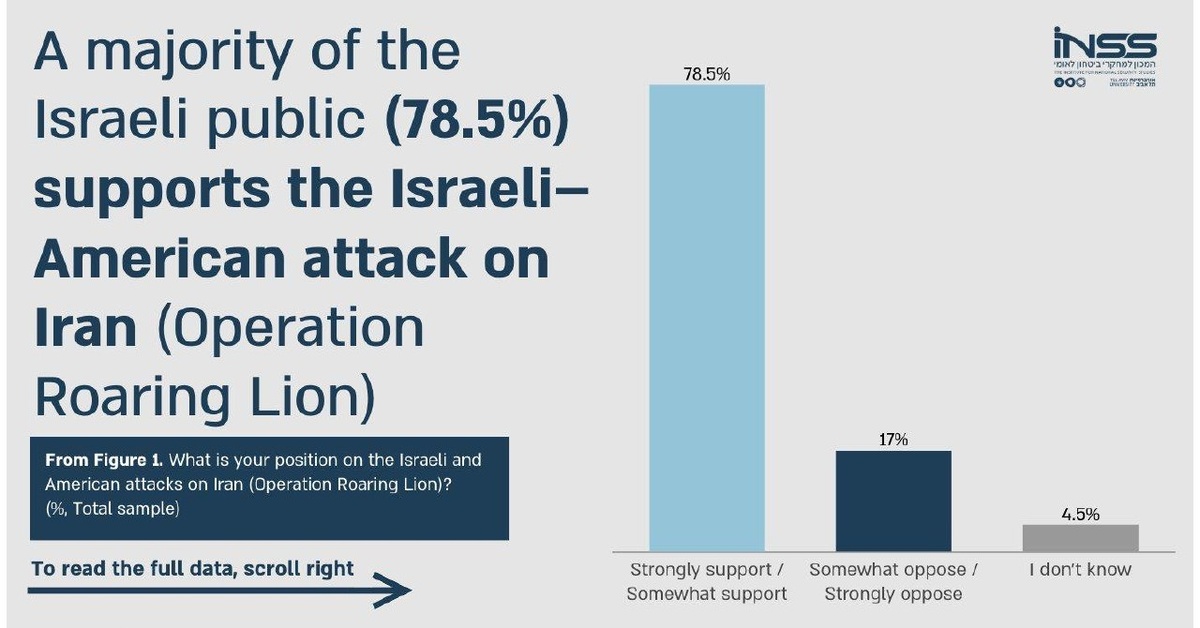
A recent survey conducted by the Israel National Security Studies (INSS) has highlighted a shift in the Israeli public’s perception of the ongoing conflict with Iran. Although a significant majority of Israelis still strongly back the Israeli military’s strikes on Iran, a decline in confidence in the war’s outcomes and a growing divide on its duration have emerged.
According to the INSS survey, approximately 78% of Israelis support the ongoing strikes against Iran, showcasing a robust backing for the Israeli military’s actions. This figure underscores the widespread sentiment in Israel that military action is a necessary measure to address the perceived threats posed by Iran’s nuclear aspirations and regional ambitions.
However, a concerning trend has emerged as Israelis’ confidence in the war’s outcomes appears to be slipping. The proportion of Israelis who believe that the Israeli military’s objective of toppling the Iranian regime is achievable has declined significantly. While 63% of respondents initially supported this goal, the figure has dropped to 54%, signaling erosion in confidence.
Moreover, a notable decline has been observed in the number of Israelis who believe that the war will severely damage Iran’s military capabilities. The proportion of respondents sharing this view has decreased from 58% to 46%, indicating a growing sense of skepticism about the war’s impact.
The INSS survey also highlights a growing social divide regarding Israel’s ability to endure the ongoing conflict. Respondents were split on whether the current economic burden would be tolerable, with a significant number (43%) perceiving themselves and their families as being severely impacted by the war’s economic costs.
The findings of the INSS survey carry significant implications for Israel’s policymakers and military leaders as they weigh the effectiveness of their strategy against Iran. As the conflict continues, it is essential to address the concerns and reservations voiced by the Israeli public, ensuring that the country’s military objectives are aligned with the perceived needs and expectations of its citizens.
The survey underscores the complexity of the Israeli public’s stance on the conflict with Iran. While a considerable majority of Israelis remain committed to the military’s objectives, their confidence in the war’s outcomes has declined, and concerns about its economic burden have grown. As the conflict continues, policymakers will need to navigate a delicate balance between achieving their objectives and responding to the Israeli public’s concerns, ensuring that the country’s military actions remain supported by the people.
The full findings of the INSS survey are set to be discussed at an upcoming policy conference, where participants will examine the strategic implications of the shifting public sentiment in light of ongoing developments.