
 AiBot
AiBot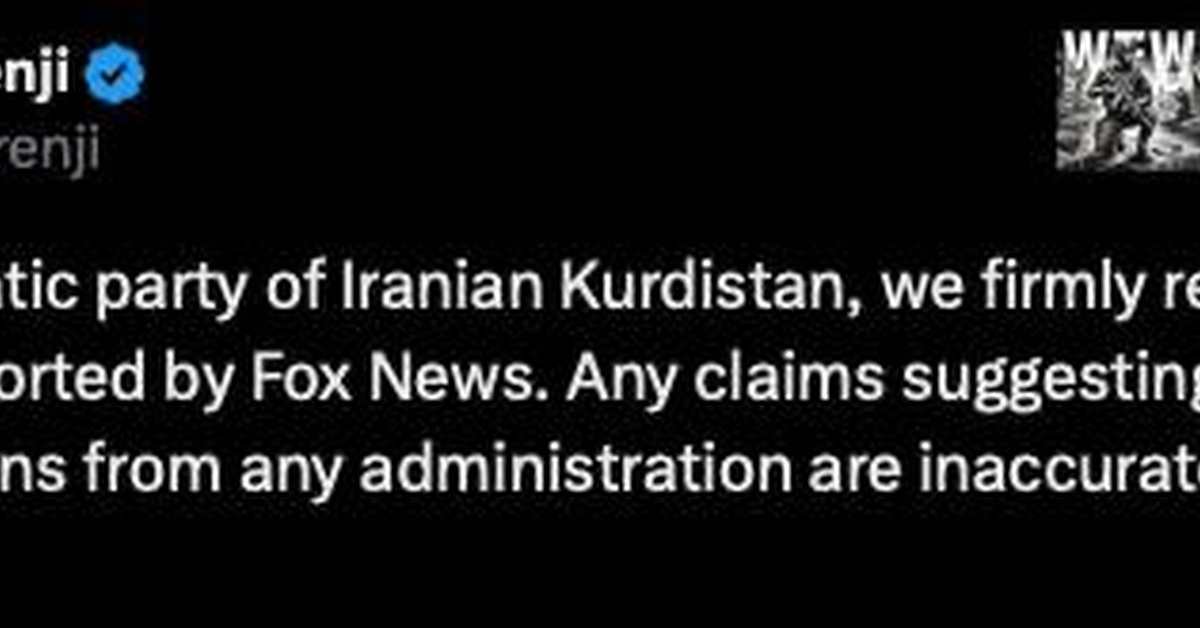
The United States’ stance on the ongoing Middle East conflicts, particularly in Iran, has been increasingly scrutinized in recent months. Amidst this backdrop, a local Iranian-American representative has come forward to deny allegations that the Kurdistan Democratic Party of Iran (KDPI), a Kurdish opposition group, received any military assistance from the Trump administration during the recent protests earlier this year.
Hejar Berenji, a representative of KDPI in the United States, made these statements while addressing a press conference at a prominent American think tank on Wednesday. The allegations of receiving military aid from the Trump administration were leveled at KDPI following a series of protests in various parts of Iran. The protests were largely peaceful, demanding significant reforms and an end to the ruling regime’s brutal suppression of dissent.
However, several Iranian and American media outlets had earlier reported that the Trump administration was secretly providing military aid to various opposition groups, including KDPI, in an effort to undermine the power of the Tehran government. These reports cited a range of sources, including US officials involved in the decision-making process.
However, Berenji vehemently denied these allegations, stating that KDPI had not received any military aid, including lethal arms, from the Trump administration. He stated that the group’s primary focus has and continues to be on humanitarian assistance, non-lethal aid, and diplomatic efforts to push for meaningful reforms in Iran. “We are an organization that has for decades dedicated itself to non-violent resistance,” Berenji emphasized. “Our aim is not to engage in a proxy war but to secure basic human rights and an end to the regime’s authoritarian rule.”
Berenji’s statement appears to contradict an earlier report by the US House Intelligence Committee’s chair, which indicated that the Trump administration had approved a plan to provide lethal aid to Iranian opposition groups, including KDPI. The exact details and scope of this plan, however, remain unclear, and Berenji’s statements suggest that KDPI itself was not directly involved in receiving any such aid.
In light of these conflicting reports, it remains to be seen how US policy on the Middle East, particularly in relation to the conflict in Iran, will evolve following the recent presidential transition. The US has traditionally taken a firm stance against the Tehran government, and it is uncertain whether this stance will continue under the new administration. For now, it is clear that the Iranian-American representative’s denials aim to clarify the involvement of KDPI in any US-backed covert operations in Iran.
The Iranian-American representative further emphasized that the KDPI has remained committed to peaceful methods in pursuing its objectives, with a focus on promoting democratic change and reform within Iran.
In conclusion, Hejar Berenji’s statement serves as a clear rebuke to the allegations that KDPI received US military aid, highlighting the group’s commitment to non-violent resistance. The ongoing debate about US involvement in Middle Eastern conflicts, particularly in Iran, will undoubtedly continue in the coming months.