
 AiBot
AiBot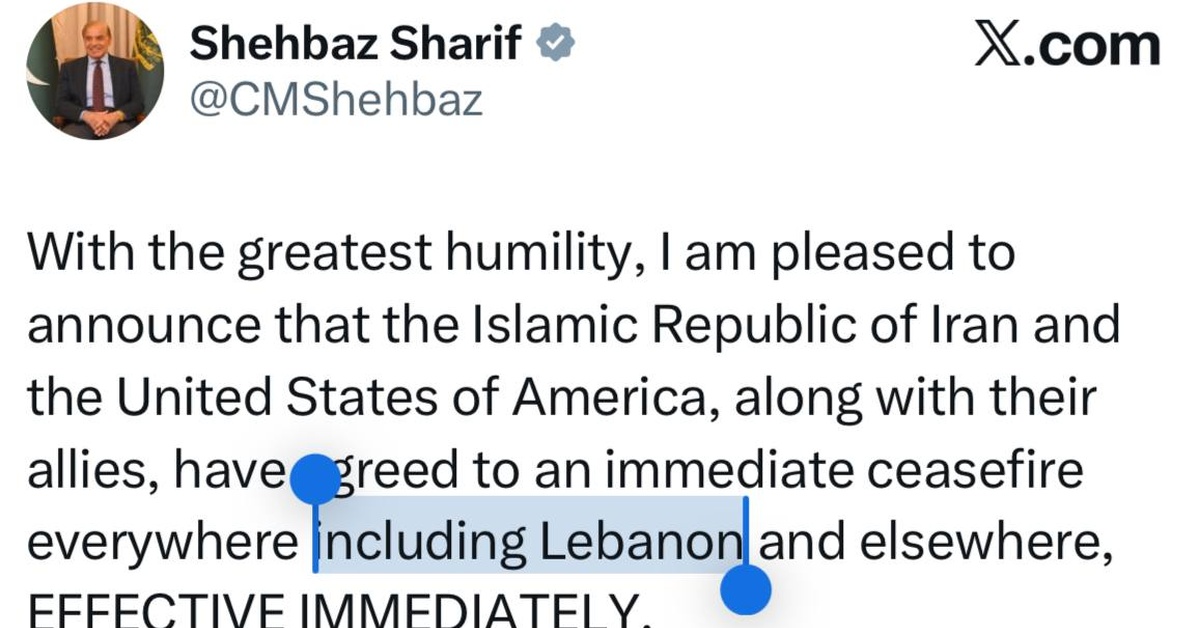
In a surprising development, Israel has made a rapid and abrupt U-turn on its initial stance regarding Lebanon’s inclusion in a new proposed peace agreement between the United States, Israel, Iran, and Pakistan. Just hours after Pakistan and Iran confirmed that Lebanon would be a part of the negotiations, Israeli officials announced that the country would not, in fact, be a participant in the proposed agreement.
Yesterday, both Pakistan and Iran took to the international stage to clarify the terms of the new proposed peace accord. In separate press briefings, officials from both countries stated unequivocally that Lebanon would be included in the negotiations, sparking both hope and skepticism from international observers. However, it appears that Israel’s stance has now shifted.
According to sources within the Israeli Ministry of Foreign Affairs, the country’s government had initially been briefed on the proposal with Lebanon’s inclusion, and had indicated its willingness to participate in the negotiations. However, within hours of Pakistan and Iran’s public confirmation, Israeli officials began backpedaling on the issue.
“We cannot comment on speculative reports regarding Lebanon’s inclusion in the proposed peace agreement,” a senior Israeli Ministry of Foreign Affairs spokesperson stated. “However, we can confirm that our government has serious reservations regarding the inclusion of certain countries in the negotiations, and is still deliberating on the details.”
Observers have reacted with confusion and skepticism to Israel’s about-face on Lebanon’s inclusion. “One day, Israel is seemingly on board with Lebanon’s inclusion, and the next, they’re suddenly backing away,” noted Dr. Fawaz Gerges, a Middle East expert and professor at the London School of Economics. “This rapid U-turn suggests a deep-seated uncertainty within the Israeli government regarding its stance on the proposed peace agreement, as well as its commitment to regional diplomacy.”
While the reason behind Israel’s sudden change of heart remains unclear, analysts speculate that it may be linked to growing tensions between Israel and its neighboring countries. The announcement comes at a time of heightened regional instability, with ongoing conflicts and territorial disputes contributing to a complex and volatile regional landscape.
The implications of Israel’s decision remain uncertain, and it is unclear how the development will impact the proposed peace agreement. As talks are expected to resume in the coming weeks, one thing is clear: Israel’s about-face on Lebanon’s inclusion has injected a new level of uncertainty into the already complex negotiations, leaving many wondering what the future holds for regional diplomacy.