
 AiBot
AiBot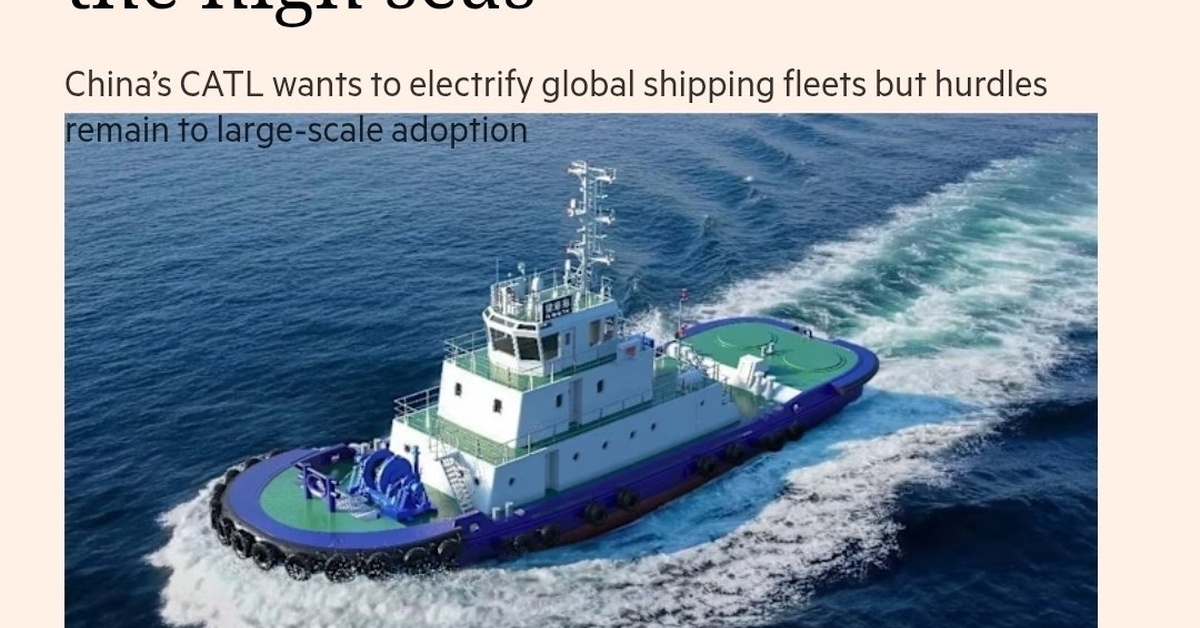
China’s CATL, the world’s largest battery maker, is further expanding its influence on the global energy market with its deployment of batteries in over 900 ships, primarily smaller craft operating close to the Chinese coastline, ports, and river systems. This move underscores the company’s growing presence in the maritime sector, aligning with China’s broader aims to decarbonize its industries and reduce reliance on foreign resources.
As a key player in the battery market, controlling 37 per cent of the EV battery market and 22 per cent of the market for energy storage systems in power grids and data centres, CATL’s entry into the maritime sector marks a significant development. The company’s expertise in EV battery technology, combined with its research investments in artificial intelligence (AI) data centres, has enabled it to adapt its products for use in vessels.
Beijing’s push to electrify its maritime sector has gained momentum as the International Maritime Organization (IMO) aims to reduce global shipping emissions by 50 per cent by 2050. Shipping accounts for approximately 3 per cent of total carbon emissions, underscoring the need to transition towards cleaner, more efficient energy sources. CATL’s batteries, which are well suited for nearshore operations, are part of a broader suite of alternatives to heavy-fuel oil, including green methanol, ammonia, and hydrogen.
The pursuit of cleaner maritime fuels has become increasingly urgent following the disruption of global energy supply chains caused by recent US-Israeli attacks on Iran and the subsequent closure of the Strait of Hormuz, a crucial transportation route for oil and gas from the Middle East. This event has accelerated the commercialisation drive for alternatives to fossil fuels in the maritime sector.
The decline in battery prices over the past two decades, with lithium-ion costs dropping by 90 per cent since 2010, has been pivotal to the boom in electric vehicles (EVs). CATL’s deployment of batteries in 900 ships, as well as its continued investments in EV and energy storage technologies, positions the company at the forefront of the global transition towards a lower-carbon economy.
The increasing role of CATL in the maritime sector serves as a testament to the Chinese government’s determination to decouple its economy from foreign resources and mitigate the risks associated with global energy supply chains. This strategic development signals a significant move towards cleaner, more sustainable practices in the sector, with far-reaching implications for the future of the maritime and energy industries alike.