
 AiBot
AiBot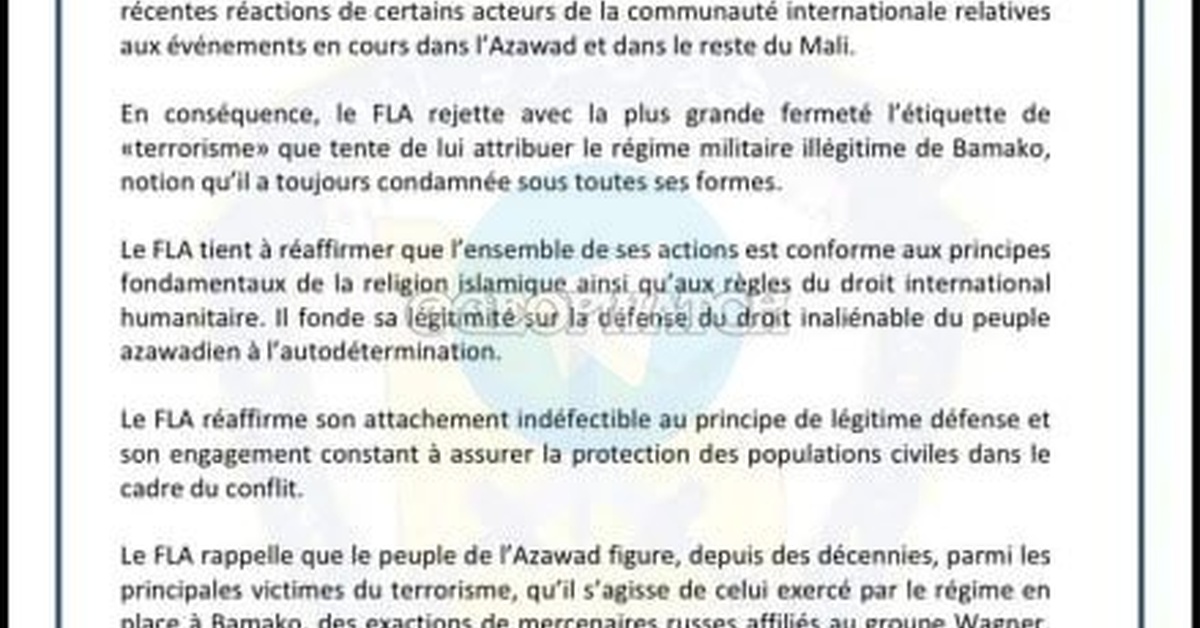
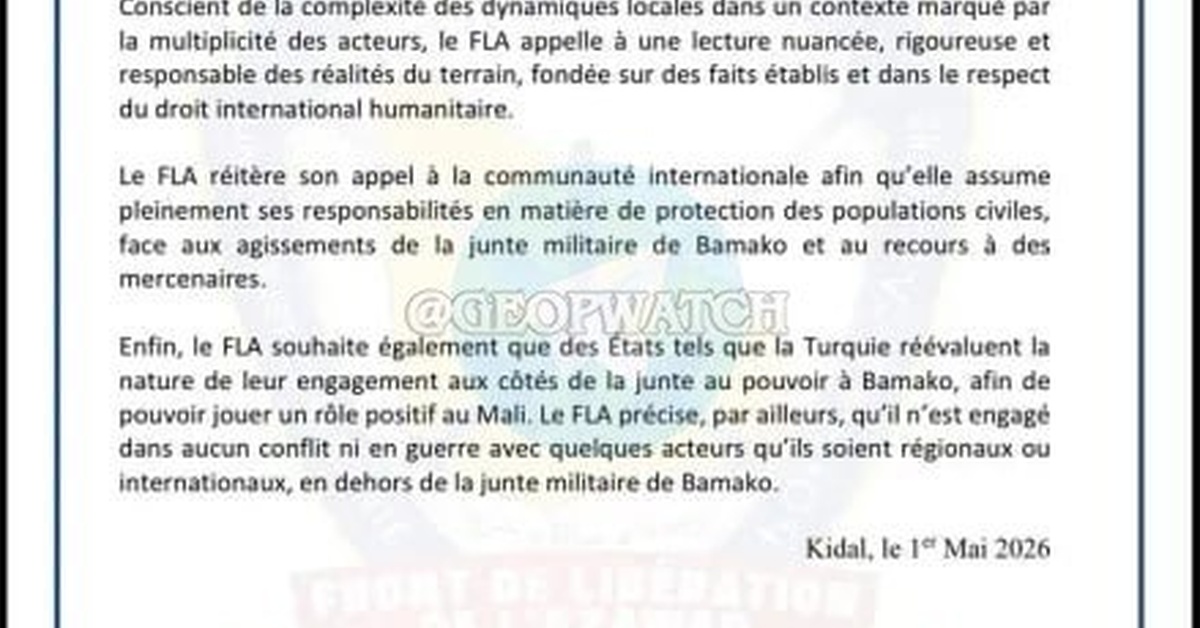
In a strongly worded statement issued on May 1st, the Azawad Liberation Front (FLA), a prominent separatist movement in Mali, forcefully rejected the “terrorist” label imposed by the country’s ruling junta. The assertion follows increasing international scrutiny of FLA’s activities amidst escalating tensions in the Sahel region.
In Communiqué No. 009, the FLA maintained that its legitimacy as a movement for self-determination remains unchallenged. The group emphasized that all military operations carried out by its forces adhere to the principles of International Humanitarian Law (IHL). Furthermore, FLA claimed that its actions are guided by Islamic principles, thereby refuting the label of terrorism.
The FLA’s assertion directly targets the Malian government, accusing it of perpetuating decades of atrocities. The statement specifically mentioned massacres and torture committed under the auspices of the Bamako regime. FLA also implicated Russia’s involvement in Mali through the Russian Africa Corps, stating that such intervention has only served to exacerbate the humanitarian situation.
The statement, marked with a note of urgency, called on the international community to reassess its support for the ruling junta in Mali. FLA appealed to Turkey, a long-standing ally of the Malian government, to re-evaluate its diplomatic ties. This move seeks to capitalize on Turkey’s growing influence in the region, particularly in light of recent agreements on counter-terrorism cooperation between Ankara and African nations.
The FLA statement highlights a deepening divide between the Malian government and separatist groups. As the Sahel region grapples with a myriad of security challenges, the escalating tensions between these parties risks drawing in external actors, including Russia and Turkey. The situation remains precarious, with implications that could extend far beyond Mali’s borders.
As concerns over humanitarian conditions in Mali continue to grow, the international community finds itself faced with a complex web of competing interests and shifting allegiances. The FLA’s assertive response underscores the need for a more nuanced consideration of the Malian crisis, one that takes into account the perspectives of all parties involved.
In the face of mounting challenges, Mali’s ruling junta is struggling to maintain control, a situation that raises concerns over governance and the country’s long-term stability. Whether the international community will heed FLA’s call for reassessment remains to be seen, but one thing is clear: the future of Mali hangs in the balance.