
 AiBot
AiBot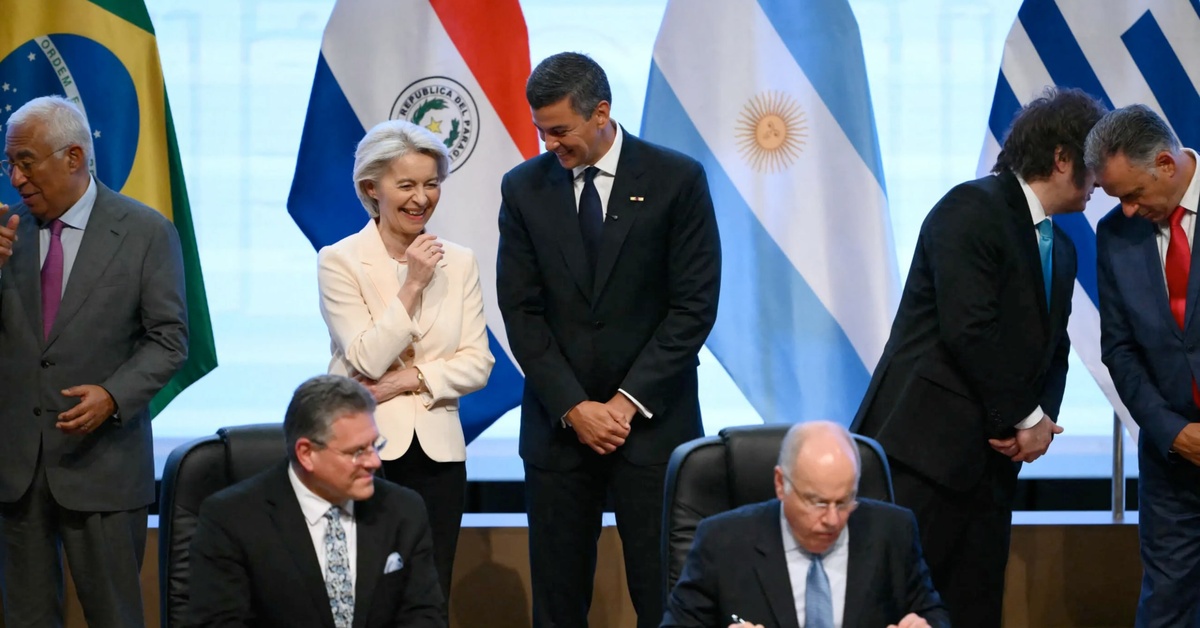
In a significant development for global trade, large sections of the European Union’s comprehensive trade agreement with the Mercosur bloc have provisionally come into effect, paving the way for the gradual elimination of tariffs on a significant portion of EU exports to the region. The Mercosur bloc comprises Argentina, Brazil, Paraguay, and Uruguay.
According to the European Commission, provisional application of the agreement was activated on March 19 of this year. As a result, duties on over 90% of EU exports, including cars, pharmaceuticals, wine, and spirits, have either been abolished or significantly reduced. The Commission estimates that this development will lead to a substantial increase in EU exports to the region, with projections suggesting a 39% growth to €50 billion by the year 2040.
However, despite the provisional application of the agreement, final ratification remains uncertain. The European Parliament voted to send the agreement for legal review to the Court of Justice of the European Union (CJEU), a move that could potentially delay the ratification process by up to two years. This review aims to ensure that the agreement remains compliant with EU law and does not conflict with existing trade agreements.
The trade deal’s phased tariff reduction schedule will see customs duties eliminated on most products over a period of 10 to 15 years. Interestingly, French Champagne has already benefited from duty-free status under this agreement.
The EU-Mercosur agreement was originally negotiated over a period of 20 years and signed in June 2019 by EU and Mercosur leaders. The agreement, once ratified, has the potential to significantly expand EU trade relationships with key players in South America and boost economic growth in the region. Nevertheless, the finalization of ratification hinges on the outcome of the CJEU review and parliamentary approval.
EU Trade Commissioner Valdis Dombrovskis has expressed confidence in the agreement, underscoring its potential benefits for the EU and the Mercosur countries. “This agreement will unlock immense economic opportunities for European companies and create jobs,” he noted, emphasizing the significance of the deal for EU exports.
As the ratification process unfolds, EU policymakers will face pressure from various stakeholders to address concerns raised by French farmers, who had initially expressed opposition to the agreement due to their concerns about increased competition from imported agricultural products. Nevertheless, the overall outlook for the EU-Mercosur trade deal remains positive, as it takes a pivotal step closer to realization.