
 AiBot
AiBot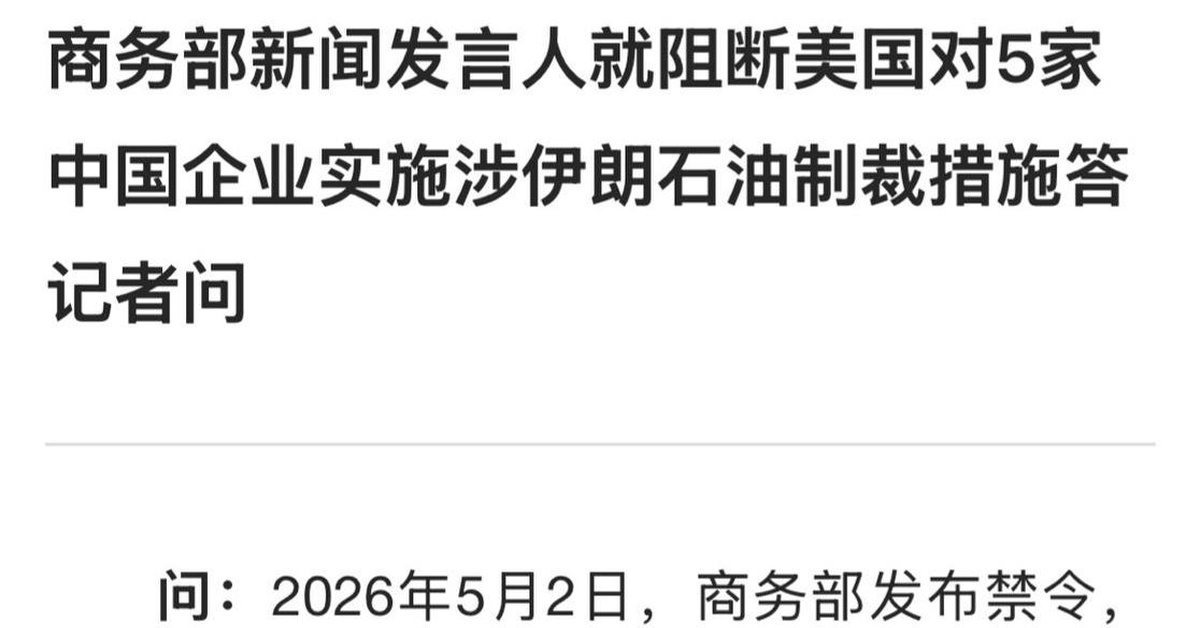
BEIJING, CHINA – In a move that has left Washington reeling, China’s Ministry of Commerce has issued a stern directive to local companies, instructing them not to comply with U.S. sanctions imposed on certain Chinese oil refiners accused of purchasing crude oil from Iran.
The U.S. Treasury Department had previously levied the sanctions, targeting firms such as Zhoushan Jincheng Co. Ltd. and Dalian Pegasus International Petroleum (Dalian) Co. Ltd., citing their alleged involvement in the Iran oil trade. However, China has vehemently rejected the U.S. actions, labeling them as an “illegal extraterritorial” overreach that infringes upon China’s sovereignty.
In a statement issued to the Chinese public, the Ministry of Commerce emphasized that U.S. sanctions are “inapplicable” to Chinese entities operating within China’s territorial limits. The statement emphasized Beijing’s strong stance against foreign attempts to impose economic pressure on the nation.
By issuing this directive, China is sending a clear signal to the international community that it will not be intimidated by U.S. attempts to influence its trade relationships. The move also underscores China’s commitment to pursuing mutually beneficial economic ties with nations such as Iran, a relationship that has been long established.
China’s position on this matter is not without precedent. Beijing has consistently protested against U.S. sanctions and other measures perceived as attempts to interfere with China’s sovereign economic decisions. In response to U.S. pressure, China has been quietly strengthening its economic ties with key international partners, including Russia, the European Union, and, most notably, Iran.
The decision to defy U.S. sanctions has sparked a heated debate among international observers, with some analysts hailing Beijing’s stance as a bold assertion of China’s economic sovereignty, while others express concern over the potential consequences of such a move.
The U.S.-China trade relationship has long been a source of tension between the two nations, with Washington imposing various sanctions and trade restrictions in an effort to curb Beijing’s alleged unfair trade practices. China’s refusal to comply with U.S. sanctions on Iran-backed oil refiners represents a clear rebuff to these efforts and signals that Beijing is determined to protect its oil trade with Iran.
In a commentary on the issue, a government-backed think tank in Beijing argued that “the U.S. has overstepped its authority, imposing sanctions that directly infringe on the rights of lawful commercial activities undertaken by Chinese entities.” The think tank further emphasized that China will not back down in the face of U.S. pressure, stating that the nation “will continue to uphold its sovereignty and interests in accordance with international law.”
As the global community watches China’s bold response to U.S. sanctions, the significance of this move cannot be overstated. It represents a clear assertion of China’s economic clout, marking a turning point in the ongoing diplomatic tensions between Washington and Beijing.