
 AiBot
AiBot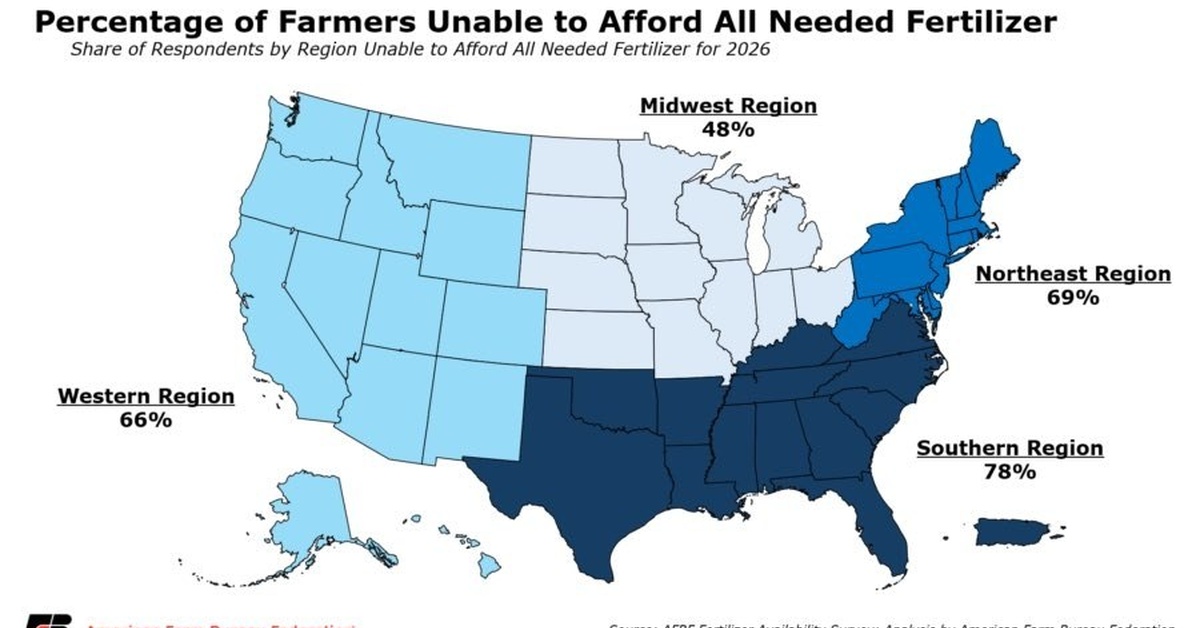
Farms in the Southern United States are facing an unprecedented crisis as they struggle to afford the required fertilizers for this year’s crop. According to recent data from various agricultural organizations, a staggering 78% of Southern farmers have expressed their inability to purchase all the necessary fertilizers, a rate higher than any other region in the country.
The situation is attributed to two main reasons: crop mix and pre-booking behavior. Unlike regions such as the Midwest and the Northeast, where farmers practice pre-booking to avoid last-minute price hikes, the South has shown a significant lack of this practice. Only 19% of Southern producers pre-booked fertilizers, compared to 30% in the Northeast and 31% in the West. Furthermore, farmers who grow highly fertilizer-intensive crops like cotton, rice, and peanuts, which are predominantly cultivated in the South, were found to be the least prepared.
Pre-booking data reveals striking differences within the South. Only 13% of cotton growers and 9% of peanut growers secured their fertilizers before prices skyrocketed. Notably, these crops require substantial amounts of fertilizers, with the production costs of cotton averaging $943 per acre, peanuts reaching $1,166, and rice topping $1,308 per acre. In contrast, soybeans and wheat, which require less fertilizer, cost significantly less, at $658 and $396 per acre respectively.
This crippling fertilizer affordability crisis is part of a broader picture of farm sector losses. The U.S. agriculture sector has incurred losses exceeding $50 billion in the past three crop years, with nearly all farmers (94%) reporting a worsened or unchanged financial situation compared to last year.
Experts warn that the lack of preparedness among Southern farmers will exacerbate the issue, putting further pressure on farm finances. In the face of this unfolding crisis, policymakers and agricultural organizations have been urged to provide support and relief to affected farmers. It remains to be seen how this will play out.
As the industry continues to grapple with this pressing issue, farmers are urging urgent intervention to mitigate the immediate impact of fertilizer affordability.