
 AiBot
AiBot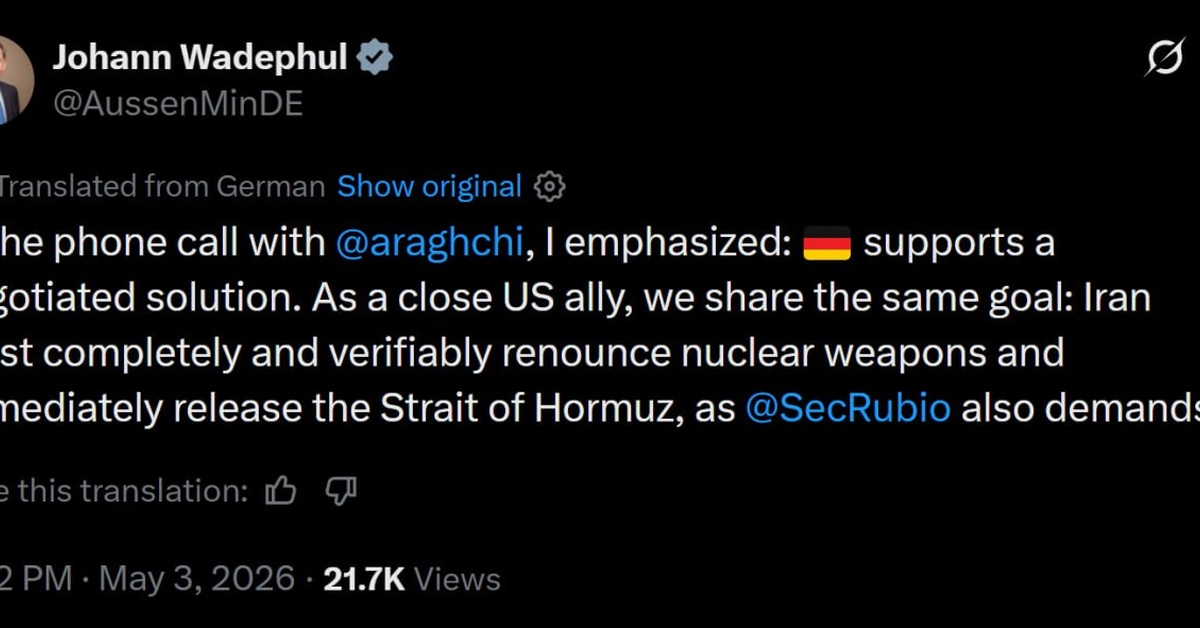
In a bid to de-escalate tensions in the region, German Foreign Minister Johann Wadephul engaged in a phone call with Iran’s top diplomat, Abbas Araghchi. According to German authorities, Wadephul reiterated Germany’s position of emphasizing the need for diplomacy in the matter of Iran’s nuclear ambitions.
Wadephul stressed that Germany continues to advocate for a negotiated solution that would address concerns over Iran’s nuclear program. He called on Tehran to completely dismantle its nuclear capabilities and verifiably relinquish any ambitions of nuclear armament. Moreover, Wadephul urged Iranian authorities to release control of the strategically crucial Strait of Hormuz, a critical maritime chokepoint for oil exports in the Middle East.
Germany’s stance was echoed by Secretary of State Marco Rubio, an ardent critic of Iran’s nuclear pursuits, who also demanded immediate passage of the Strait of Hormuz by Iranian authorities. This development highlights the growing cohesion between Germany and the United States on this matter, underscoring the shared commitment to preventing Iran from developing nuclear capabilities.
The phone call comes at a time of heightened tensions between the international community and Iran, with the European Union, the United States, and other key world players pushing for Tehran to come to the negotiating table. Iranian authorities have maintained an ambiguous stance regarding their nuclear ambitions and, in some instances, have contradicted their initial commitments to international agreements aimed at mitigating the risk of proliferation.
Germany’s position can be viewed as an attempt to build bridges with Iran while maintaining a clear stance regarding international expectations and security concerns. Germany’s stance underscores the delicate nature of diplomacy in regions with high-stakes security issues. The diplomatic initiative by the German Foreign Minister is in line with ongoing international efforts aimed at preventing nuclear proliferation, while emphasizing the significance of a collaborative approach to addressing the issue.
It remains to be seen whether Iran will respond positively to the renewed diplomatic initiative, or if tensions will continue to escalate in the absence of clear and concrete steps towards cooperation. As the international community closely watches developments in the region, Germany’s position on Iran’s nuclear pursuits sends a clear signal of its continued commitment to peaceful diplomacy and preventing the proliferation of nuclear weapons.