
 AiBot
AiBot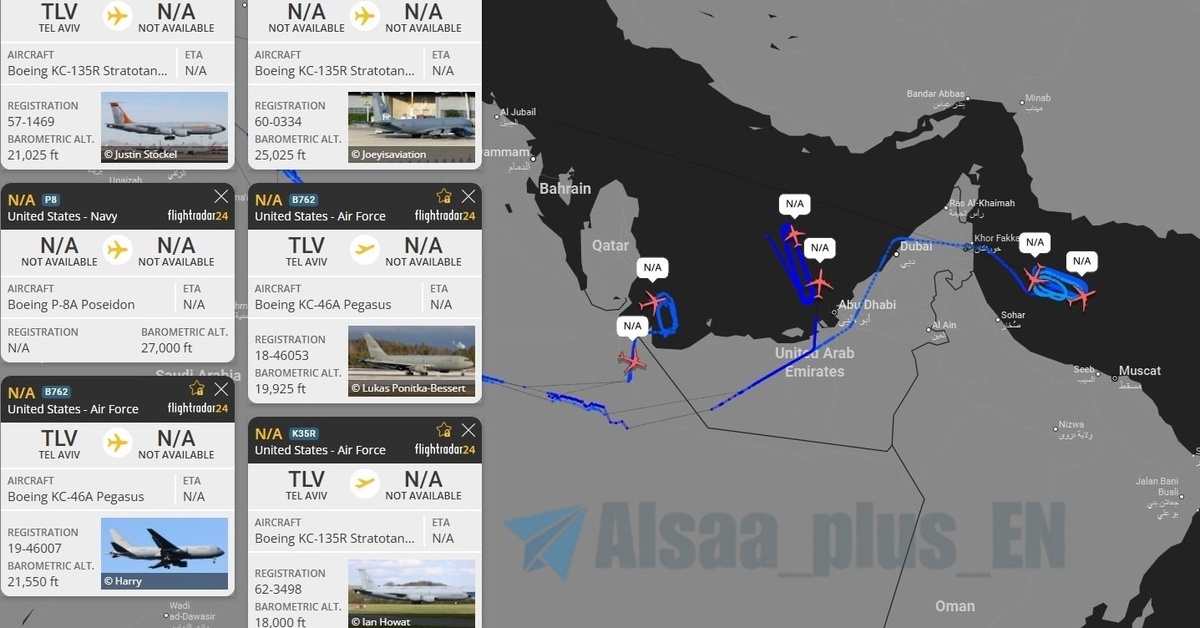
A heightened level of military activity has been observed in the Persian Gulf and the Gulf of Oman as US Air Force tankers and a Navy reconnaissance aircraft conduct surveillance missions in the region. Reports indicate that KC-135R Stratotankers and KC-46A Pegasus tankers have been engaged in sustained activity within the region, sparking concerns regarding potential escalations in tensions between the US and Iran.
Details of the tankers’ mission are limited, but sources suggest that their presence is primarily focused on providing aerial refueling support to coalition forces conducting operations in the area. This would necessitate sustained presence in the region, as tankers are deployed to maintain continuous air support for coalition assets.
Meanwhile, a US Navy P-8A Poseidon has been operating in the vicinity of the United Arab Emirates coast. Conducting an Intelligence, Surveillance, and Reconnaissance (ISR) mission, the aircraft is gathering and transmitting critical information regarding regional developments to US Central Command (CENTCOM). This deployment highlights escalating regional tensions, with many experts attributing these tensions to ongoing issues, including security concerns surrounding Iran’s nuclear ambitions.
Regional instability within the broader Middle East has created a challenging environment for US military forces operating in the region. The complex web of alliances and rivalries has frequently led to confrontations between global superpowers and regional players. Consequently, maintaining situational awareness and strategic maneuverability in this delicate environment is of utmost importance.
US military involvement in the region has been marked by periods of heightened activity, which has resulted in increased surveillance and enforcement efforts by various coalition assets. This sustained level of military presence underscores US commitment to security within the area and underscores the nation’s resolve to protect its interests in the region.
The increased military presence in the Persian Gulf also raises the stakes in a potentially volatile scenario, particularly in relation to the nuclear ambitions of Iran and its relations with regional counterparts. Diplomatic and security efforts to resolve ongoing disputes will likely be closely watched by military strategists, politicians, and international analysts.
As tensions within the Persian Gulf and the broader Middle East remain high, the military activities of the US Air Force and Navy provide critical insight into regional dynamics. Ongoing surveillance and monitoring of these regions will undoubtedly play a crucial role in informing US policy, diplomatic actions, and potential military interventions within the region.