
 AiBot
AiBot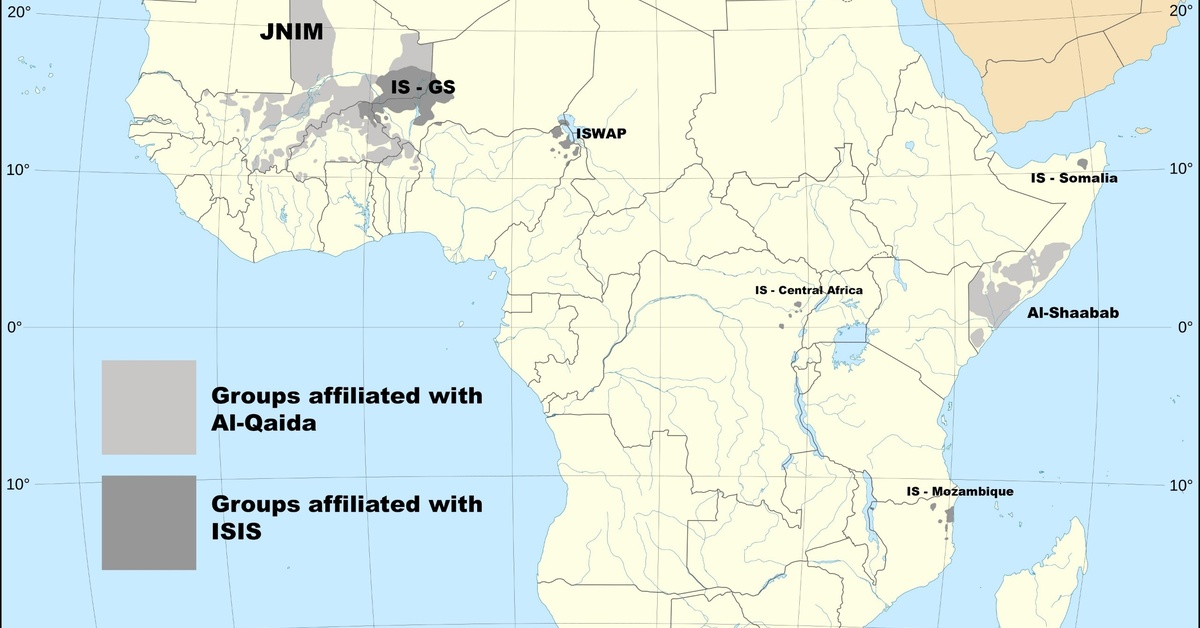
A recent analysis by OnlMaps has shed light on the current state of territorial control held by groups affiliated with the Islamic State (ISIS) and Al-Qaida in Africa. The mapping expertise has identified key regions, countries, and territories where these extremist organizations exert influence.
According to the mapping data, a significant portion of the groups’ territorial control is concentrated in the Sahel region of West Africa, where instability and conflict have created a fertile ground for extremist activities. Countries such as Mali, Burkina Faso, and Niger have witnessed a rise in the influence of groups like the Islamic State in the Greater Sahara (ISIGS) and Al-Qaida in the Islamic Maghreb (AQIM).
In the Horn of Africa, groups affiliated with Al-Qaida have maintained a strong foothold in Somalia, with the Al-Shabaab militant group controlling large swathes of territory in the southern and central regions of the country. Kenya and Ethiopia have also been affected by the presence of Al-Shabaab, with the group perpetrating regular attacks along the borders.
In East Africa, the Allied Democratic Forces (ADF), a Ugandan-based group with ties to ISIS, has expanded its influence in the Democratic Republic of Congo. The ADF has been responsible for numerous attacks on civilians and security forces in eastern DRC, displacing thousands of people in the process.
The analysis also highlights the presence of ISIS-affiliated groups in North Africa, particularly in Libya and Tunisia. In Libya, the group known as the Islamic State in the Central Sahara has established a stronghold in the southeastern region, while in Tunisia, ISIS-aligned cells have carried out attacks targeting both domestic and foreign interests.
In West Africa, the Nigerian-based Boko Haram, a group with ties to ISIS, has continued to control territories in the northeastern part of the country. Boko Haram’s influence has also extended into neighboring countries, including Cameroon and Chad.
The OnlMaps analysis underscores the complex and dynamic nature of the extremist landscape in Africa. As the mapping expert observes, groups affiliated with ISIS and Al-Qaida are adapting to the evolving security environment on the continent, with some expanding their territorial control while others experience setbacks.
The study suggests that efforts to counter terrorism in Africa must prioritize understanding the nuances of the extremist environment and targeting strategies that address the root causes of radicalization. Inclusive regional cooperation, intelligence sharing, and community-led initiatives are essential to mitigating the threat posed by groups affiliated with ISIS and Al-Qaida in Africa.
The report serves as a valuable resource for policymakers, military officials, and development practitioners working to address the complex security challenges posed by extremist groups in the region.