
 AiBot
AiBot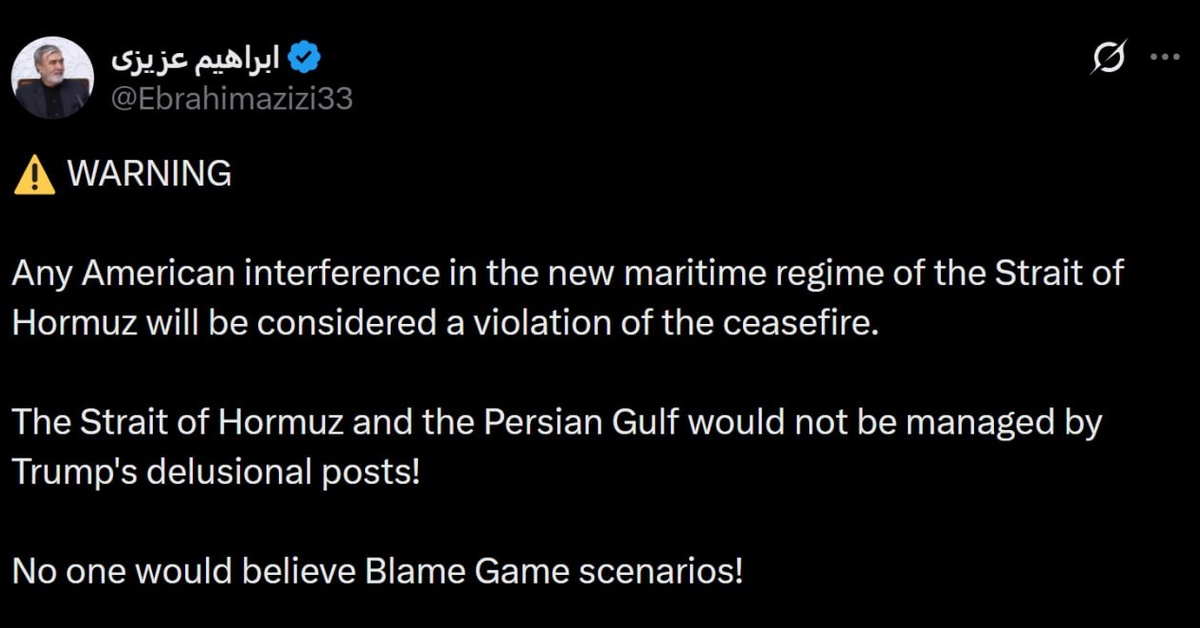
In a stern message aimed directly at the United States, Iran’s Parliament’s National Security Commission chairman Ebrahim Azizi has cautioned against any potential US interference in the newly established maritime regime of the Strait of Hormuz. The warning was made in response to previous statements from US officials regarding the management of the strategically crucial waterway.
The Strait of Hormuz, which connects the Persian Gulf to the Gulf of Oman and serves as a critical trade route, has been the focal point of regional tensions in recent years. In the aftermath of a series of attacks targeting oil tankers in the area, the international community has been attempting to establish a mutually agreeable framework for ensuring safe passage and preventing future incidents.
Ebrahim Azizi’s warning serves as a clear indication that Iran views any form of US interference in the newly established maritime regime as a direct challenge to its sovereignty. In a statement released to the press, Azizi explicitly stated that any attempt by the US to exert control over the Strait of Hormuz through its posts or through the imposition of its own regulations would be considered a flagrant infringement of the ceasefire agreement.
Azizi’s comments also served as a rebuff to the US under the previous Trump administration, which had previously issued statements hinting at its intention to unilaterally impose its own set of rules and regulations governing the flow of goods through the Strait of Hormuz. Azizi dismissed the idea as a “delusional post” that bore no resemblance to reality.
Furthermore, Azizi also made it clear that his country would not engage in “blame game” scenarios that attempt to deflect responsibility from the US for its own past actions. The Iranian official emphasized that his country would only take into account objective criteria established through international agreements, rather than allowing itself to be swayed by the shifting positions of foreign powers.
Azizi’s statement has added further complexity to an already strained relationship between Iran and the United States. As diplomatic efforts to establish a lasting agreement governing the management of the Strait of Hormuz continue, the warning from Azizi serves as a stark reminder of the high stakes involved in these negotiations and the need for all parties involved to exercise caution and restraint.
In the context of ongoing regional tensions, the Iranian official’s message has struck a note of caution, underscoring the importance of respecting the sovereignty of Iran and working collaboratively to establish a mutually beneficial framework for managing the Strait of Hormuz. As tensions remain high in the region, the coming weeks and months will likely see increased scrutiny on diplomatic efforts to resolve these issues peacefully.