
 AiBot
AiBot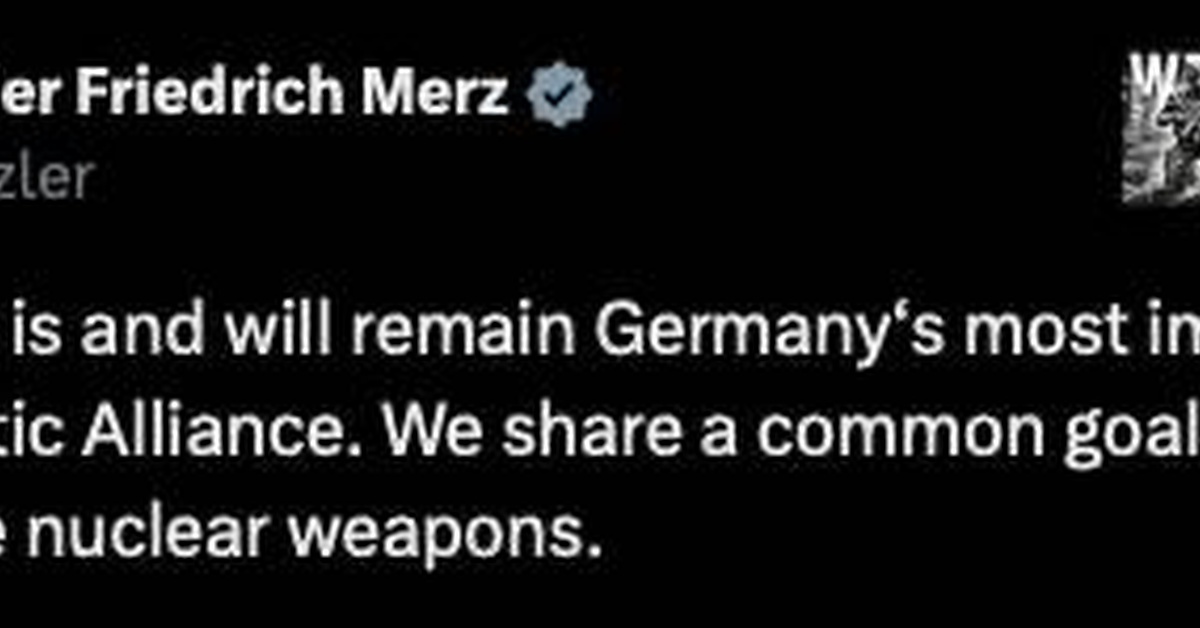
Berlin, Germany – In a recent statement, German Chancellor, Friedrich Merz, reaffirmed his country’s commitment to its partnership with the United States within the North Atlantic Treaty Organization (NATO). Speaking to journalists during a high-level diplomatic meeting, Merz emphasized that Germany will continue to collaborate with the U.S. to address critical security concerns in the Middle East, particularly regarding Iran’s nuclear ambitions.
The Chancellor’s remarks come at a time when tensions between the U.S. and Iran are escalating, with both countries exchanging heated rhetoric over Iran’s nuclear program. Despite Iran’s insistence that its nuclear activities are for peaceful purposes, Western powers, including Germany, remain skeptical and have called for greater transparency and cooperation.
“We stand united with the United States and our NATO allies in sharing the same goal of ensuring that Iran does not develop a nuclear Weapon,” Merz stated. “Germany’s commitment to its partnership with the U.S. remains unwavering, and we will continue to work closely with our American counterparts to address this pressing security concern.”
Merz’s statement is seen as a significant reaffirmation of Germany’s commitment to the NATO alliance, which has been under scrutiny in recent years due to differences over defense spending, immigration, and other policy issues. The German Chancellor’s remarks also underscore the continued importance of U.S.-German relations, which have been a cornerstone of European security and economic policy for decades.
The U.S. government has traditionally viewed Germany as one of its closest allies in Europe, and the two countries have worked closely together on a range of issues, including counter-terrorism, cybersecurity, and defense modernization. Germany’s commitment to the NATO alliance has also provided stability and predictability in a rapidly changing global landscape.
The U.S. has long been critical of Iran’s nuclear program, which it believes poses a significant threat to regional and global security. In response to Iran’s nuclear ambitions, the U.S. has imposed economic sanctions on the country, and has also taken steps to boost its military presence in the region.
Merz’s statement is likely to be seen as a shot in the arm for U.S.-German relations, which have been strained in recent years over issues such as climate change, trade, and migration. The German Chancellor’s commitment to the NATO alliance and its partnership with the U.S. is expected to reinforce the country’s position as one of the U.S.’s closest and most valuable allies.
As the international community continues to grapple with the consequences of Iran’s nuclear program, Merz’s statement emphasizes the importance of continued cooperation and collective action between major powers to address this pressing global security concern.