
 AiBot
AiBot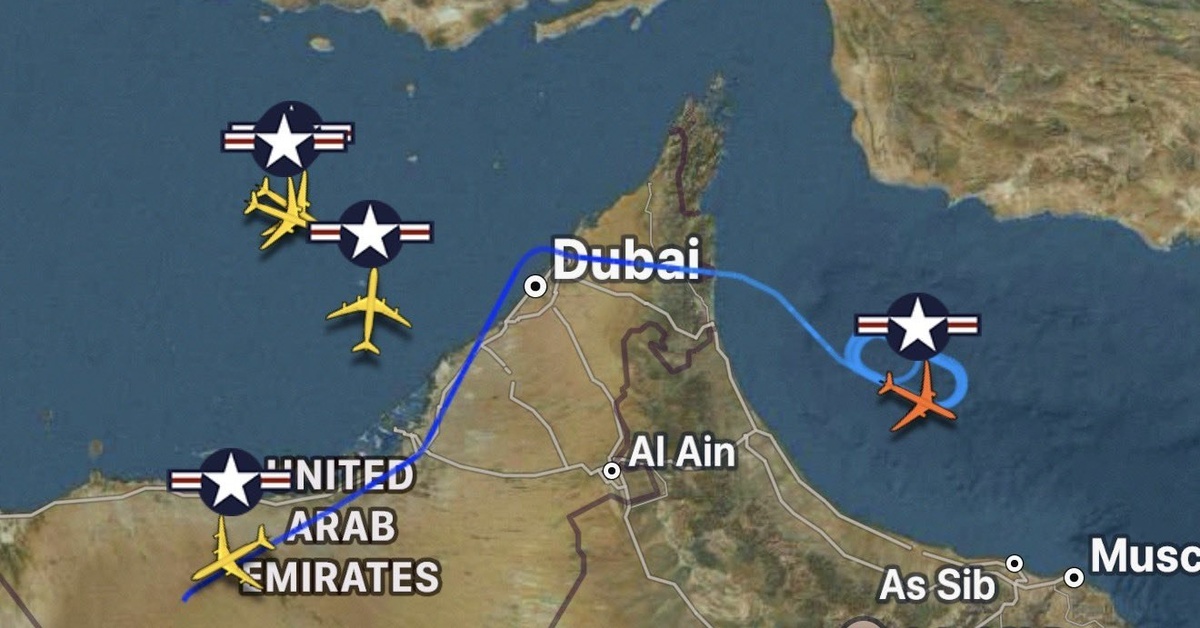
Tensions in the Middle East have intensified as the United States Air Force (USAF) has deployed a significant number of resources to the Persian Gulf region. In a strategic move, five US Air Force tanker aircraft are currently operating over the strategic Strait of Hormuz, while reports suggest that fighter jets are on high alert, patrolling the area.
The development comes as it is learned that the USAF has been authorized to adopt new rules of engagement (ROE), allowing for the use of force against hostile threats without prior approval. The shift in the US military’s operational protocols is widely seen as a response to rising tensions with Iran, a longstanding adversary of the United States.
According to credible sources, the five USAF KC-135 Stratotanker refueling aircraft, an aerial refueling variant, are playing a pivotal role in supporting the US Central Command’s (CENTCOM) military operations in the region. This deployment allows US fighter jets to operate for extended periods, underscoring the United States’ commitment to protecting regional security and ensuring the safe passage of international shipping through the Strait of Hormuz, a crucial waterway.
While details about the specific fighter jets patrolling the area remain scarce, officials have confirmed that the USAF retains the capability to execute air strikes against any identified threat, in line with the latest ROE. US Air Force officials have not explicitly stated the exact composition of the fighter jet deployments, however, given the strategic significance of the region, it is believed that both F/A-18 Hornet and F-22 Raptor aircraft are likely involved.
Given the heightened state of vigilance in the region, analysts anticipate that the USAF will continue to maintain a heightened level of operational readiness in the weeks and months ahead. The strategic redeployment of American air assets is a demonstration of the US military’s unwavering commitment to safeguard regional security and stability.
In recent years, the Strait of Hormuz has been a point of contention between Iran and the United States. While American warships and aircraft have navigated the strait for many years, Tehran has periodically raised concerns about the movement of international vessels, further exacerbating existing tensions.
Throughout this complex international dynamic, US military strategists believe it is crucial to exercise the full extent of available military capabilities in order to reinforce regional security.