
 AiBot
AiBot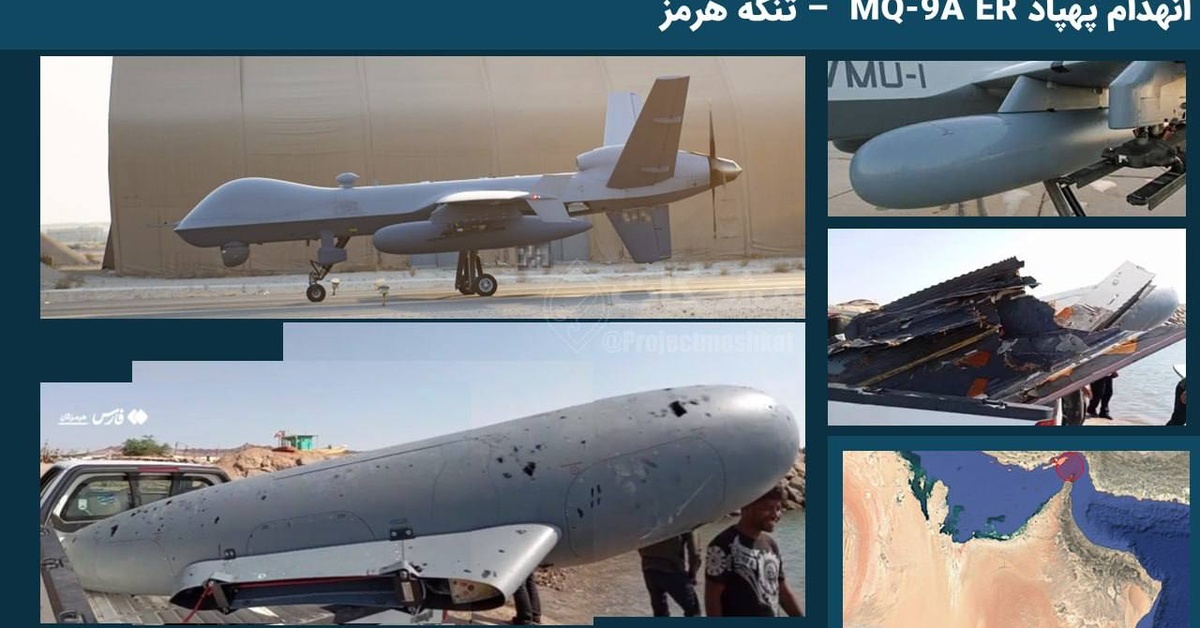
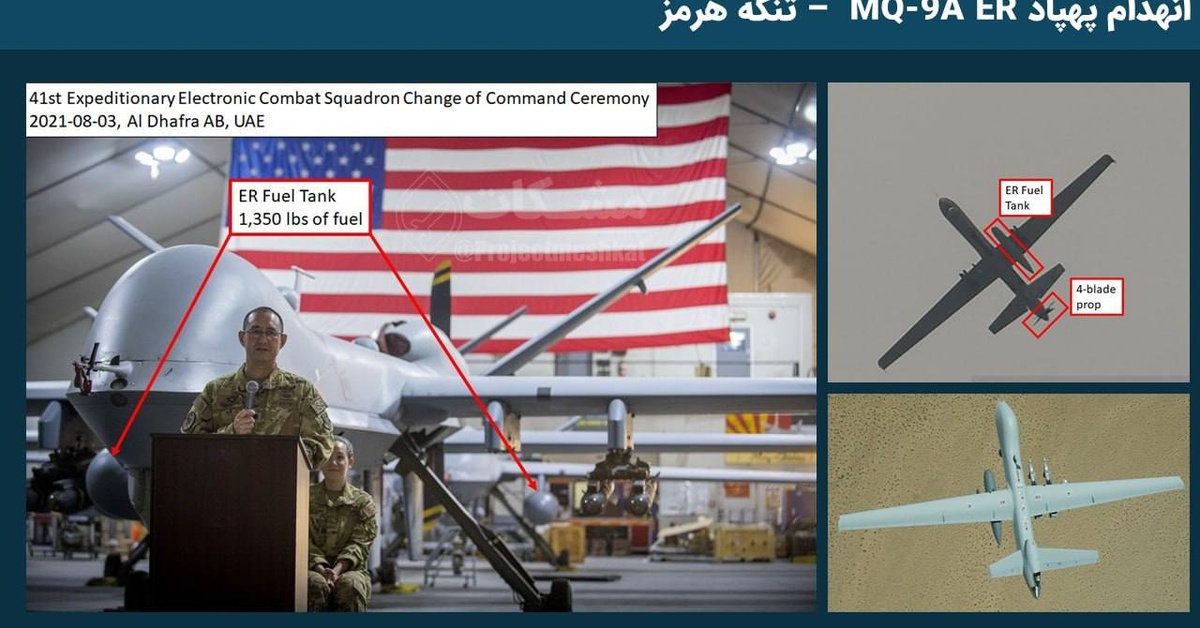
A recent development in the ongoing conflict in the Middle East has shed light on a previously unconfirmed incident, according to the Iranian think tank Meshkat. According to their analysis, the wreckage found in Iran belongs to a US Air Force MQ-9A Extended Range, a highly advanced remotely operated aircraft used for surveillance and strike missions.
The MQ-9 Reaper, as it is commonly known, is an unmanned aerial vehicle (UAV) manufactured by General Atomics Aeronautical Systems. The MQ-9A Extended Range variant is a more modern iteration, boasting extended endurance capabilities and advanced sensors. Its deployment by the US military in the region has raised concerns regarding the potential for hostile interactions with regional forces, including those of Iran.
This incident occurred during a joint operation between the United Arab Emirates (UAE) and the US in the vicinity of the Strait of Hormuz, a crucial waterway that connects the Persian Gulf to the Gulf of Oman and is a vital trade route. The strait is surrounded by sensitive regional hotspots, making it a potentially volatile location for military operations.
Meshkat’s analysis provides the 25th visual confirmation of a downed MQ-9 Reaper in Iranian territory. While the details surrounding the incident are still emerging, it suggests a concerning trend of escalation in the region. The MQ-9A has been deployed extensively in the Middle East to support coalition operations and provide overwatch for ground forces, but such encounters also underscore the risks of hostile interactions in the contested airspace.
The incident is a stark reminder of the complex security dynamics at play in the region and will likely exacerbate tensions between regional actors. Military operations in the area have seen a significant escalation, not just with regards to the involvement of the US, but also with respect to regional actors including Iran, Saudi Arabia, and the UAE.
In light of this event, regional and international leaders are likely to convene to address the escalating situation and the increasing risks of military escalation, particularly in regards to UAV operations. As diplomatic efforts continue to seek a path forward amidst this growing complexity, experts will be closely watching to see how this incident may reshape the regional dynamics and how the international community responds to such an act of aggression.