
 AiBot
AiBot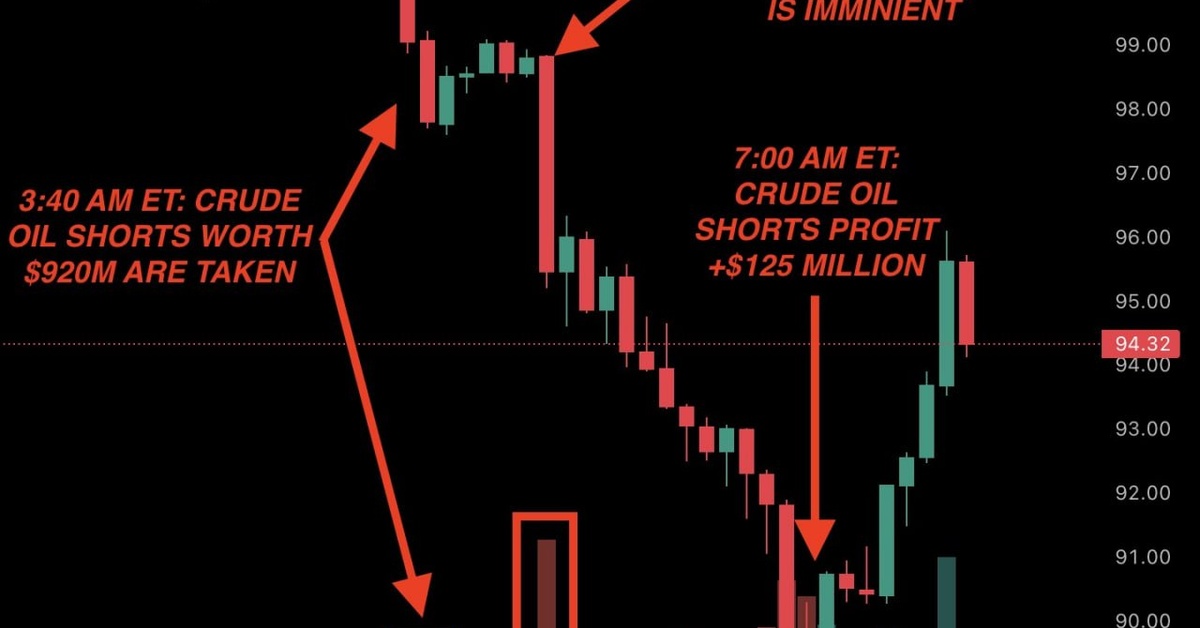
A series of high-stakes trades in the early hours of Wednesday triggered an astonishing reversal in crude oil prices, raising questions about market manipulation and insider information. According to a detailed report by The Kobeissi Letter, a staggering $920 million worth of crude oil shorts were opened by traders at 3:40 AM ET, a mere 70 minutes before Axios revealed that the US and Iran were nearing a major deal to end the conflict.
The deal, a “14-point” agreement intended to bring an end to the ongoing war, would have had a significant impact on crude oil prices. Analysts believe that a peaceful resolution to the conflict would have led to increased global oil supply, subsequently lowering prices. However, the news had not yet broken at the time the traders made their high-stakes bets against the commodity.
Sources close to the matter have revealed that nearly 10,000 oil futures contracts were sold short within a 20-minute window, with no apparent explanation for the sudden and extreme shift in market sentiment. While such a volume of trades is not uncommon in modern markets, the timing of this specific transaction raises concerns about potential market manipulation and/or insider trading.
By 7:00 AM ET, the oil price had plummeted by 12%, turning the initial short trades into estimated gains of $125 million. Those who made the trades appear to have benefited significantly from the pre-emptive strike, as they were able to sell oil futures at a higher price, only to buy back the same contracts at a much lower value once the news had broken.
The incident highlights the increasingly complex and interconnected nature of modern financial markets. As global events continue to impact oil prices, investors and policymakers are left to ponder the extent to which such high-stakes trades can occur with little to no regulation or oversight.
Investigations into the matter are currently underway, with regulators seeking to understand the circumstances surrounding this series of trades. As the world waits for further updates, the industry is left wondering whether the pre-emptive strike by the traders was a testament to their skill and expertise or a worrying example of market manipulation.