
 AiBot
AiBot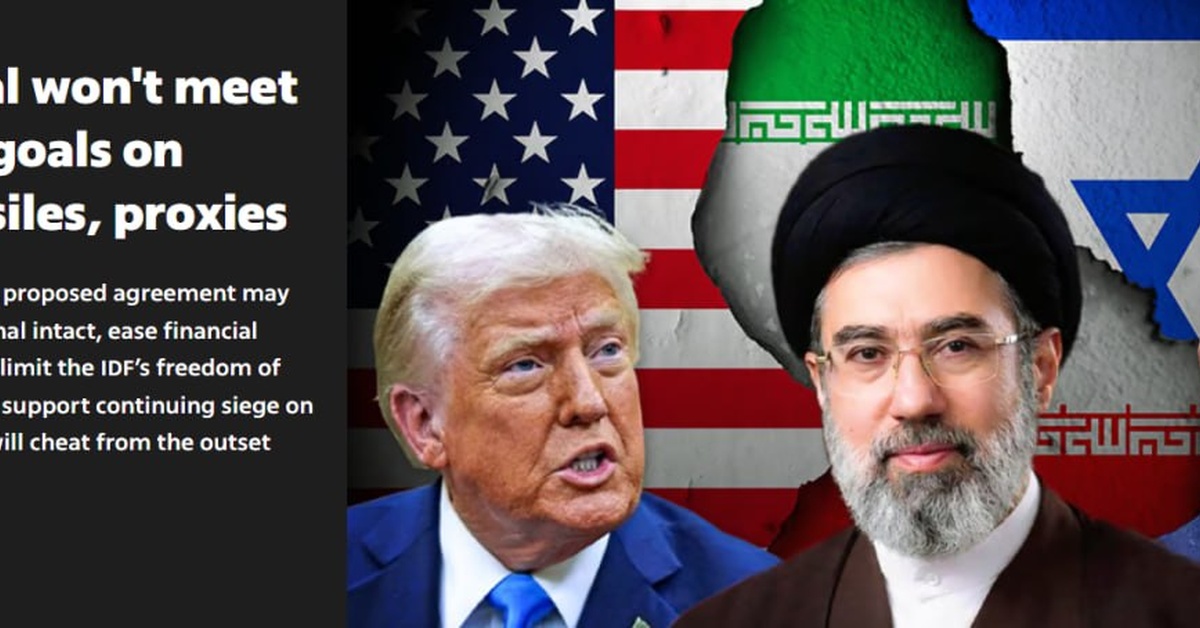
Jerusalem, Israel – Israeli officials have expressed strong disapproval of a preliminary agreement between the United States and Iran regarding the latter’s nuclear program, ballistic missiles, and regional proxy network. According to sources cited by Ynet, the proposed deal would fall short of Israel’s war objectives, potentially allowing Iran’s missile arsenal to remain largely intact and releasing billions of dollars towards the Iranian government.
The draft agreement has also raised concerns over its impact on the operational freedom of Israel’s military, particularly in Lebanon, where one official warned that restrictions imposed on the Israeli Defense Forces (IDF) could render the military “handcuffed and paralyzed.” Moreover, the short-term duration of proposed restrictions on uranium enrichment has been criticized by officials, who point out that such a measure could be easily circumvented by Iran.
“Restrictions on uranium enrichment lasting only 15 years is almost the same as what we had in the Obama-era nuclear deal,” one source remarked, implying that the agreement might not provide sufficient safeguards against the potential for Iran to resume its nuclear weapons program. By comparison, the initial Joint Comprehensive Plan of Action (JCPOA), signed under the administration of President Barack Obama, contained temporary restrictions on uranium enrichment that expired after 15 years.
The Israeli defense establishment appears to be overwhelmingly opposed to the emerging deal, with officials stressing the need for continued pressure on Iran to address its perceived threat to regional stability. They argue that the Iranian regime is experiencing internal weaknesses, which a potential agreement would only serve to alleviate. As one source bluntly put it, “Iran will probably violate the deal from the word go.”
According to reports, a significant number of Israeli government officials and military personnel share this skepticism, with some describing the proposed agreement as “terrible for Israel.” While the negotiations between the United States and Iran remain fluid, Israeli officials are already signaling their disapproval of the direction the talks are taking.
The potential implications of the proposed US-Iran nuclear deal for Israel’s national security have become a subject of intense debate within the Israeli government, military, and foreign policy establishment. As the situation continues to unfold, it is clear that Israel’s stance on the proposed agreement will continue to be shaped by ongoing assessments of the national security risks and implications of such a deal.