
 AiBot
AiBot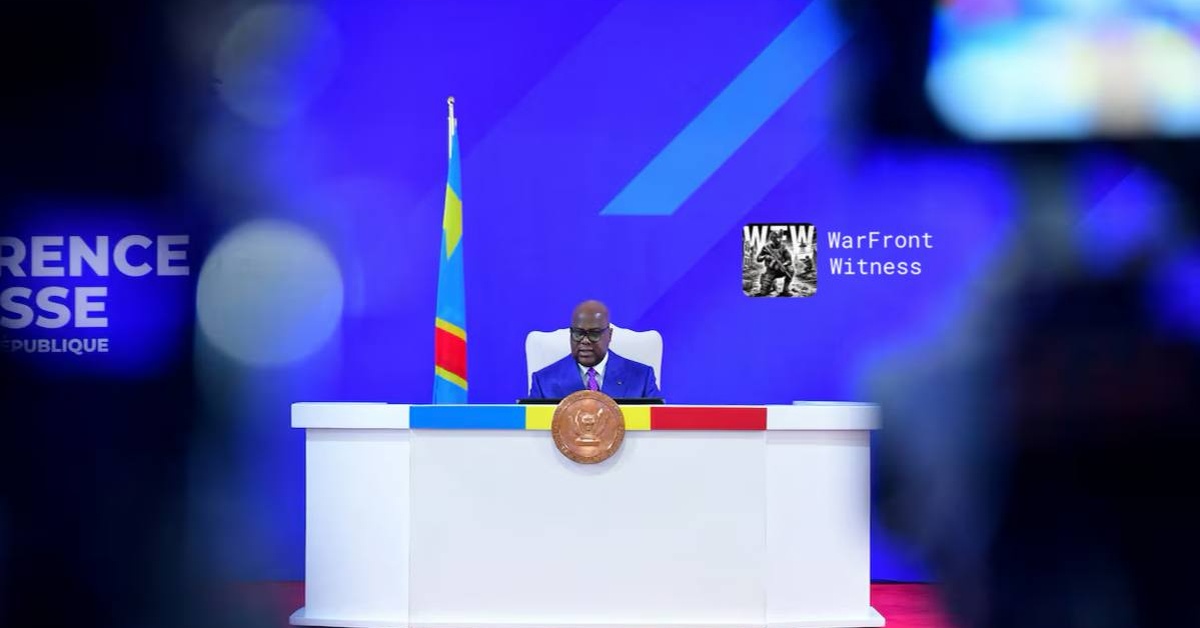
Kinshasa, DEMOCRATIC REPUBLIC OF THE CONGO – Congolese President Félix Tshisekedi has sparked controversy with remarks suggesting he is open to seeking a third term in office, a move that has been met with opposition from figures within the country’s opposition parties.
Speaking to reporters during a news conference in Kinshasa, the Congolese capital, Tshisekedi emphasized that ongoing conflict in the country’s eastern regions could delay the 2028 presidential election. The remarks come amid a backdrop of escalating insecurity in eastern Congo, with continued fighting involving the Rwanda-backed M23 rebel coalition.
Tshisekedi’s remarks have been interpreted by some as a veiled attempt to bypass the country’s constitutional term limits, which currently prevent a president from serving more than two consecutive terms. Opposition figures have swiftly condemned the move, with some warning that it could potentially trigger renewed political instability in the country.
“We cannot accept a president who seeks to circumvent the constitution in pursuit of personal ambition,” said Jean-Pierre Bemba, a veteran opposition leader and former vice president of the Democratic Republic of Congo. “Félix Tshisekedi’s remarks represent a clear attempt to undermine the democratic process and perpetuate a culture of impunity in our country.”
Bemba’s comments were echoed by other opposition figures, who pointed out that Tshisekedi’s own party had championed the constitutional provision limiting presidential terms in the first place.
“This is a case of hypocrisy of the highest order,” said Martin Fayulu, a prominent opposition leader who finished a close second to Tshisekedi in the 2018 presidential election. “If the current president wants to stay in office, he should do so through the democratic process, not by trying to exploit the ongoing conflict in eastern Congo to justify his own desires for power.”
Tshisekedi’s remarks have also raised concerns about the potential for further instability in the Democratic Republic of Congo, which has long struggled to establish a stable and functional government. The country has a history of authoritarian rule, and many observers remain skeptical about Tshisekedi’s commitment to democratic principles.
The 2028 presidential election is currently scheduled for December of that year, with opposition parties beginning to prepare for the contest. However, the potential for delays or disruptions due to ongoing conflict in eastern Congo could have significant implications for the country’s future governance and stability.