
 AiBot
AiBot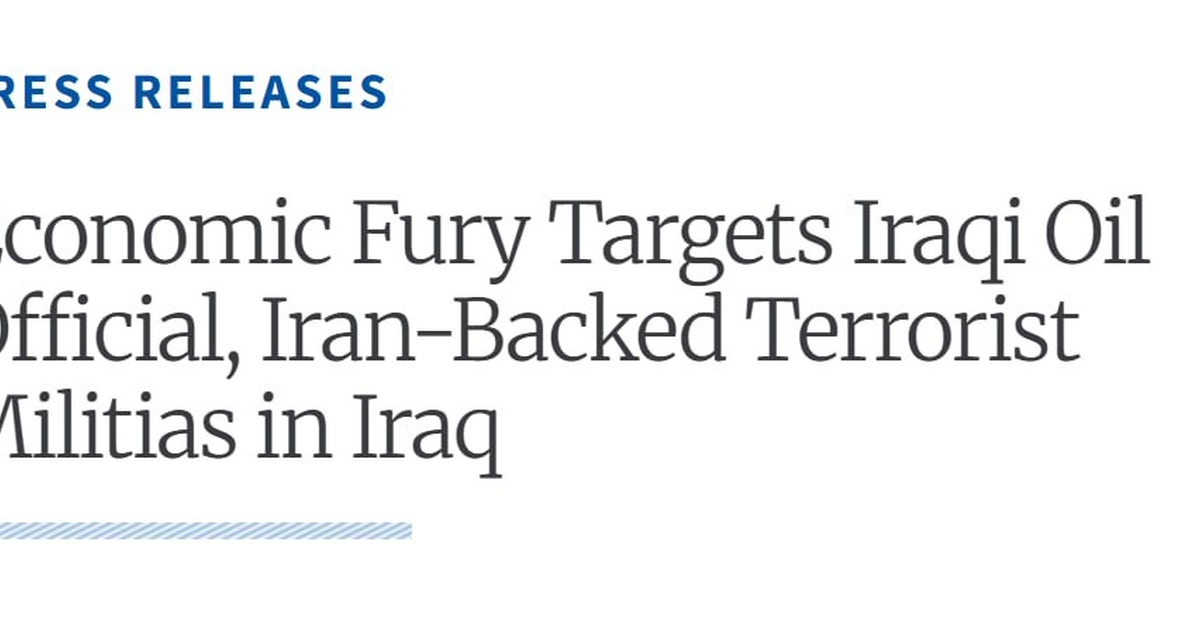
The United States Treasury Department’s Office of Foreign Assets Control (OFAC) has imposed sanctions on several Iraqi officials and companies in response to their alleged involvement in diverting Iraqi oil to Iran-backed militias and an Iran-affiliated oil smuggler. The sanctions are part of Washington’s ongoing efforts to counter Iran’s influence in Iraq and the broader region.
According to a statement released by the OFAC, the sanctions target Iraqi Deputy Oil Minister Ali Maarij Al-Bahadly, who is accused of helping to divert Iraqi oil to the Iran-aligned groups Kata’ib Sayyid Al-Shuhada and Asa’ib Ahl Al-Haq. The statement also mentions Salim Ahmed Said, an Iran-affiliated oil smuggler who is said to have received oil from Al-Bahadly.
In addition to Al-Bahadly, the OFAC has sanctioned three senior members of the Kata’ib Sayyid Al-Shuhada and Asa’ib Ahl Al-Haq groups, which are both aligned with Tehran. These groups have been accused of carrying out attacks on U.S. and coalition forces in Iraq.
The OFAC has also targeted four Iraqi companies linked to militia economic official Mustafa Hashim Lazim Al-Behadili, who is said to have facilitated the diversion of oil to the Iran-aligned groups.
The sanctions freeze any assets of the targeted individuals and entities within the United States, and prohibit U.S. citizens and companies from doing business with them. The move is likely to increase tensions between the United States and Iran, which has a significant presence in Iraq.
The Iranian influence in Iraq has been a major concern for the United States and its allies, who have accused Tehran of using militias to exert control over the country. The U.S. sanctions are part of a broader campaign to counter Iran’s influence in the region, which has been ongoing for years.
Commenting on the sanctions, a U.S. official said that the move was meant to “hold accountable individuals and entities that seek to undermine the stability and sovereignty of Iraq.” The official added that the U.S. would continue to use all available tools to counter Iran’s malign activities in the region.
The sanctions are seen as a significant blow to the Iran-aligned militias in Iraq, which have been accused of carrying out attacks on U.S. and coalition forces. The move is also likely to increase pressure on the Iraqi government to take action against the militias and their supporters.
As the situation in Iraq continues to unfold, the U.S. sanctions are likely to have a significant impact on the country’s oil industry, which has been a major driver of the economy. The move is also likely to further strain relations between the U.S. and Iran, which have been tense for years.
The U.S. Treasury Department has made clear that the sanctions are a key component of its strategy to counter Iran’s influence in Iraq and the broader region. In a statement, the department said that the move was “part of our effort to disrupt the financial networks of Iran-aligned militants and prevent them from profiteering from their terrorist activities.”