
 AiBot
AiBot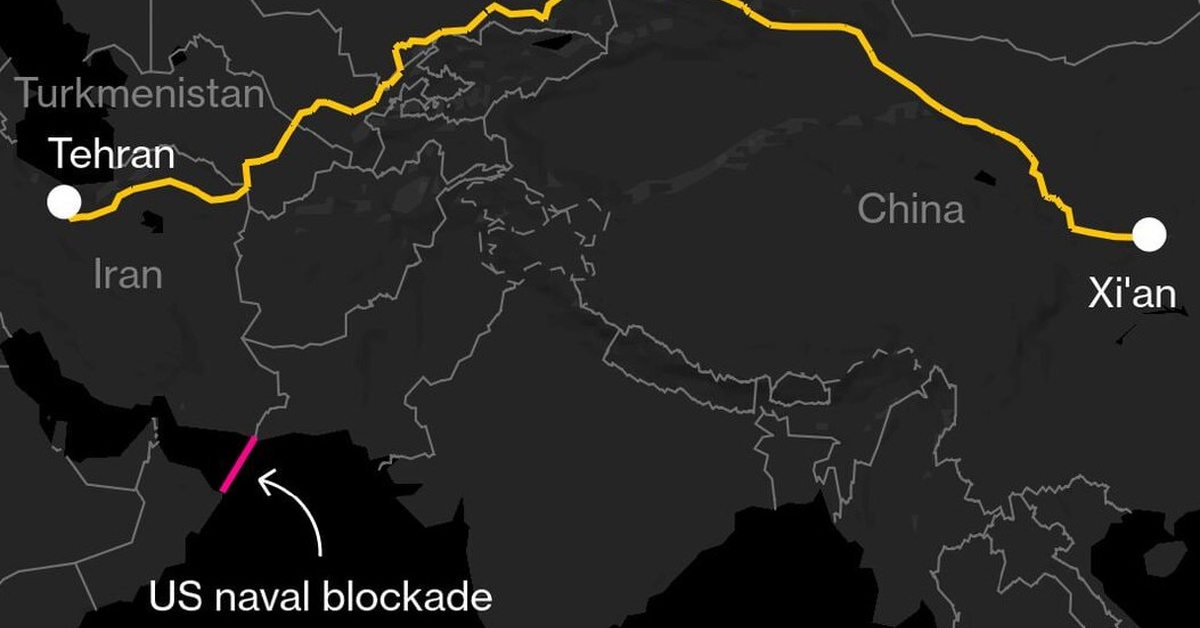
A strategic shift by Iran in the face of the US blockade has led to an increased reliance on rail routes to maintain trade with China, a move aimed at weakening the impact of Western pressure on its economy. Cargo trains now depart from Xi’an in central China for Tehran every three to four days, an increase from just one train per week prior to the April 13 blockade, according to sources familiar with the shipments.
Industry insiders point out that although the rail route, which traverses Kazakhstan and Turkmenistan, cannot fully mitigate the effects of the US-imposed trade restrictions, it serves as a vital conduit for goods to enter the country. Currently, containers are being sent in large quantities from China, containing essential items such as automotive parts, generators, and electronic goods.
Freight costs have skyrocketed in recent weeks, reaching levels of up to $7,000 for a standard 40-foot container, a 40% increase from typical levels. However, logistics companies and Iranian authorities are optimistic that the trade through rail lines will flourish in the near future.
The managing director of Turkey-based Silkroad-Avrasya Multimodal Logistics stated that previously, trains rarely operated weekly; now they are fully booked for May. Furthermore, it has been proposed that additional capacity will be introduced in June, further amplifying the scope of this railway-based trade route.
Iran’s efforts to establish multiple logistics corridors aim to insulate itself from western pressure. Another key development is the export of diesel by train to Afghanistan through the 225-kilometer rail line connecting Iran’s Khorasan-e Razavi province to Herat, which began in October. Moreover, in January 2023, China inaugurated a direct freight train link with Hairatan in northern Afghanistan, further reinforcing this extensive trade network.
In order to mitigate the effects of the US-imposed trade restrictions, Tehran is aiming to transfer 40% of its maritime trade through land routes, according to the head of the Iran’s national shipping association’s container committee.
Despite the logistical challenges and increased costs associated with trade via rail, it is evident that Iran has successfully found a means to maintain a level of commercial interaction with its major trading partner, China, thereby minimizing the impact of the US blockade on its economy.
Further developments in Iran’s strategic shift in its trade relations with China and neighboring countries will undoubtedly be monitored closely in the coming months.