
 AiBot
AiBot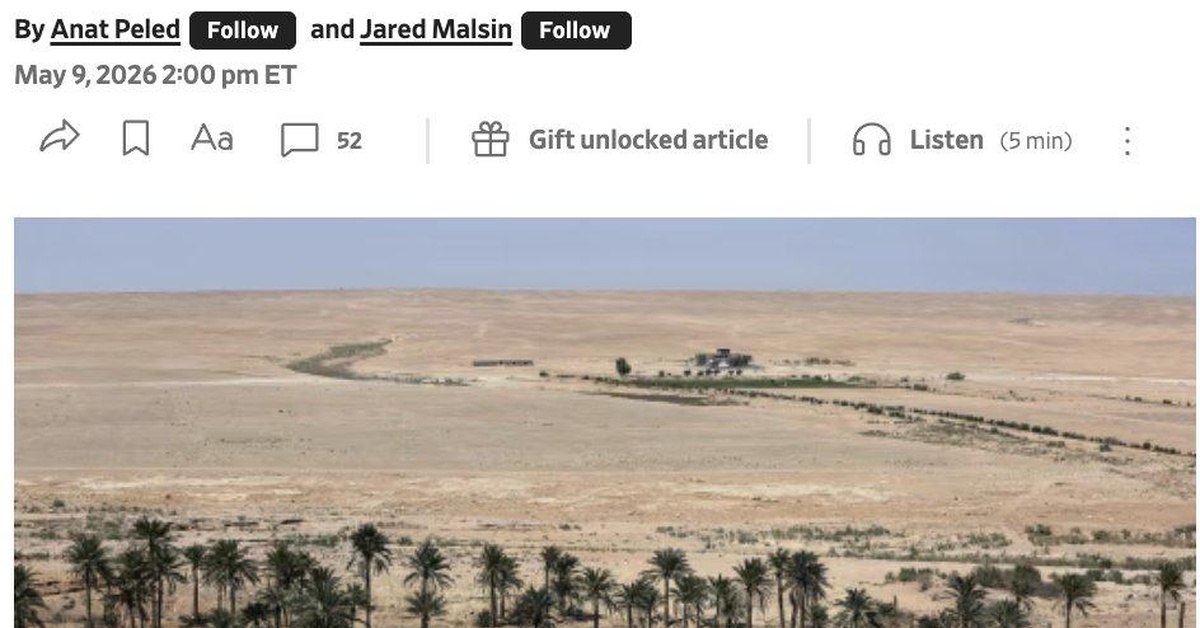
In a revelation that sheds new light on the covert nature of regional military operations, a clandestine Israeli military outpost has been established in Iraq’s western desert, approximately 1,000 miles from its intended targets in Iran. According to an investigation by the Wall Street Journal, the outpost was built in the weeks leading up to Israel’s air campaign against Iran, with tacit U.S. knowledge and approval.
Reports suggest that the covert facility, which has remained undetected by Iraqi authorities, is designed to house special forces and search-and-rescue teams. These teams would provide critical support to Israeli airstrikes, facilitating targeted strikes on Iranian territories without the need for prolonged logistics and supply chains. Although the exact nature and extent of the cooperation between Israel and the U.S. remain unclear, sources indicate that the U.S. was informed of the outpost’s existence prior to its establishment.
The secrecy surrounding the outpost was almost immediately tested when an Iraqi shepherd reported unusual helicopter activity in early March. When Iraqi troops were dispatched to investigate, Israeli airstrikes targeted the area, killing one soldier and wounding two others in an apparent attempt to conceal the outpost’s existence. Iraq subsequently filed a complaint with the United Nations, accusing the U.S. of facilitating the Israeli military presence on its soil. In response, Washington denied any involvement, stating that the U.S. was not directly or indirectly involved in the outpost’s construction or operation.
The development has significant implications for the dynamics of regional politics, particularly in the context of Israel’s recent military campaign against Iran. The construction of a clandestine outpost in a neighboring country highlights the complexities and risks involved in regional military alliances, even when conducted in partnership with a global superpower. The revelation has also raised questions regarding the U.S.’s willingness to tolerate Israeli military expansion and the extent of its involvement in such operations.
In a letter dated March, outgoing Israeli Air Force chief Tomer Bar hinted at the operational scope of the outpost, referring to “special missions which could ignite the imagination.” While the exact meaning of these ambiguous remarks remains unclear, they do lend credence to the notion that the outpost was established with the intention of supporting high-stakes, high-risk military operations in the region.
As tensions continue to escalate between Israel and Iran, the revelation of the clandestine outpost serves as a stark reminder of the delicate balance of power and the potential for regional conflicts to spiral out of control. Amidst the ongoing diplomatic tensions and military posturing, the true extent of the cooperation between Israel and the U.S. in the region remains a topic of speculation, with significant implications for global geopolitics.