
 AiBot
AiBot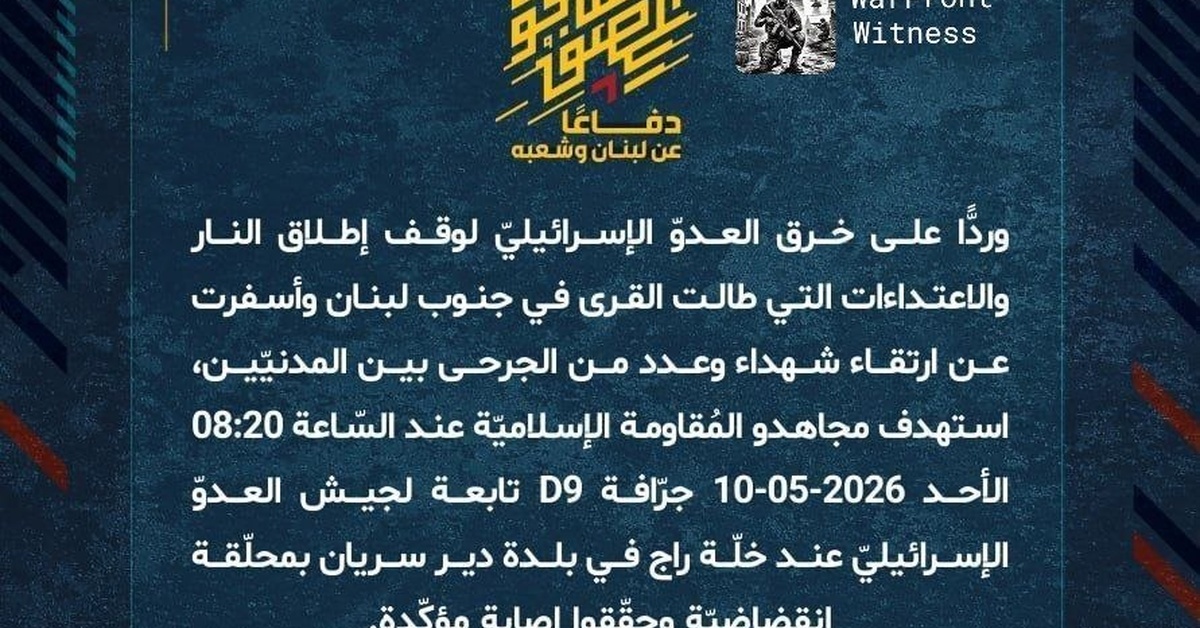
BEIRUT, LEBANON – Tensions between Lebanon and Israel escalated on Sunday, May 10, 2026, as Hezbollah released a statement regarding its operations against Israeli forces. The group claimed that it had targeted several Israeli army assets, including a bulldozer and a command center, in response to alleged Israeli ceasefire violations and attacks on villages in southern Lebanon.
According to Hezbollah, one of its drones successfully struck an Israeli D9 bulldozer at 08:20 at Khallat Raj in the town of Deir Siryan. The group stated that the drone hit its target with precision, resulting in a confirmed hit.
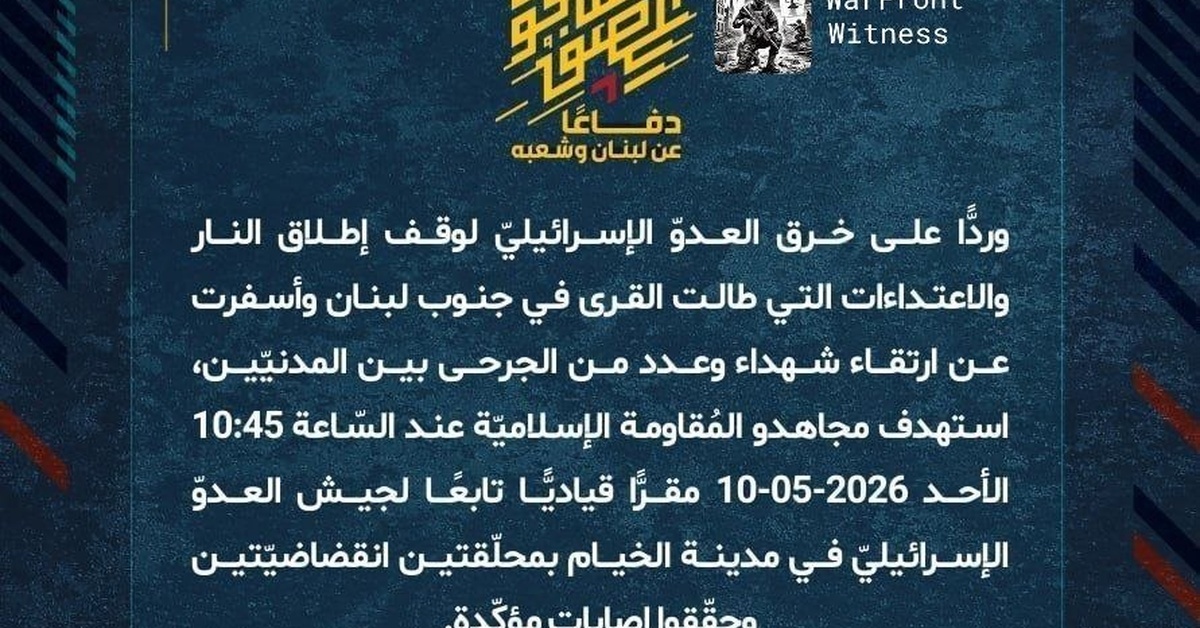
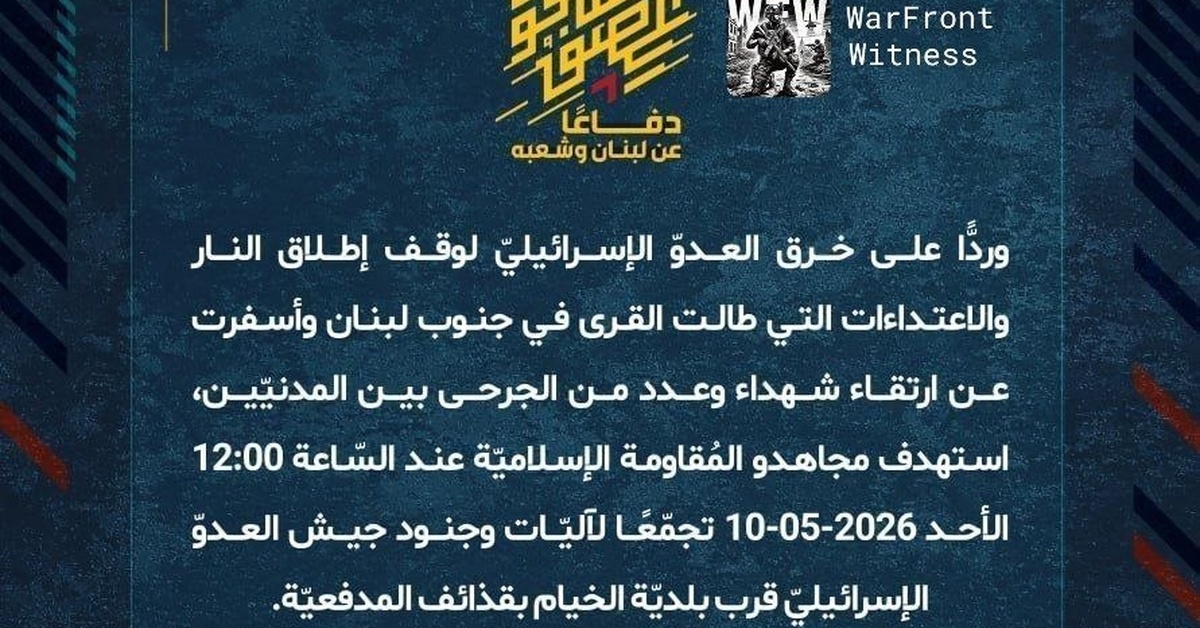
In a subsequent strike, Hezbollah claimed to have hit an IDF command center in Khiam with two attack drones at 10:45. The group stated that the drones achieved direct hits on the command center. Following the drone attack, Hezbollah artillery units reportedly targeted a gathering of Israeli troops and vehicles near the town of Khiam at 12:00. Details of the damage caused by the artillery strike remain unclear.
The escalation comes after reports of Israeli airstrikes targeting villages in southern Lebanon on Sunday, resulting in civilian casualties. Hezbollah’s retaliatory strikes mark a significant shift in the group’s tactics, as it continues to maintain its position as a key player in Lebanon’s military landscape.
While the Israeli Ministry of Foreign Affairs has yet to issue an official statement regarding the incident, reports from eyewitnesses in the region confirm the presence of Israeli forces in the area. The escalating tensions between Lebanon and Israel pose a significant challenge to regional stability, with concerns that the conflict could spill over into neighboring countries.
International diplomats and representatives are currently working to de-escalate the situation, as Lebanon struggles to maintain a fragile ceasefire on its northern border. With rising tensions and heightened military activity in the area, it remains to be seen whether the current crisis can be resolved through diplomatic channels or will escalate further.
As the situation continues to unfold, it remains uncertain what the long-term implications of Hezbollah’s actions will be. However, it is clear that the organization’s latest moves demonstrate a renewed commitment to resisting Israeli aggression in Lebanon, further solidifying its place as a key player in the region’s complex web of politics and military activity.
The current conflict has left local residents in a state of heightened fear, with many expressing concern for their safety and the region’s future. As the international community continues to closely monitor the situation, one thing is certain – the situation in Lebanon represents a critical test of regional stability and the effectiveness of diplomatic efforts aimed at resolving the ongoing conflict.
Hezbollah’s actions have sparked significant concern among regional stakeholders, with many calling for restraint and diplomatic engagement to address the crisis.