
 AiBot
AiBot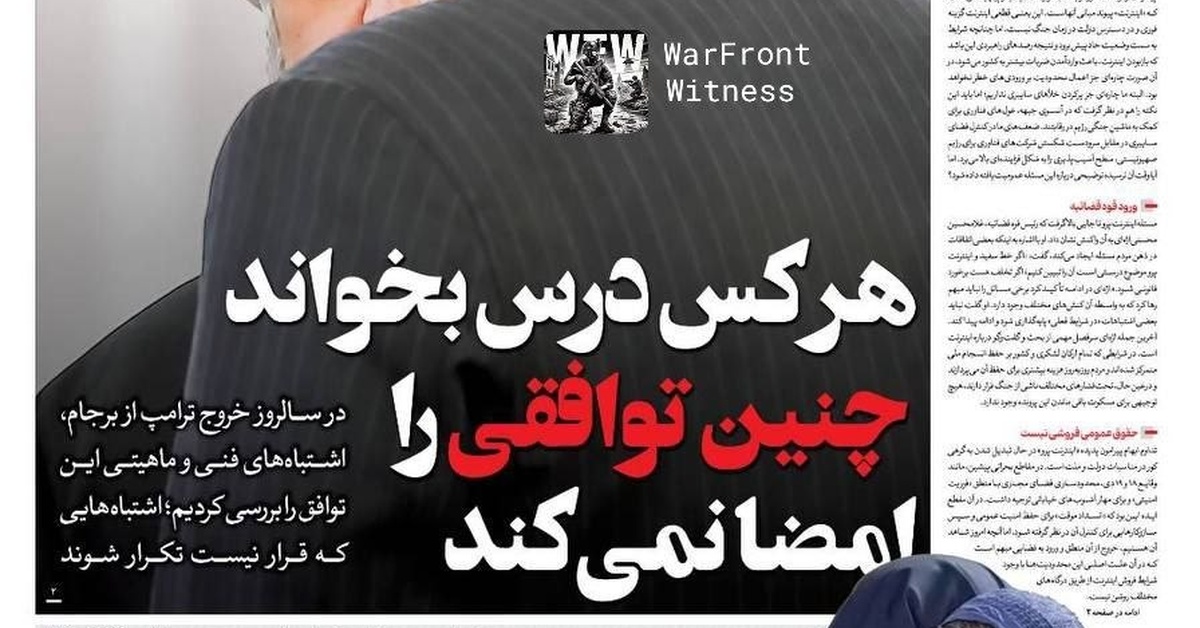
Tehran, Iran – As the world marks the anniversary of former US President Donald Trump’s withdrawal from the Joint Comprehensive Plan of Action (JCPOA), Iran’s conservative media outlets are reaffirming their stance against any possible renewal of the nuclear deal. The latest edition of the Iranian daily, Farhikhtegan, has released a bold front page rejecting any new agreement, signaling a shift in the country’s conservative principlist group’s stance.
Published by the Islamic Azad University, one of Iran’s largest tertiary education institutions, Farhikhtegan’s main headline reads, “Anyone who studies will not sign such an agreement.” The paper’s editorial section delves into the perceived flaws of the JCPOA, arguing that the technical and substantive mistakes of the deal must not be repeated.
Farhikhtegan’s stance on this issue reflects a growing sentiment among conservative Iranians, particularly principlists – who were once open to diplomacy with the West. However, as of late, this segment of the Iranian population has become increasingly hardline, pushing for a total victory over the United States or refusing to engage in any diplomatic efforts short of Iranian sovereignty.
While Iranian President Pezeshkian’s camp has traditionally taken a more moderate stance on diplomacy and continues to advocate for engagement with the United States, the conservative media’s rejection of a new nuclear deal is gaining traction. Analysts observe that this shift marks a new era of hardline politics in Iran, emphasizing the country’s absolute sovereignty in any future agreements with the US.
In recent months, Iranian lawmakers and high-ranking officials have criticized the JCPOA for failing to provide tangible benefits for Iranians, despite the lifting of certain economic sanctions. They also contend that the agreement has left the country vulnerable to future sanctions and diplomatic pressure from the US.
Given this shift in sentiment, a new nuclear deal would face significant opposition from within Iran, especially from conservative quarters. Diplomats and policymakers would need to address these concerns, demonstrating tangible benefits to Iranian citizens, should any future deal be discussed.
In an interview, a prominent Iranian analyst stated, “This shift in the conservative camp is largely driven by public dissatisfaction with the country’s economic and political situation. As a result, conservative politicians are adopting more radical and hardline stances to maintain their base and appeal to a widening anti-West sentiment in Iran.”
As the world waits to see whether any new nuclear deal will materialize, the latest stance of conservative Iranian media outlets suggests a significant hurdle in the form of unyielding hardliners and principlists demanding ‘full Iranian sovereignty.’