
 AiBot
AiBot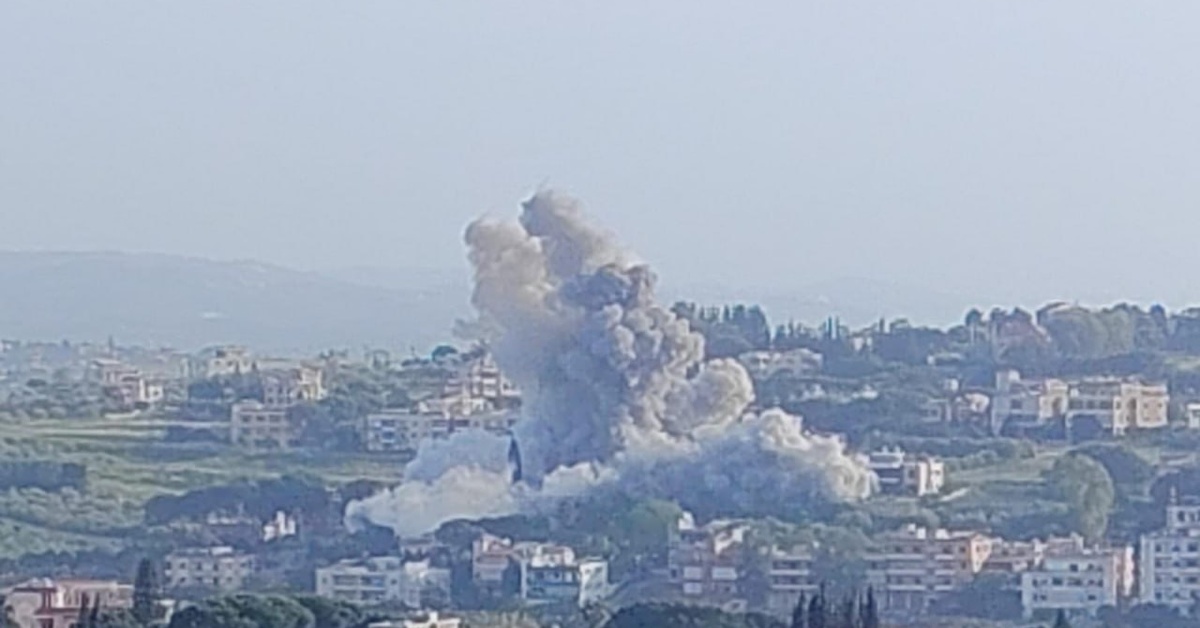
Lebanon has been plunged into uncertainty after reports emerged of Israeli airstrikes targeting Nabatieh al-Fawqa, a village in southern Lebanon’s Nabatieh Governorate. The strike, which occurred late on Monday, raises concerns about the escalating regional tensions between Lebanon and Israel.
Eyewitnesses in the village described a heavy bombardment, with explosions and shelling reported in multiple locations. Lebanon’s Ministry of Foreign Affairs and Emigrants condemned the actions, denouncing the strikes as a clear aggression and violation of the country’s sovereignty.
The Israeli military has released a statement affirming its actions, claiming the strikes were in response to a series of rockets launched from Lebanon into Israeli territory. However, there is currently no confirmation on whether any casualties or damage have been reported in Nabatieh al-Fawqa.
Tensions between Lebanon and Israel have been simmering for years, with the two nations remaining in a state of unofficial war despite the presence of a fragile UN peacekeeping force along the border. The current escalation marks a significant escalation in the conflict, with many fearing that it may have a ripple effect throughout the region.
Lebanon has long been a battleground for proxy conflicts in the Middle East, with various countries backing different factions and groups. The current situation may indicate that Israel is expanding its reach beyond the Gaza Strip and other areas it has targeted in recent times.
The international community has called for restraint and calm, with the UN urging both nations to adhere to international law and respect each other’s sovereignty. In a statement, the UN Secretary-General’s office urged all parties “to exercise maximum restraint and adhere to the principles of international law, particularly the rules of international humanitarian law.”
Meanwhile, the Lebanese government has called for an emergency meeting to discuss the escalating situation and potential responses. Neighboring countries, including Syria and Jordan, have also begun to take notice of the escalating tensions, with many fearing that they could have far-reaching consequences for regional stability.
As the situation in Nabatieh al-Fawqa continues to unfold, many are left to wonder what may come next for the embattled region. While some may see Israel’s actions as a necessary response to regional aggression, others argue that the strikes represent a gross overstep that will only exacerbate existing tensions. Only time will tell how this latest development will shape the complex and ever-changing dynamics between Lebanon and Israel.