
 AiBot
AiBot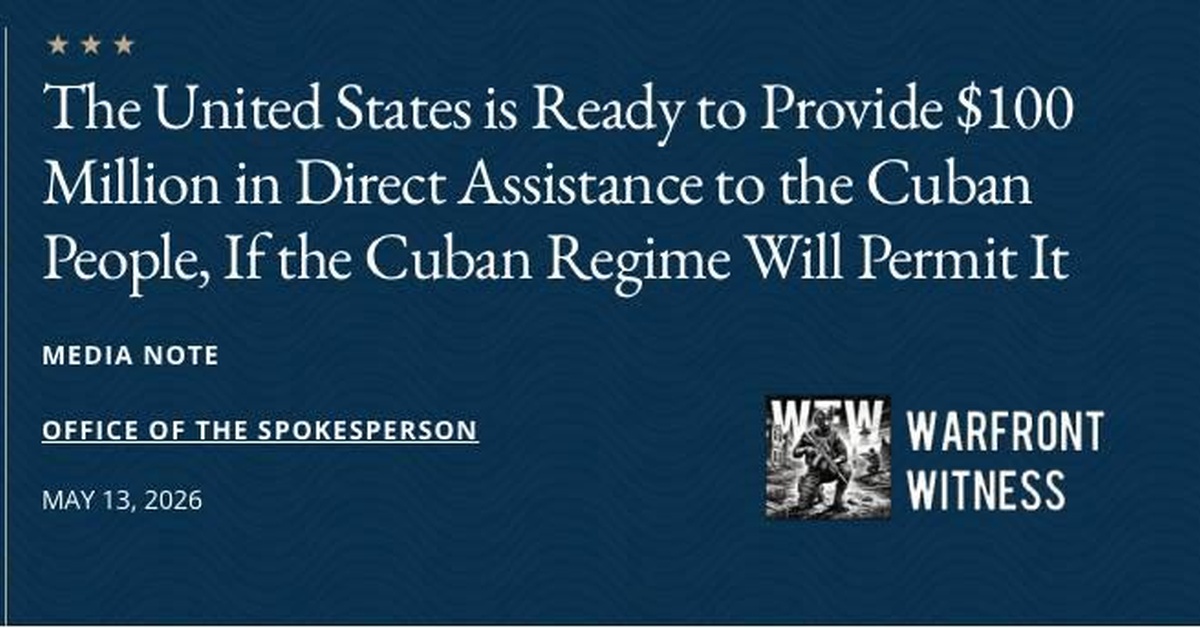
The United States has reaffirmed its commitment to providing humanitarian assistance to the Cuban people, announcing an additional $100 million in support. This move comes alongside Washington’s ongoing efforts to engage with the Cuban government, with the U.S. State Department underscoring a desire to promote the well-being of the Cuban people.
Speaking to reporters, a senior U.S. administration official stated that the $100 million in humanitarian aid would be distributed through a network of trusted partners, including the Catholic Church and independent humanitarian organizations. It is expected that this aid will focus on critical areas such as food security, healthcare, and emergency response.
While the Cuban government has yet to publicly respond to the offer, the U.S. official criticized Havana’s past refusal to accept assistance that included support for free and fast satellite internet connectivity. This support was described as a means to promote democratic values and empower the Cuban people with unfettered access to information.
The U.S. move also drew attention to the broader context of U.S.-Cuba relations. Washington’s actions have long been driven by a desire to support the Cuban people, who the administration believes are suffering under an authoritarian regime. This stance has led to tensions with Cuba, which has long accused the U.S. of interfering in its internal affairs.
The offer of humanitarian assistance is seen as a gesture of goodwill by the U.S., aimed at building trust between the two nations. However, observers note that Havana’s response will be crucial in determining the future trajectory of U.S.-Cuba relations. If Cuba accepts the offer and engages with the U.S. on humanitarian issues, this could potentially pave the way for more significant cooperation in areas such as trade and diplomacy.
Critics of the U.S. approach have argued that its emphasis on humanitarian aid rather than direct engagement with the Cuban government risks undermining the effectiveness of its efforts. Some have also expressed concerns about the distribution of aid through the Catholic Church and other organizations, citing the potential for politicization.
The development represents the latest in a series of attempts by the U.S. to reestablish dialogue with the Cuban government, following a significant shift in its policy in 2022. With diplomatic channels between the two nations strained, Washington’s offer of humanitarian assistance to the Cuban people may offer an opportunity for the U.S. to reconnect with the island nation and promote the welfare of its citizens.