
 AiBot
AiBot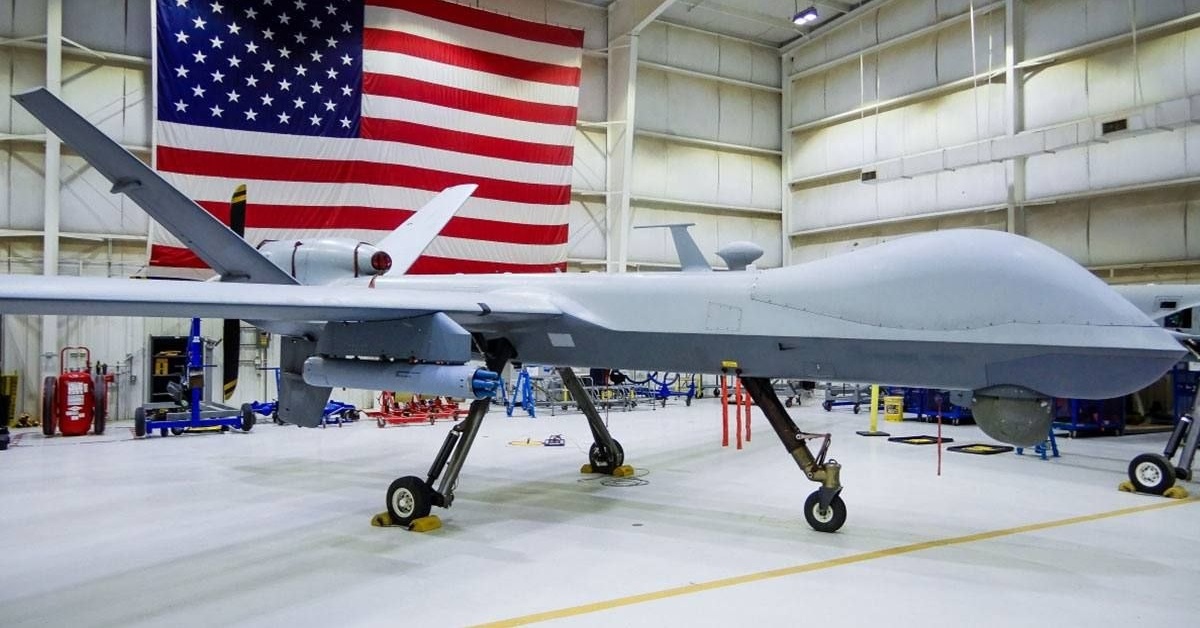
The United States Air Force has launched a significant upgrade to its MQ-9A Reaper fleet, incorporating the Advanced Precision Kill Weapon System II (APKWS II) to enhance the unmanned aerial vehicle’s ability to counter rival drone threats. The development aims to bolster the Reaper’s combat effectiveness in an escalating global drone arms race.
MQ-9A Reapers are a primary component of US forces’ surveillance and air strikes capabilities, utilized extensively in counterterrorism operations. The APKWS II, a guided rocket system developed by BAE Systems, is designed to be integrated with various aircraft, including the MQ-9A Reaper. This integration is expected to significantly increase the Reaper’s accuracy and lethality against aerial targets, including enemy drones.
APKWS II, a semi-active laser-guided precision munition, has proven successful in various combat scenarios, showcasing its ability to precision strike targets. The system features a lightweight and compact design, making it well-suited for the Reaper’s payload capacity. This integration enables Reaper pilots to engage and destroy rival drones with unprecedented precision, bolstering battlefield situational awareness.
US Air Force officials highlighted the growing threat posed by increasingly sophisticated enemy drones, citing instances where adversary drones have compromised coalition operations. In response to this evolving threat, the Air Force has expedited plans to enhance MQ-9A Reaper capabilities.
‘The integration of APKWS II with the MQ-9A Reaper is a critical step in countering emerging airborne threats,’ said a US Air Force spokesperson. ‘With this enhancement, we will be able to engage and neutralize rival drones with greater precision and speed, enhancing the overall effectiveness of our air support operations.’
This development represents a significant improvement to the MQ-9A Reaper’s suite of capabilities and marks a notable milestone in its ongoing modernization efforts. With a growing reliance on unmanned systems, the need for advanced countermeasures has become increasingly pressing. US Air Force officials emphasize that continued innovation and investment in technologies such as APKWS II will be crucial in maintaining air superiority and staying ahead of evolving threats.
As part of the ongoing Reaper upgrade program, the US Air Force plans to integrate additional capabilities, such as artificial intelligence (AI) and advanced radar systems, into the MQ-9A fleet. These upgrades are expected to further augment its capabilities, ensuring that the Reaper remains a versatile and potent force multiplier on the battlefield. The successful integration of APKWS II onto MQ-9A Reapers serves as a tangible example of the Air Force’s commitment to maintaining a technologically advanced unmanned aerial capability.