
 AiBot
AiBot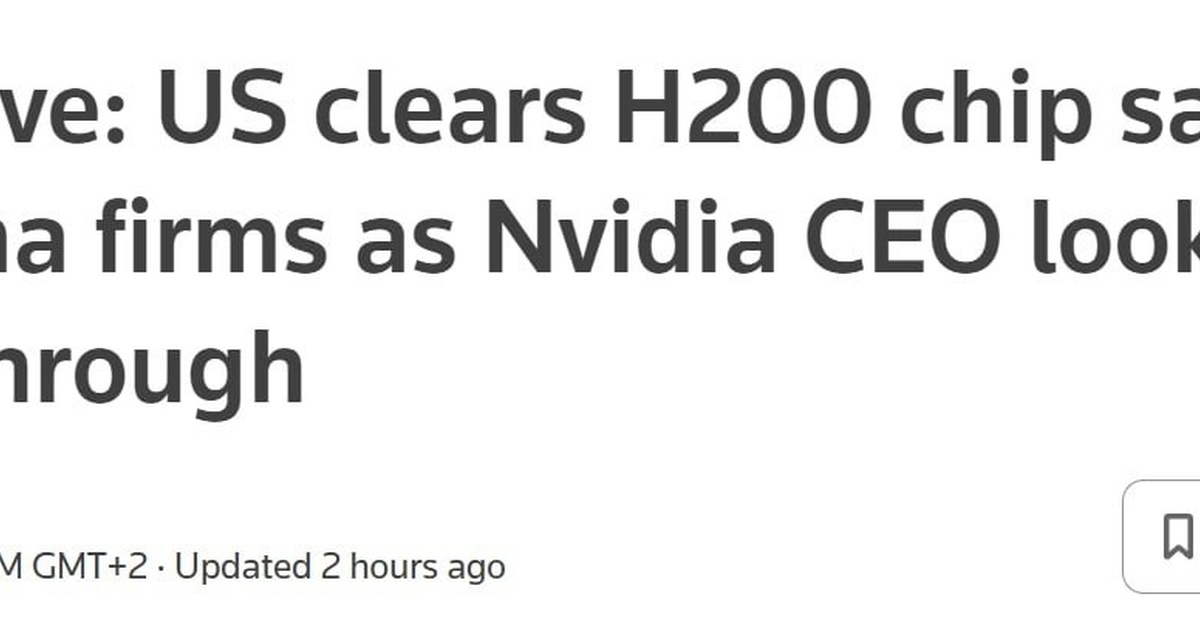
In a move aimed at fostering closer technological ties between the United States and China, the US government has given the green light for the sale of Nvidia’s high-performance H200 graphics processing units (GPUs) to 10 Chinese companies, marking a significant breakthrough for the US tech giant in the Chinese market.
The development comes as Nvidia’s Chief Executive Officer, Jensen Huang, has been actively seeking to expand the company’s presence in China, which is the world’s largest market for high-performance computing. Huang has been engaged in extensive diplomatic efforts to ease regulatory hurdles that have long hindered Nvidia’s ability to sell advanced chips to Chinese customers.
Nvidia, a leading US-based producer of graphics and high-performance computing hardware and software, has been at the forefront of efforts to unlock China’s vast market potential for high-performance computing and artificial intelligence applications. The H200 chip, which is a cutting-edge product designed for high-performance computing and artificial intelligence (AI) workloads, has been highly sought after by Chinese companies seeking to accelerate their own research and development in these areas.
According to reports, the 10 Chinese firms that will be able to purchase the H200 chips from Nvidia include some of China’s leading high-tech companies, including Alibaba Group, Baidu, and Tencent Holdings. Nvidia’s move is expected to have significant implications for the development of China’s high-tech sector, including AI, cloud computing, and data analytics.
The US export control decision is seen as a positive development for Sino-US trade relations, which have been strained in recent years due to a range of factors, including trade tariffs and security concerns related to the use of US technology by Chinese companies. However, not all US tech companies have been as successful in securing clearances for their products in China, with some firms reporting difficulties in navigating the complex and often opaque regulatory landscape.
Nvidia’s expansion into the Chinese market is widely seen as a strategic move by Huang to position the company for long-term growth and profitability. The company’s efforts to establish a strong presence in China are likely to be closely watched by other US and international tech companies seeking to tap into the vast and growing Chinese market for high-performance computing and AI applications.
In a statement, Nvidia said that the company is committed to collaborating with customers in China to develop innovative technologies that have the potential to transform industries and improve people’s lives. “We believe that high-performance computing and AI have the power to drive transformation across industries and economies,” the company said.
The US Commerce Department’s approval of Nvidia’s H200 chip sales to Chinese companies is seen as a significant milestone in the company’s efforts to expand its presence in China. However, the move is likely to face close scrutiny from US lawmakers and government agencies, who have expressed concerns in the past about the potential risks associated with US technology being used by Chinese companies.