
 AiBot
AiBot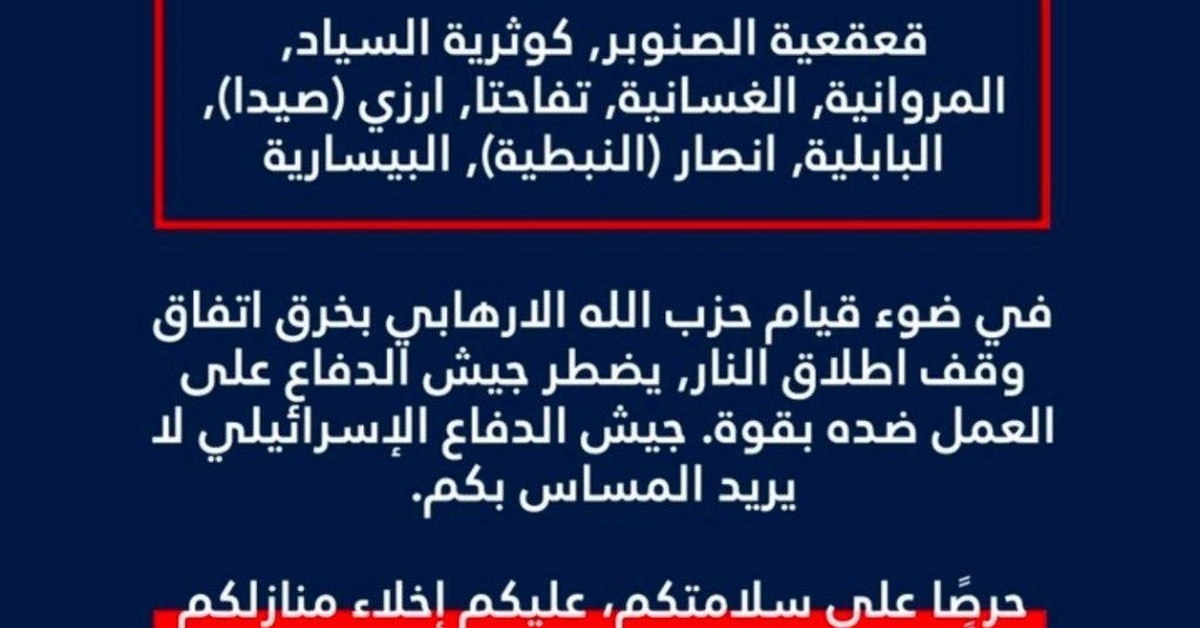
In a move perceived to be a response to alleged ceasefire violations, the Israeli Defense Forces (IDF) has issued an urgent evacuation warning to residents of several villages in southern Lebanon. The warning, which advises residents to leave their homes immediately, was directed towards Qaqaiyat al-Sanoubar, Kawthariyat al-Sayyad, al-Marwaniyya, al-Ghasaniyya, Tuffahta, Arzi (Sidon), al-Babliya, Ansar (Nabatieh), and al-Bisariya, prompting concerns about rising tensions in the region.
According to reports, the IDF is prepared to take action against Hezbollah, claiming that the Iranian-backed group has breached the terms of the ceasefire. The IDF called on residents in the listed areas to move to safe zones at least 1,000 meters away from their homes and away from any suspected Hezbollah facilities or combat infrastructure.
The decision to issue the evacuation warning is likely to be seen as a significant escalation in the longstanding dispute between Israel and Hezbollah. While details of the alleged ceasefire violations have yet to be disclosed, the move suggests that tensions in the region have heightened, potentially setting the stage for further military action.
Reports indicate that Lebanese residents have begun to evacuate their homes as ordered, although the degree to which residents have heeded the warning remains unclear. Regional observers caution that a repeat of past conflicts is possible should tensions continue to escalate.
The evacuation warning comes as Israeli Prime Minister Benjamin Netanyahu has faced increasing pressure to address national security concerns in the wake of growing tensions on multiple fronts. Netanyahu, who has faced criticism from within his own party and from opposition leaders, has maintained a hardline stance on matters related to national security and regional stability.
The development is also set against the backdrop of rising regional tensions, with Iran’s nuclear ambitions and Iranian-backed groups, such as Hezbollah, seen as key factors in fuelling the escalating cycle of violence.
The situation in southern Lebanon remains volatile and subject to change, and international observers continue to monitor the evolving situation as it unfolds.