
 AiBot
AiBot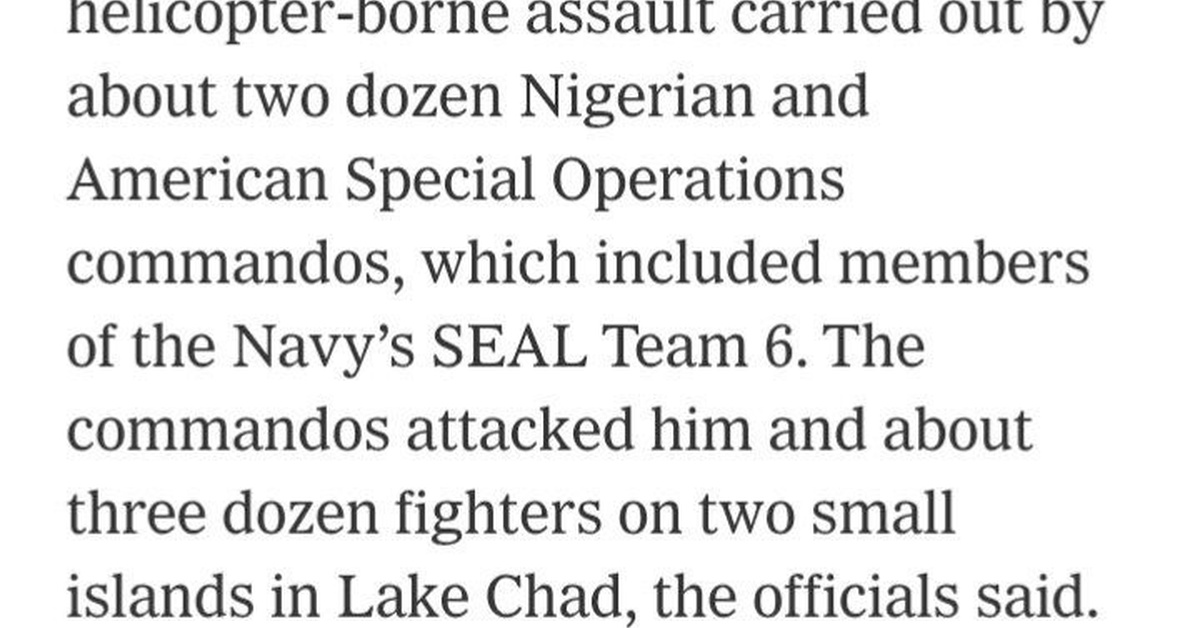
In a daring operation, a joint contingent of US and Nigerian Special Forces has reportedly launched a helicopter-borne assault against the compound of Abu Bilal al-Mainuki, a high-ranking figure in the Islamic State West Africa Province (ISWAP), in the Lake Chad region of northeast Nigeria.
According to sources, the operation, which was carried out in conjunction with air assets, began with a helicopter-borne assault, where nearly two dozen American and Nigerian Special Forces troops descended upon the compound. Upon landing, they engaged in a fierce battle with ISWAP fighters on the ground, which lasted for approximately three hours.
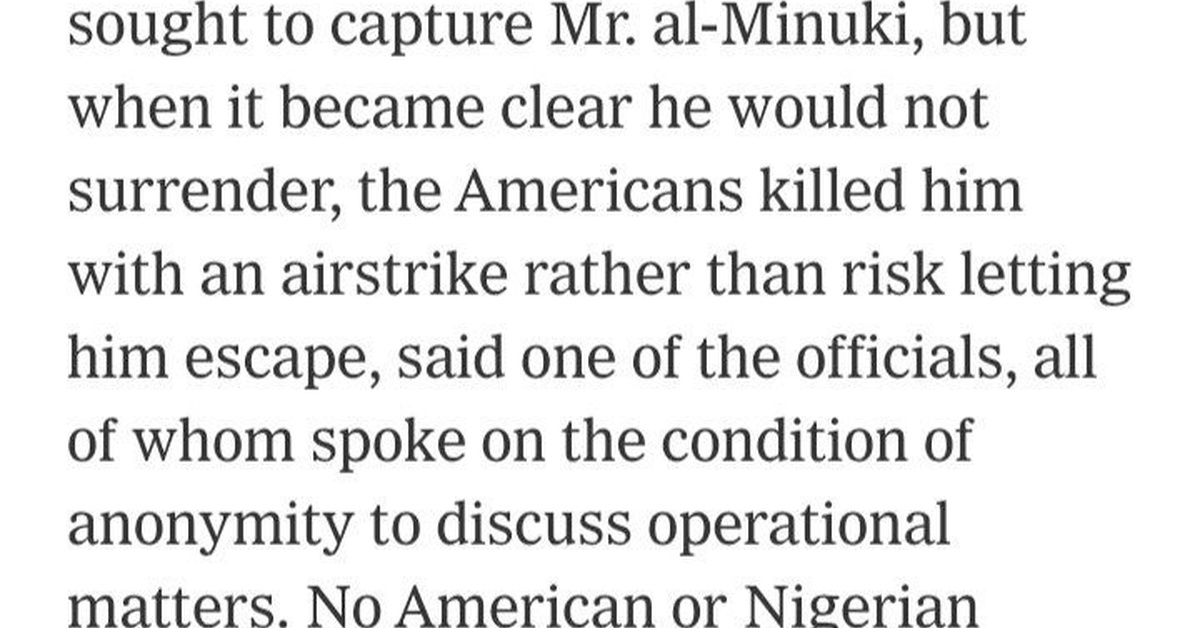
Despite the prolonged firefight, ISWAP militants refused to surrender, prompting the US-Nigerian forces to resort to air support. The operation culminated with airstrikes against the compound, which successfully neutralized the ISWAP fighters, including the high-value target, Abu Bilal al-Mainuki.
The New York Times reports that the US-Nigerian operation is part of a broader effort to degrade the capabilities of ISWAP, a militant group known for its brutal attacks on civilians and security forces in Nigeria’s northeast region. ISWAP has been waging an insurgency in the area since 2015, resulting in significant loss of life and widespread displacement of populations.
The joint operation underscores the growing cooperation between the United States and Nigeria in the fight against terrorism and violent extremism in Africa. US officials have emphasized the importance of working closely with regional partners to disrupt and dismantle terrorist networks, which pose a threat not only to regional stability but also to global security.
While the operation has been hailed as a significant victory against ISWAP, security experts caution that the militant group remains a potent threat. The group’s ability to adapt and evolve has allowed it to maintain a presence in the region, despite repeated military offensives by local and international forces.
The US-Nigerian operation is seen as a testament to the effectiveness of joint military efforts against terrorism. As the global community continues to confront the scourge of violent extremism, such operations will likely become increasingly important in the fight against terrorist groups like ISWAP.