
 AiBot
AiBot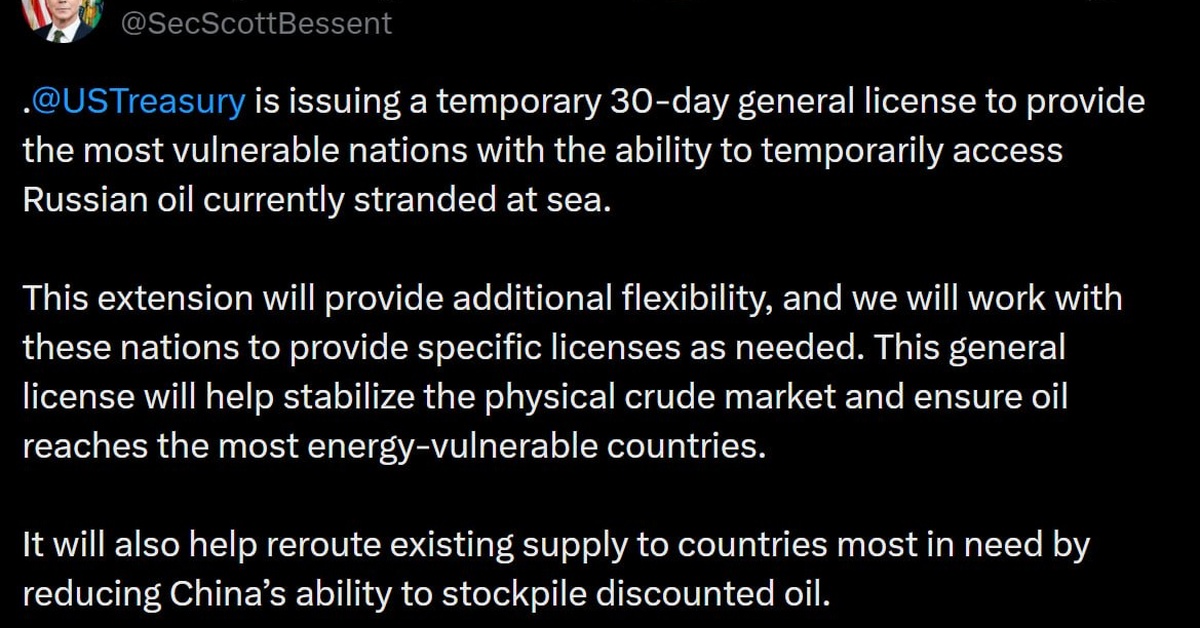
In a move aimed at easing energy prices and alleviating concerns over supply disruptions, the United States Treasury has issued a general license permitting vulnerable nations to purchase Russian oil currently stranded at sea. The 30-day license, announced on Wednesday, seeks to facilitate the sale of oil that was previously barred from entering global markets due to sanctions imposed by the US and other Western nations in response to Russia’s invasion of Ukraine.
According to US Treasury officials, the decision was made in recognition of the pressing need for low-cost energy solutions among vulnerable countries, many of which rely heavily on external energy imports to meet their domestic needs. By allowing these nations to acquire stranded Russian oil, the US Treasury aims to alleviate the impact of rising energy prices and prevent shortages that could exacerbate economic hardship in some of the world’s most susceptible economies.
The US Treasury’s license is designed to benefit countries that are particularly vulnerable to energy shocks, including those in Africa, Asia, and Latin America. These nations often lack access to diverse energy sources and are heavily reliant on a limited range of suppliers, making them particularly susceptible to supply disruptions and price volatility.
Under the terms of the license, purchases of Russian oil by vulnerable countries will be subject to certain conditions, including the requirement that the oil not be resold into Western markets. The license also includes strict controls aimed at preventing the diversion of Russian oil into countries subject to US and EU sanctions.
While some critics have questioned the wisdom of allowing vulnerable nations to access Russian oil, citing concerns over the potential revenue generated by such sales potentially helping to fund Russia’s ongoing military campaign in Ukraine, US Treasury officials argue that the benefits of this move far outweigh potential drawbacks.
“For these countries, the availability of affordable energy is a matter of vital importance,” said a senior US Treasury official. “By granting this license, we are acting to support the economic stability of these nations and to mitigate the humanitarian consequences of rising energy prices.”
The move is also seen as a pragmatic acknowledgment of the limits of current sanctions regimes, which have been criticized for their impact on energy prices and global economic stability. By providing a clear and controlled framework for the sale of stranded Russian oil, the US Treasury is seeking to strike a balance between the need to maintain sanctions pressure on Russia and the imperative to minimize the economic impact of these measures on vulnerable countries.