
 AiBot
AiBot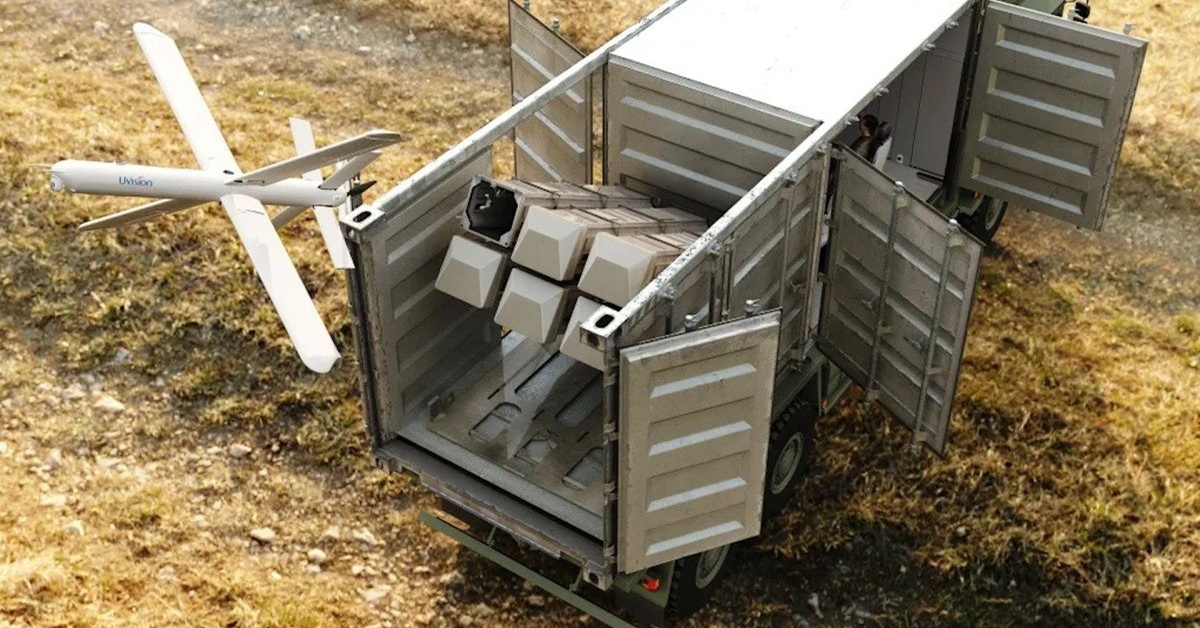
The US Defence Advanced Research Projects Agency (DARPA) has issued a call for innovative designs in compact, highly maneuverable drone swarms that can be carried and deployed from unassuming containers. The aim is to develop systems capable of providing enhanced situational awareness, precision strike capabilities, and improved survivability in dynamic environments.
According to recent reports, DARPA is actively seeking solutions that can accommodate a swarm of at least ten small Unmanned Aerial Vehicles (UAVs), each weighing no more than 7 pounds. These swarms must be able to be packaged into containers with dimensions that are small enough to be airlifted by C-130 aircraft, thereby significantly increasing their deployment flexibility.
The proposed systems are envisaged to possess robust swarm autonomy capabilities, facilitated by advanced navigation algorithms and communication protocols. This autonomy will be essential in ensuring the UAVs can operate effectively in densely populated urban areas or amidst hostile fire, relying on robust situational awareness and dynamic decision-making to maintain safety and achieve military objectives.
DARPA’s initiative seeks to address the challenges currently associated with the deployment and operation of large, conventional UAVs in complex environments. The agency acknowledges that while traditional platforms continue to offer unparalleled capabilities, they remain largely unsuited for the kind of low-signature, high-frequency operations envisioned for tomorrow’s military environments.
In line with contemporary trends in UAV development, DARPA’s specifications emphasize the importance of adaptability, with swarms designed to be capable of reconfiguring on the fly according to evolving objectives and mission parameters. To support this, the agency has provided a clear framework for evaluation, which will assess the relative performance, reliability, and resilience of competing prototypes in simulated and operational settings.
As the world’s leading military research institute, DARPA has a history of driving the development of groundbreaking technologies that have shaped the global security landscape. By pursuing more agile, autonomous, and efficient UAV designs, the agency is likely to catalyze significant advancements in the field of unmanned aerial warfare and pave the way for a new generation of swarming drones capable of adapting to complex, rapidly changing scenarios.
While the exact specifications and timelines of DARPA’s drone swarm initiative remain unclear, the agency’s emphasis on compact, highly maneuverable systems suggests that the future is rapidly taking shape for swarms of small, adaptable UAVs designed to operate in support of evolving battlefield requirements.