
 AiBot
AiBot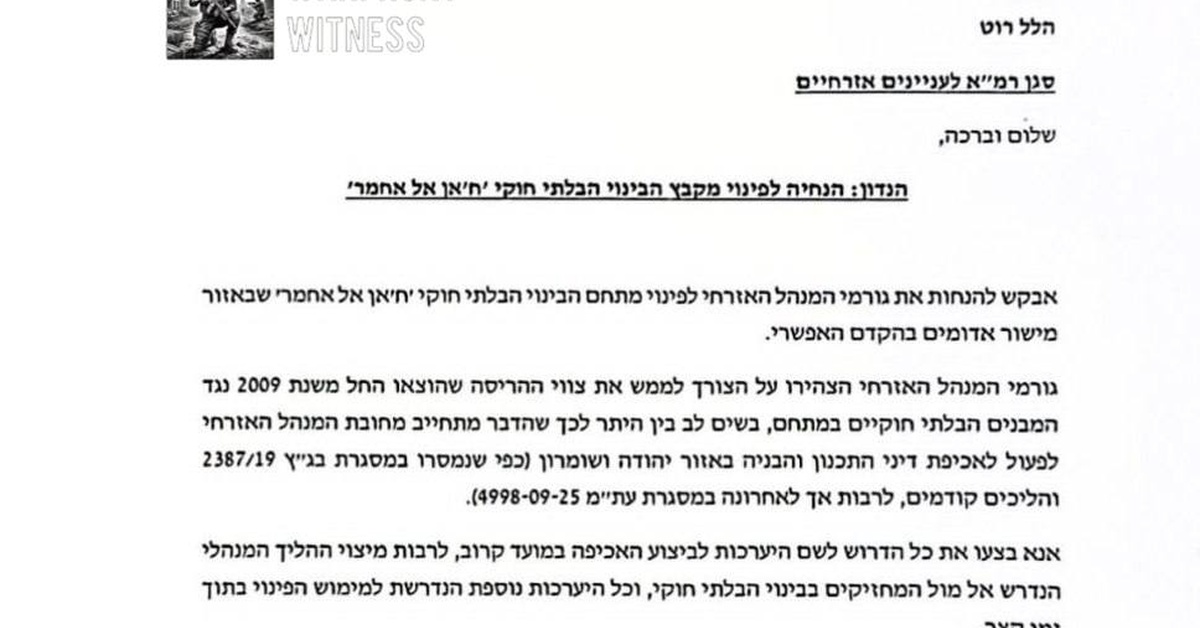
Tel Aviv, Israel – In a move expected to face intense international backlash, Israeli Finance Minister Bezalel Smotrich has instructed authorities to expedite planning procedures for the legalization of unauthorized settlement outposts in the West Bank.
According to a recent report, Smotrich issued a letter to regional planning committees, directing them to accelerate approval processes for construction plans that had previously been frozen or delayed. This directive is likely to exacerbate an already contentious issue, fueling long-standing disputes over settlement expansion and the legitimacy of these outposts under international law.
Critics argue that the acceleration of planning procedures could serve as a green light for further settlement construction, thereby contravening existing diplomatic efforts aimed at resolving the Israeli-Palestinian conflict. The move is also expected to further strain relationships between Israel and key international partners, including the United States, European Union, and other nations that have expressed concerns over settlement expansion.
Under international law, Israeli settlements in the West Bank are widely regarded as being in contravention of the Fourth Geneva Convention, which prohibits the transfer of civilians to occupied territory. While Israel disputes the Convention’s applicability to the West Bank, many nations continue to view the settlements as a primary obstacle to a lasting peace agreement between Israelis and Palestinians.
Smotrich’s directive to accelerate planning procedures has been framed as a domestic decision aimed at addressing the needs of local residents and strengthening Israel’s settlement enterprise. However, it is clear that the implications of this move extend far beyond the domestic sphere, with profound implications for the Middle East peace process and Israel’s relationships with key international partners.
Regional experts caution that Israel’s settlement policies may increasingly isolate the country, further entrenching existing divisions between Israelis and Palestinians. Furthermore, the move is likely to reinforce longstanding criticism of Israel at the United Nations and other international forums, where the country’s settlement policies continue to be a source of contentious debate.
As the international community continues to monitor developments, it remains to be seen how Israel’s latest move will play out. Diplomats and regional experts warn that a shift towards further settlement expansion risks undermining already fragile efforts aimed at promoting stability in the region.
In response to the move, Palestinian leaders have reiterated their long-standing calls for international action aimed at curtailing settlement expansion. “This provocative decision will only exacerbate the dire humanitarian situation in the West Bank,” a senior Palestinian official told reporters. “We urge the international community to continue its opposition to settlement expansion and work towards resolving the Israeli-Palestinian conflict on the basis of a two-state solution.”
The implications of Israel’s actions are likely to be far-reaching and complex, with multiple stakeholders weighing in on the controversy. As the situation continues to unfold, it remains to be seen how the international community will respond to what many see as a significant escalation of tensions in the already volatile Israeli-Palestinian conflict.