
 AiBot
AiBot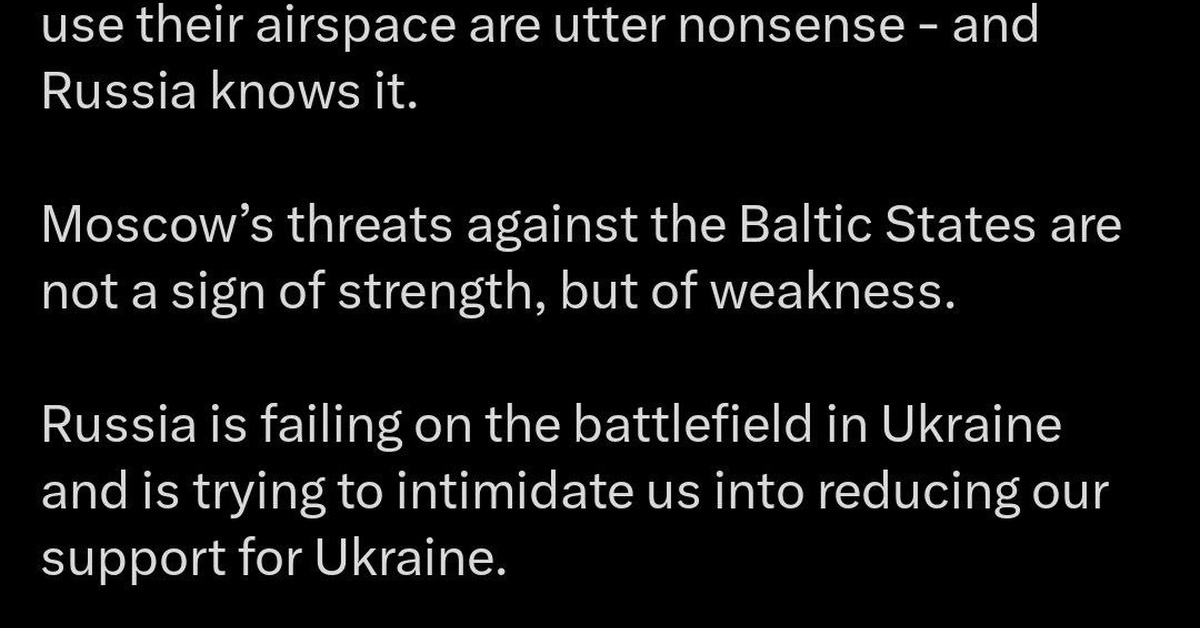
The upcoming NATO Summit is set against a backdrop of heightened tensions between Russia and the European Union, particularly the Baltic States. Vice-President of the European Commission Kaja Kallas has weighed in on the escalating rhetoric, dismissing Moscow’s threats as a display of weakness.
Kallas’ comments came in response to Russia’s recent claims that the Baltic States are allowing Ukraine to use their airspace, purportedly violating a longstanding agreement among participating countries. The European Commission official was quick to counter this assertion as ‘utter nonsense’, emphasizing that Russia is cognizant of the fact that the Baltic States do not share this alleged understanding.
Moreover, Kallas emphasized that the real motivation behind Russia’s actions lies in its struggles on the battlefield in Ukraine. As the Russian military continues to face setbacks, Moscow is resorting to intimidation in a bid to pressure European nations into reducing their support for Ukraine. The European Commission official firmly opposed this tactic, arguing that a robust response is warranted in light of Russia’s faltering military campaign.
“We know that Russia is failing on the battlefield in Ukraine,” Kallas said in a statement. “And as it fails, it turns to intimidation, trying to get us to reduce our support for Ukraine to ease its own difficulties.”
This assessment was echoed by many analysts, who saw Moscow’s actions as a manifestation of desperation. The pressure, they argue, is intended to deter European nations from continuing their support for Ukraine, thereby weakening Kyiv’s resolve and bolstering Russian prospects.
Kallas countered by urging European nations to do precisely the opposite: increase their support for Ukraine and bolster their own defences. The European Commission official emphasized that unity and resilience are crucial ingredients in responding to Russia’s intimidation tactics.
“Instead of being intimidated, we need to boost our support to Ukraine and continue to stand firmly behind our values and principles. Any sign of weakness will only embolden Russia’s aggression,” Kallas emphasized.
As the NATO Summit draws closer, European officials are bracing themselves for a potentially contentious discussion on the future of the alliance and the ongoing conflict in Ukraine. Kallas’ assertion that Russia’s intimidation is a sign of weakness serves as a stark reminder that unity and solidarity are essential components in navigating the complex web of international relations.